Home
 We’ve been asked about Sri Lankan traditional pieces of clothing, other than the world-famous sarong and sari. Of course, there are a few other folk garments. And this article is dedicated to them. If you can add more, feel free to do it in the comment section. These unique authentic pieces are worth talking about and they represent the rich traditional culture of Sri Lanka. Lama sariya, dhoti, pancha, redda and hatte, kabakuruttu, and other local folk garments.
- Details
- Category: Sri Lanka
- Hits: 13198
Cabin crew fashion throughout time. What did flight attendants wear in different periods of history?
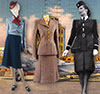 This is a special article dedicated to flight attendants and the history of their uniforms. It’s our way to support and cheer up the cabin crew members during the pandemic of Covid-19, which would probably cause a lot of flight attendants to lose their jobs. And the only thing we can do about it is social support. The air travel knew a lot of bumps and difficulties throughout its history, which influenced the cabin crew uniforms and fashion trends of the time. But always, time moved forward and everything changed for the better. Let’s hope the same will happen this time, too.
- Details
- Category: Nationalclothing
- Hits: 9001
 Many Czech folk costumes look rather bizarre, especially women’s outfits with their baroque exaggerated shapes – puffed sleeves, short and very wide skirts, giant ruff collars, large headdresses, etc. But in the Moravia region, the traditional dress often appears more natural and usual to our eye. Both male and female attire are still charming, unique, and elegant; they reflect the local culture and lifestyle. And, of course, the folk costume varies from district to district or even from village to village, which is so typical for Slavic countries.
- Details
- Category: Czech Republic
- Hits: 19656
 In this article, we’ll talk about the fashion trends in women’s clothing of the 1890s. What did ladies wear? What silhouette was the most fashionable and popular? Also, we’ll give you a great idea as to where you can see the examples of this period’s clothing, and more precisely, in what movie they occur. Historically, the 1890s didn’t actually bring anything really fresh and new into fashion but this era’s silhouette, in general, is unique and recognizable. And let’s see why.
- Details
- Category: Nationalclothing
- Hits: 10241
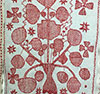 In Ukraine, ceremonial wedding towels are an integral part of the traditional (and even modern) marriage ceremony. Practically every couple uses a so-called “rushnyk” during their wedding and then preserves this item as something sacred for the family. In the past, each woman wove and embroidered her wedding towel by herself. So, many authentic examples survived to this day and are now kept in museums and private collections. Here is a large collection of wedding towels with the Tree of Life depicted on them. Why did women like the Tree-of-Life motif so much? Let’s find out.
- Details
- Category: Ukraine
- Hits: 11677
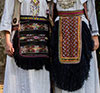 This garment looks a bit strange – all that long hairy fringe sticking from the sides and bottom of the apron. But somehow, it fits the traditional Slavic costumes just fine and seems an integral part of the outfit. Where does it occur? In a whole large area of Eastern Europe – Serbia, Romania, Bosnia and Herzegovina, Montenegro, Croatia, etc. But even if you live far from these countries, you can find such vintage fringed aprons in museum collections almost worldwide. Here are some of the examples of authentic Eastern European fringed aprons and some interesting info about them.
- Details
- Category: Nationalclothing
- Hits: 28007
 Usually, we analyze civil historic clothing in our articles about stage costumes used in popular TV shows – ladies’ gowns, gentlemen’s suits, national costumes, historic accessories, and so on. But this material is dedicated to military uniforms. Let’s find out what historic military clothes inspired the costume designers of Star Wars to create the costumes of the Imperial Navy officers and Imperial Navy guards. What details do they have in common with some of the real-life uniforms? Were they really based on the Nazi uniforms?
- Details
- Category: Nationalclothing
- Hits: 17166
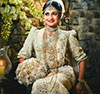 How much do you know about Sri Lankan traditional attire? The majority of people hardly know that sari and sarong are the most widespread folk garments in Sri Lanka. But not much more. We’ve prepared a few interesting facts about this country’s folk costume. The locals are lucky to have such comfy and good-looking folk clothing, suitable for the climate of Sri Lanka and pretty modest at the same time.
- Details
- Category: Sri Lanka
- Hits: 6320
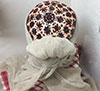 Ukrainian women have always been very creative with their clothing, jewelry, and accessories. There are dozens of arty-crafty headdresses or at least elaborate ways of draping even the simplest headpieces. But this particular headdress is truly unique – it was worn by married women only in a small area and, today, it is almost vanished. But why is this accessory interesting and special? Because women were banned to wear it to the church in the 19th century. Strange, isn’t it? Let’s find out why.
- Details
- Category: Ukraine
- Hits: 4346
 This a bit weird accessory came into fashion in the mid-17th century. It had a long and fascinating history and went through centuries along with new and new generations. A piece that was created for noblemen turned into something downright feminine and business-like – today, it is seldom seen on male shirts. Though, we oftentimes encounter male accessories or designs that became an integral part of women’s attire: white stockings, high heels, pantaloons, jabot collar – all these items were created for men, but can we imagine men wearing them now? The 16th-18th century in Europe was a truly strange period for world fashion!
- Details
- Category: Nationalclothing
- Hits: 23053
 In Africa, there are numerous types of traditional textiles produced and used by the local tribes since the beginning of time. In this material, we’ll look at the hand-woven cloth invented by the Yoruba people – the aso oke fabric. The locals in Nigeria and some neighboring territories not only create traditional and ceremonial pieces of clothing from aso oke cloth but even make cute contemporary casual wear from this authentically African fabric.
- Details
- Category: Nigeria
- Hits: 10889
 There are so many articles and videos about the aristocratic outfits from the 16th century in England, France, Italy, etc. But what about Germany? What clothing did German men wear in the 1500s? And did it differ much from English high-class costumes? Let’s find out. In this material, we’ll unveil some curious facts about European 16th-century male clothes, show you a nice modern reproduction of that period’s attire, and introduce you to the secrets of German Renaissance men’s clothing, with all its peculiarities.
- Details
- Category: Germany
- Hits: 102296
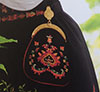 The traditional Norwegian women’s bunad – folk dress – is incomplete without one small but very important accessory. It’s the bunad purse or waist pocket. This purse always matches the rest of the outfit – same embroidery, same silverwork, same color palette, etc. But except for this, there is so little info on bunad purses on the internet, so let’s try to find out some more about this mysterious folk pouch.
- Details
- Category: Norway
- Hits: 20736
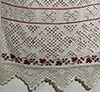 Here are several samples of Ukrainian traditional needlework and openwork. These two crafts were widely used by the local women to decorate clothing, tablecloths, bridal and ceremonial towels, etc. We’ve found some vintage examples of ceremonial towels called “rushnyk” that represent old traditions, beliefs, and skill. These are from central regions of Ukraine, the late 19th – early 20th century. They are museum exhibits. Every piece of the towels is handmade – they are hand-woven from linen or hemp yarn and embellished with embroidery, openwork, fringe, etc.
- Details
- Category: Ukraine
- Hits: 3001
Page 27 of 70