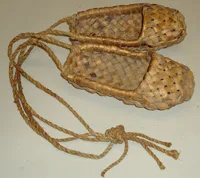
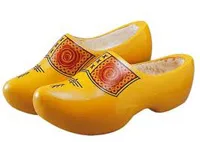
Sometimes shoes are the most interesting part of the national costume. They indicate the typical features of the country and at the same time the traits of the person who made and uses them. Shoes are the part of the outfit which tells more than any other piece about the wearer. That’s why traditional footwear of other countries often seems so odd for us. For example, these 10 weird national shoes: Top-10 most offbeat traditional shoes around the world (http://nationalclothing.org/13-nationalclothing/71-top-10-most-offbeat-traditional-shoes-around-the-world.html). Bast-shoes.jpgSabots.jpg
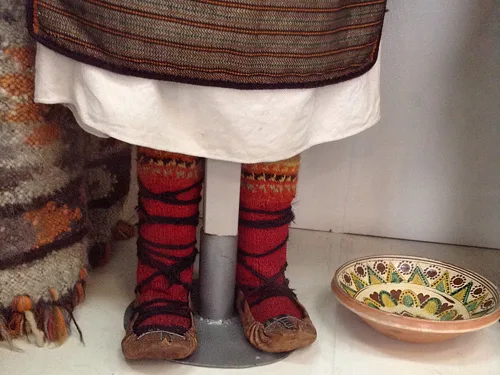
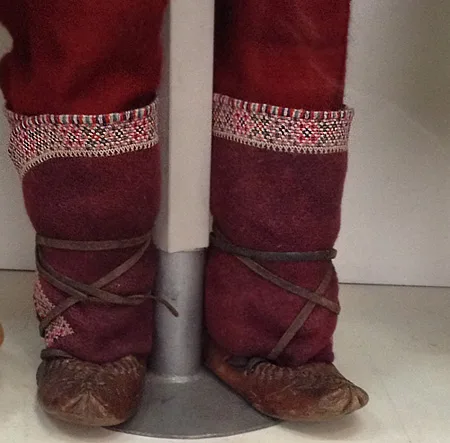
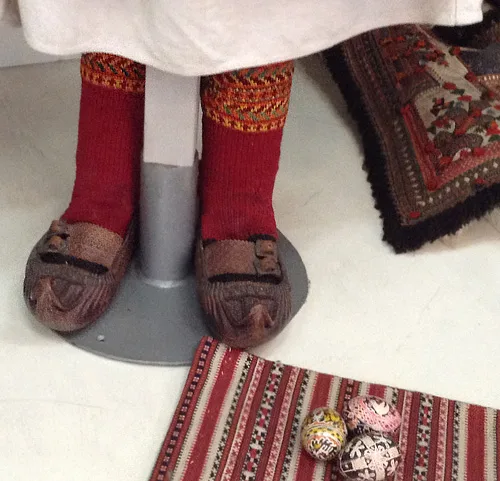
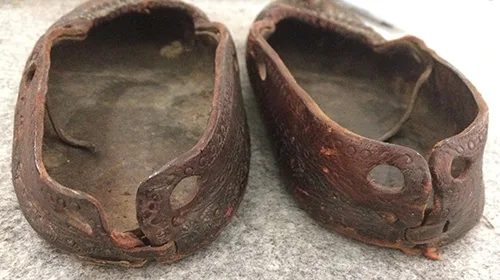
Postoly – the traditional shoes of Eastern European countries. They are made from leather and can be tied to the leg with leather strips or thick woolen threads. The tips of postoly are often narrowed and turned-up.
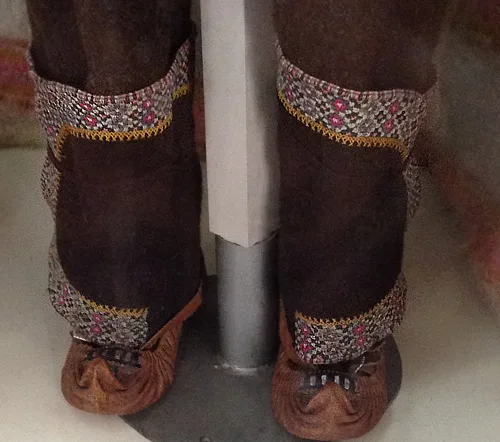
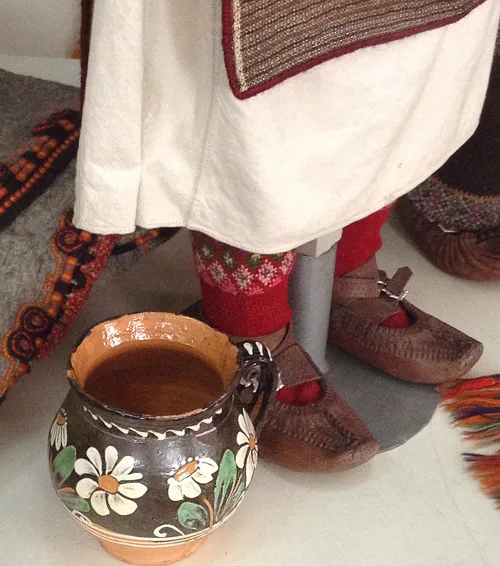
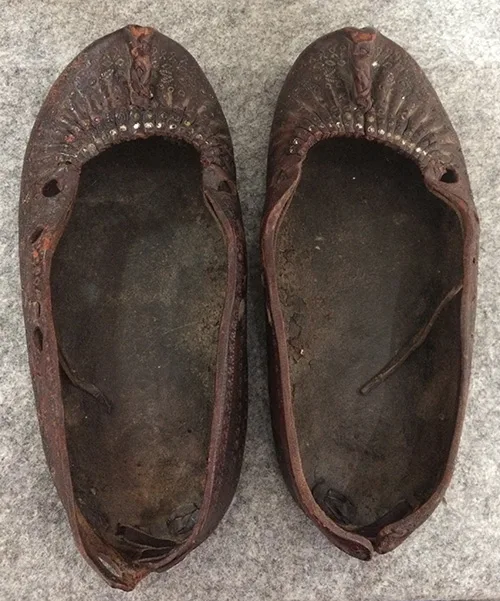
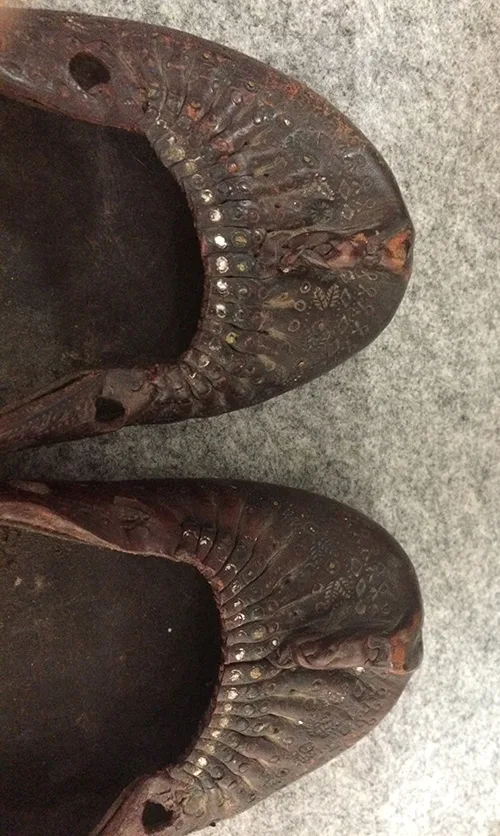
On the photos below, are postoly from the western part of Ukraine (Carpathian regions), the end of the 19th century. clothing4.jpgclothing5.jpgclothing6.jpgclothing11.jpgclothing12.jpg
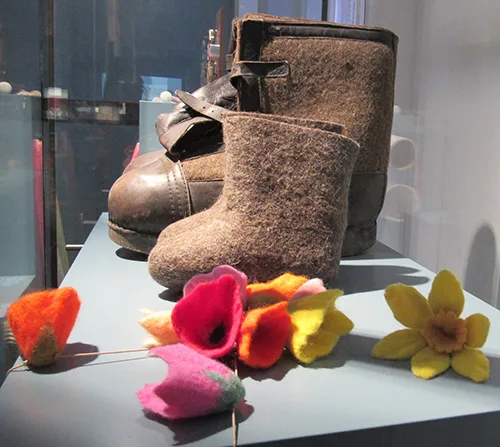
Vintage felt boots for winter. You can see a pair of tiny kid’s boots and a pair of felt & leather boots for an adult. Also, there are several beautiful felt flowers in the photo.
Such felt boots were popular in Europe in the 20th century. Even today, they are used in some countries.
Felt boots are very warm but not waterproof at all. That’s why they are worn with gumshoes on top. Felt-boots.jpg
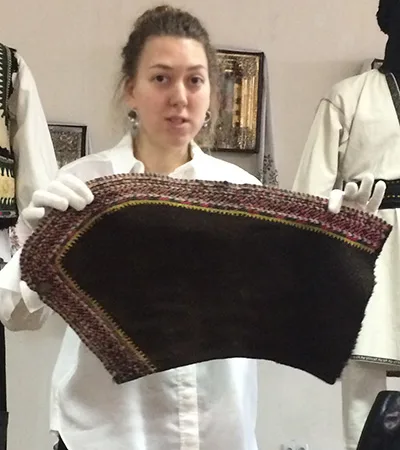
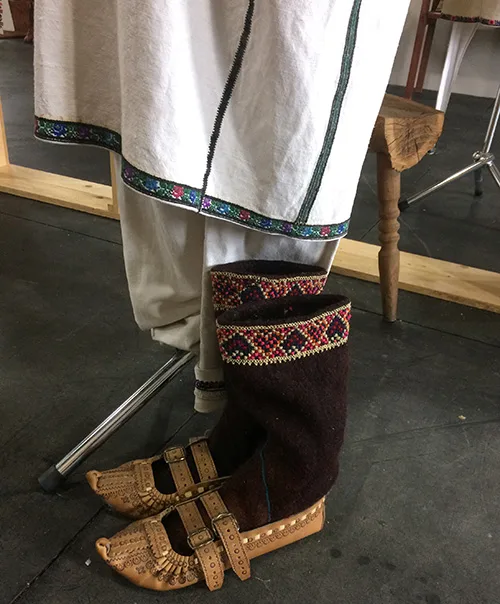
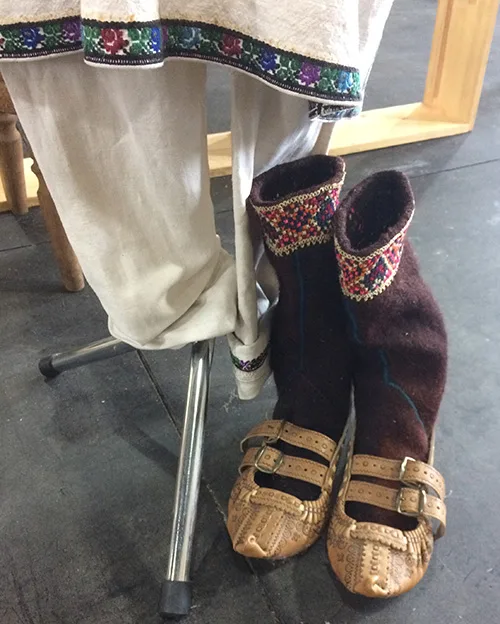
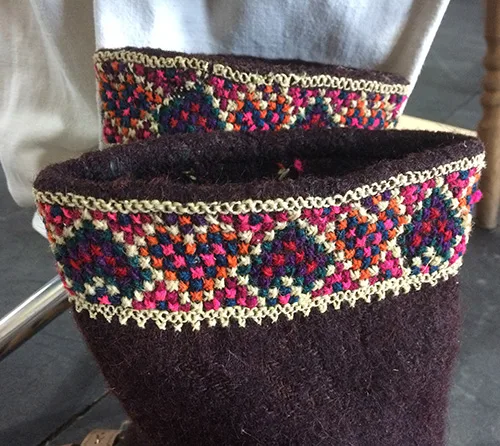
Hutsul woolen leg wrappings worn with special leather shoes called “postoly”. Ukraine, Carpathian region. Such leg wrappings are warm, comfy, and pretty. They are usually adorned with beautiful embroidery. This pair has a tiny button that helps to keep them in place, but they also may be tied to the leg by the shoe’s leather straps.
You’ve already seen these leg wrapping put on in one of the previous posts.
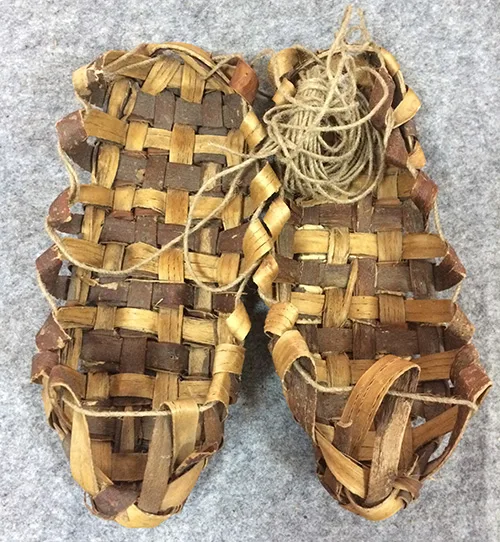
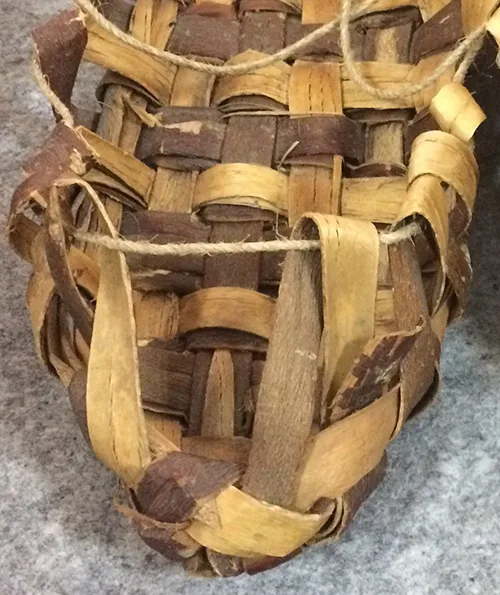
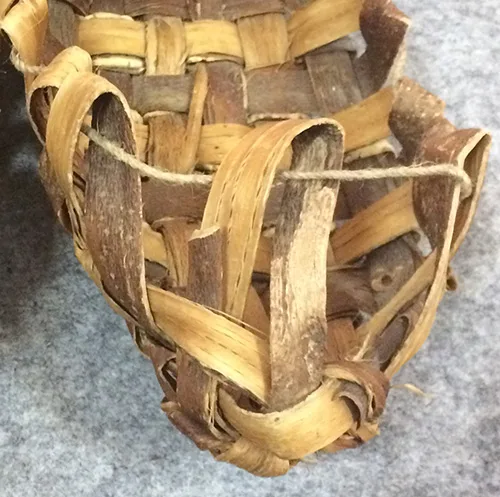
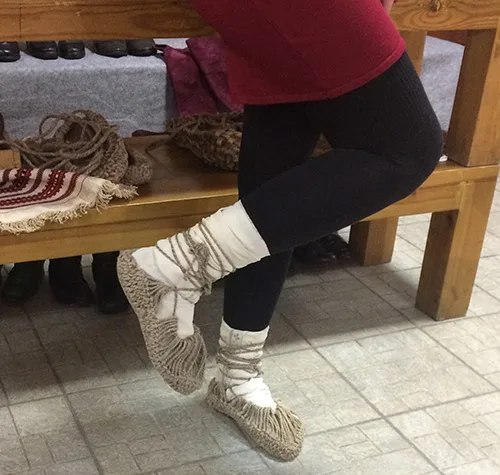
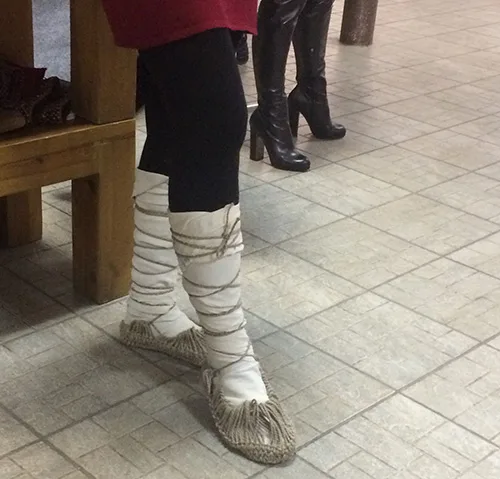
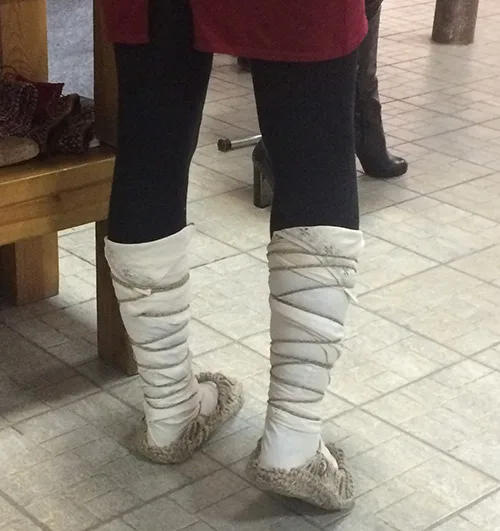
Ukrainian traditional footwear. Unisex bast shoes called “lychaky” made from birch bark. Zhytomyr region of Ukraine (northern part of the country); so-called “Polissia” (woodland) area; the end of the 20th century. Handmade. These shoes also have very long (longer than the human height) hemp cords that tie them to the foot. Such lychaky were very cheap and easy to make but they frayed quickly. Similar footwear can be found in Russia, Belarus, Finland, and Baltic countries.
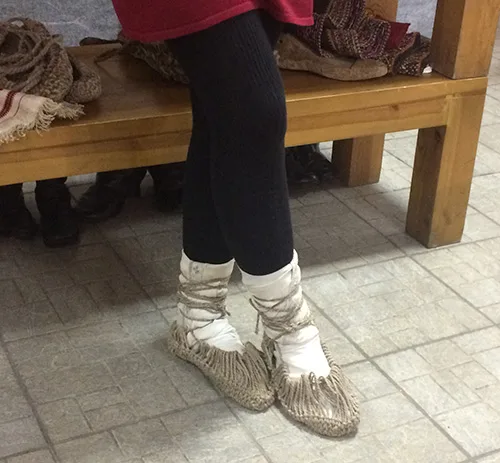
Lychaky were worn on top of the leg wrappings, of course. Because they are coarse and can hurt the skin.
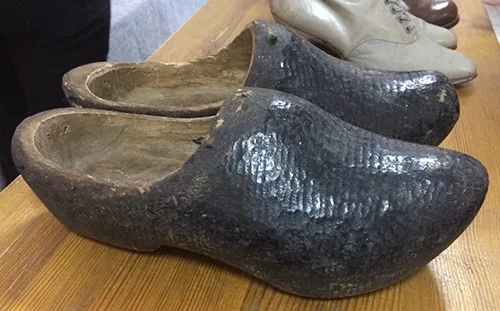
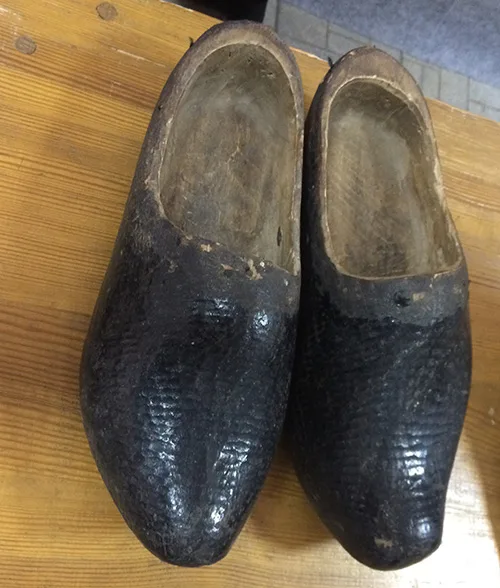
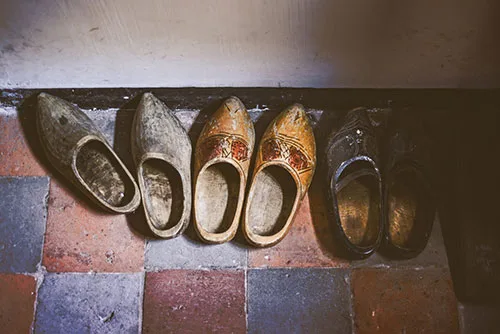
Unisex wooden shoes called “kaidany” or “stupaky”. Central Ukraine, mid-20th century. They are handmade from one whole piece of wood and painted in black. Footwear of the same shape and design can be found in Scandinavian countries – clogs or klompen.
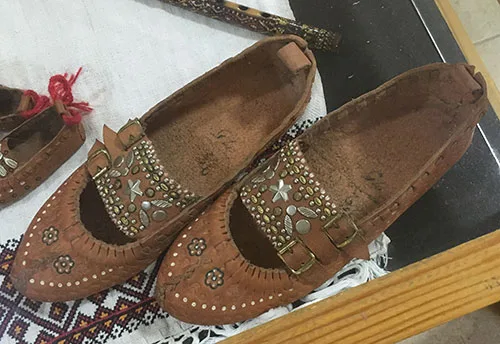
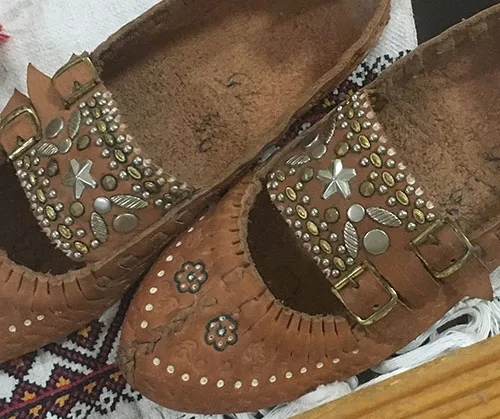
Women’s leather shoes called “postoly”. Velykyi Bereznyi district, Zakarpattia region (western Ukraine); so-called “Lemko” area where Lemkos ethnic group lives; the 1st half of the 20th century. Each shoe is made by hand from one whole piece of leather and adorned with metal eyelets and buckles as decoration. There are 3 leather straps on each shoe that help to keep it in place. Similar footwear was used in many countries of the Southeast Europe.
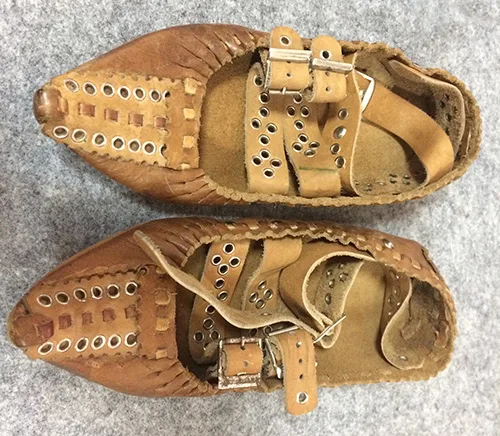
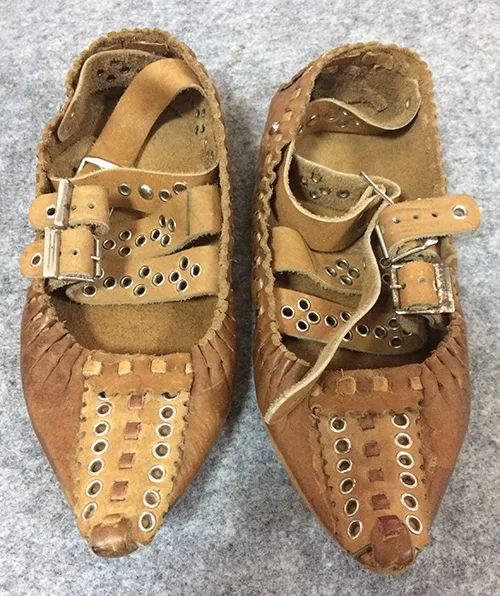
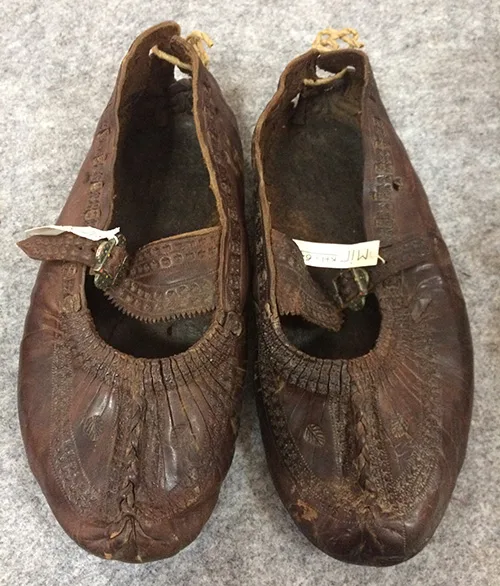
Female leather shoes called “postoly”. Bekhy village, Korosten district, Zhytomyr region (Northern Ukraine), the 2nd half of the 20th century. Handmade. Each shoe is made from one whole piece of leather and embellished with stamping on leather. Also, there is a leather strap with a brass buckle that ties the shoe to the foot. The back of each shoe is knit together with a cord.
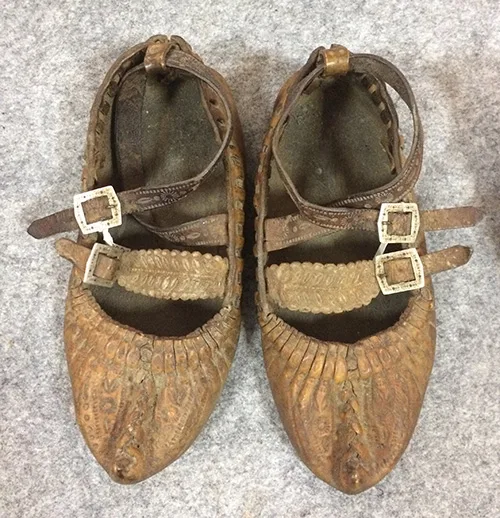
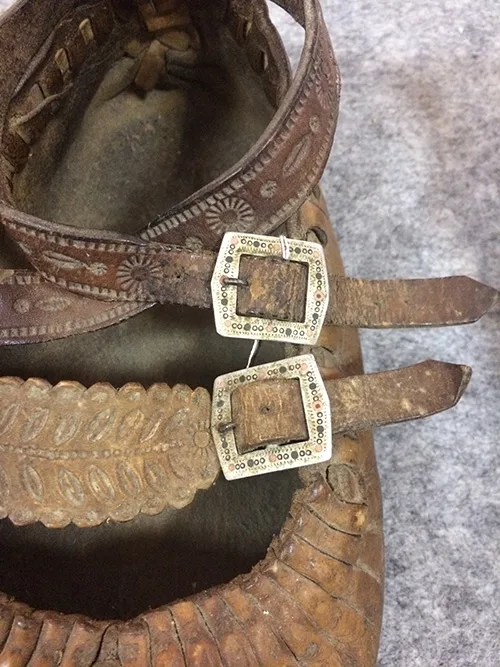
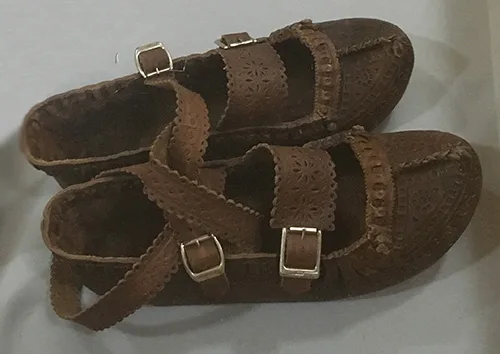
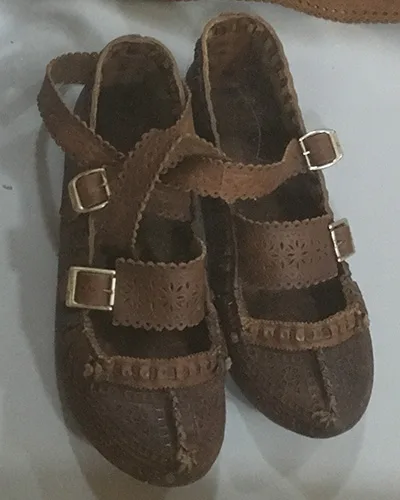
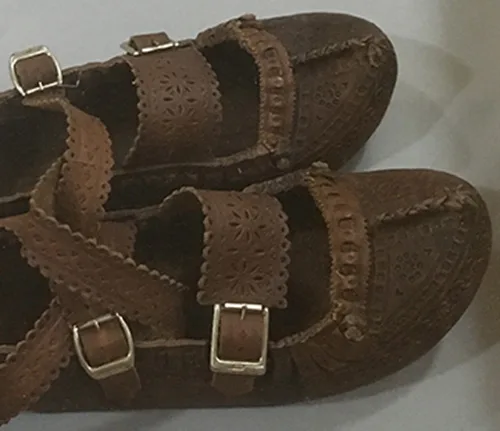
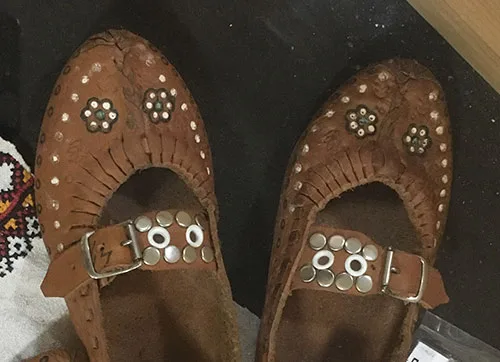
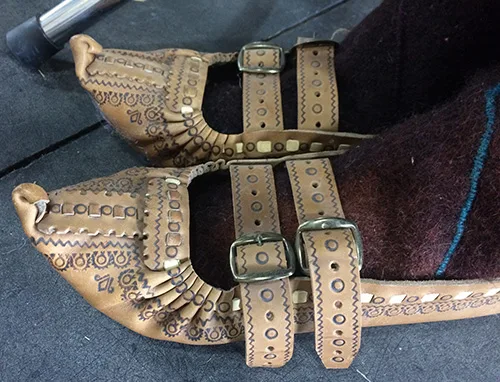
Women’s leather shoes called “postoly”. Ivano-Frankivsk region of Ukraine (western part of the country), the 1st half of the 20th century. Each shoe is made by hand from one whole piece of leather and adorned with stamping on leather and 2 ornate brass buckles. These shoes have pretty and rather modern-looking leather straps that encircle the ankle.
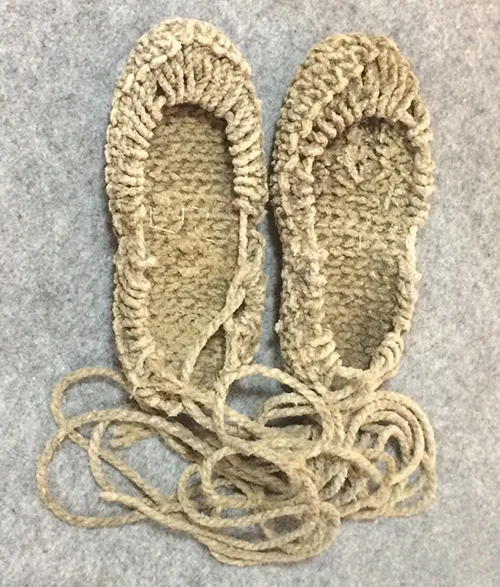
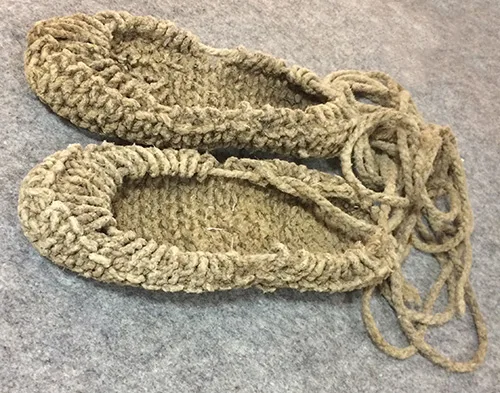
Unusual unisex shoes called “lychaky” made from coarse linen cord. Chernihiv region (northern Ukraine), the beginning of the 21st century. Handmade. These shoes have long cords which are used to tie the shoe to the foot
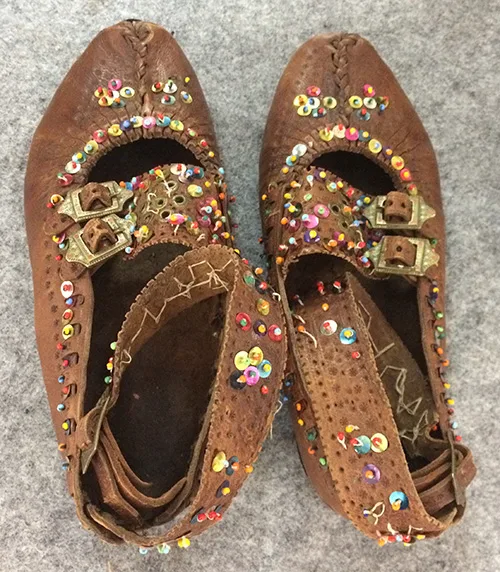
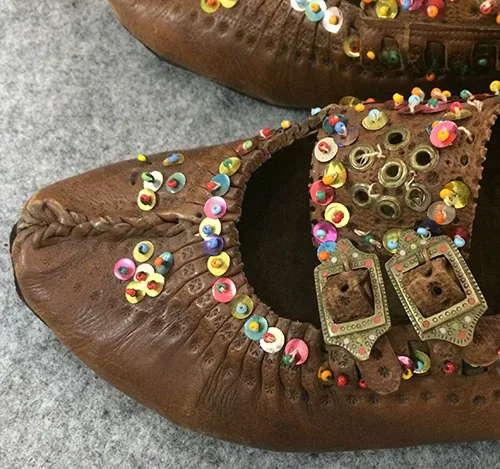
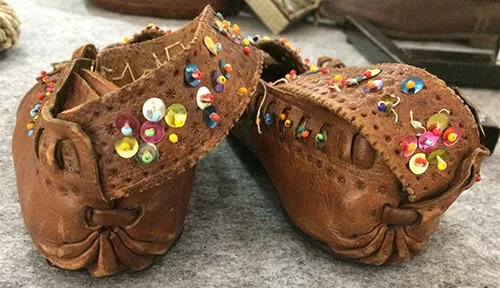
Female leather shoes called “postoly”. Ivano-Frankivsk region of Ukraine (western part of the country), the 2nd half of the 20th century. Each shoe is made by hand from one whole piece of leather and richly adorned with stamping on leather, colorful sequins, beading, metal decorations, and 3 brass buckles. These shoes look really festive.
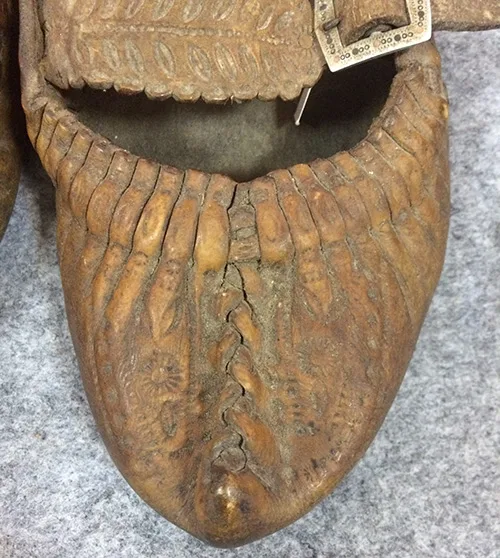
Unisex leather shoes called “postoly”. Kryvorivnia village, Verkhovyna district, Ivano-Frankivsk region (western Ukraine), the 1st half of the 20th century. Handmade. Each shoe is made from one whole piece of leather and adorned with stamping on leather and tiny metal nails on each wrinkle. You can also see that the back of postoly has holes and is usually knit together with a cord.
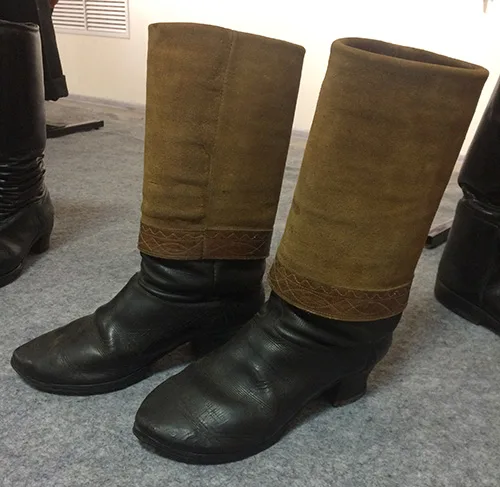
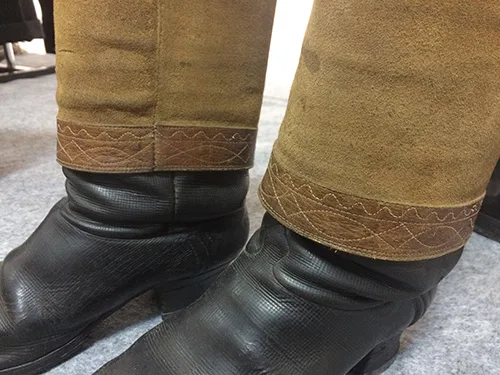
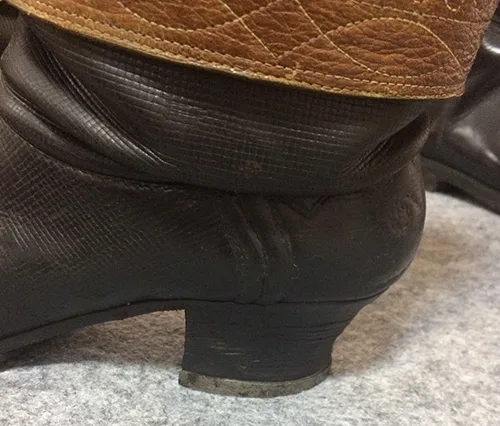
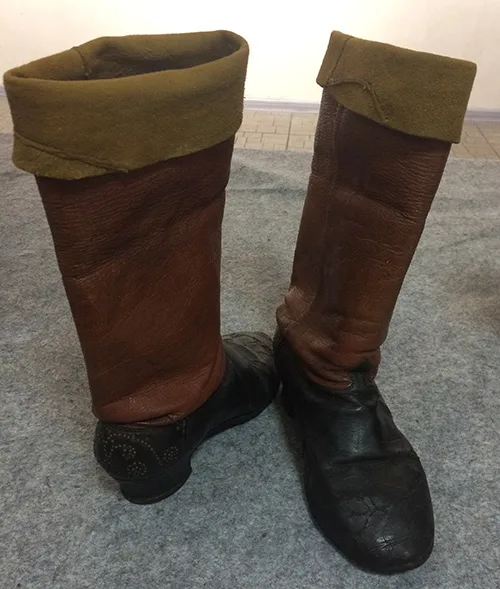
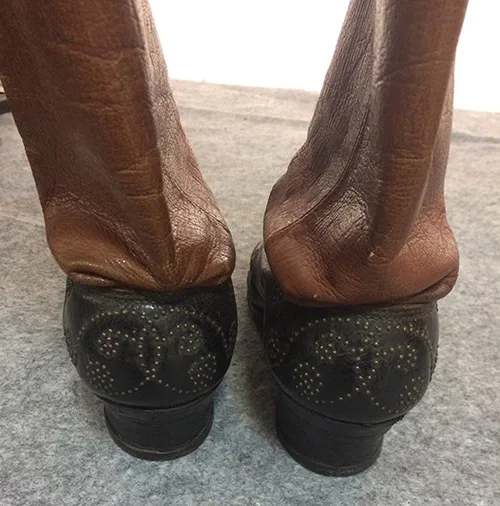
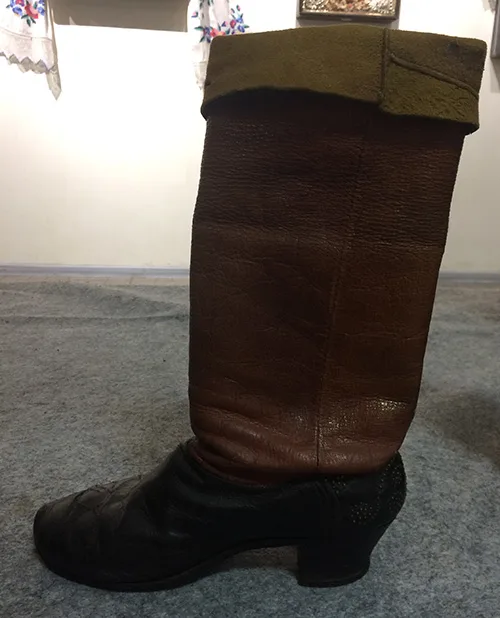
Female leather boots called “marigold boots” because they were duo colored. The end of the 19th century. Handmade. These boots were made from black and light-brown leather. The bootlegs are actually very high but folded up twice. There is a decorative sewn pattern on the bootlegs. The heels are made from pieces of leather glued together. Similar footwear was used in Poland.
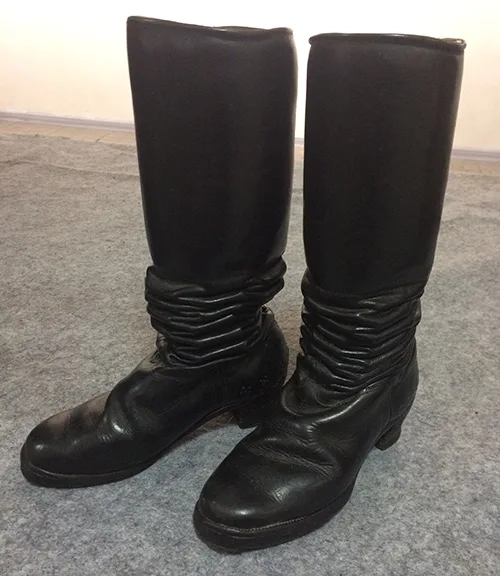
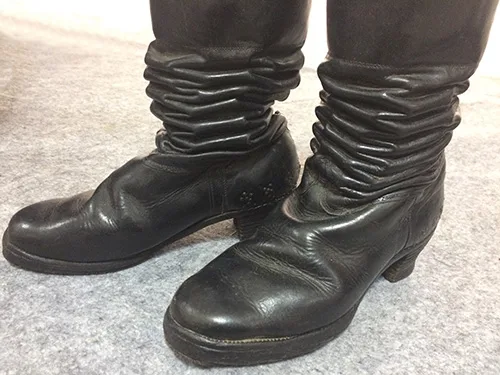
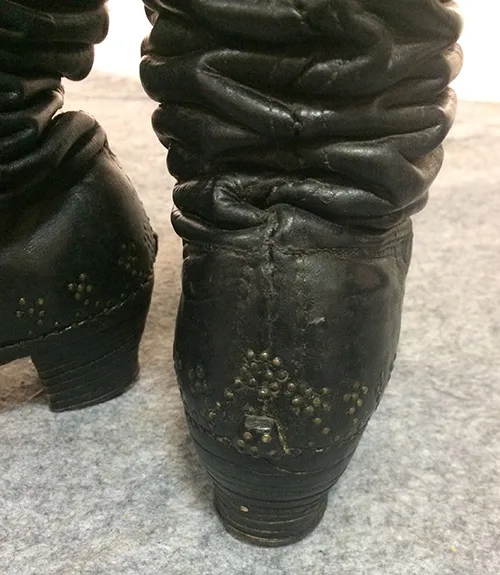
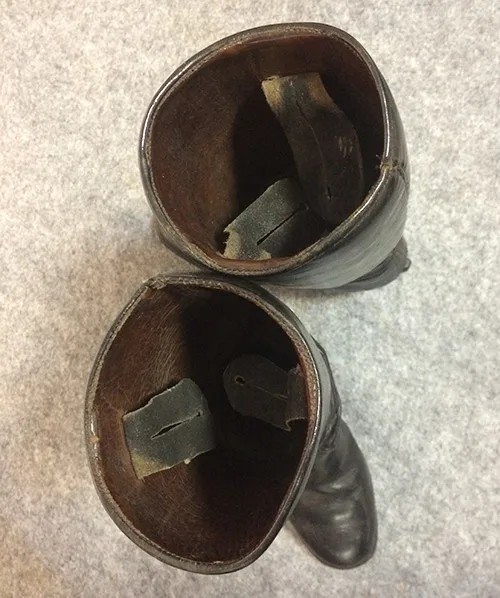
Women’s high leather boots called “riasovani boots” with an accordion folded, decorative shape of the bootlegs. Ivano-Frankivsk region (western Ukraine), the beginning of the 20th century. Handmade. Such an unusual shape of the bootleg has a decorative purpose and also it is comfortable to walk in them. But it is rather hard to take shoes off because of the accordion folding – and that’s why there is a special nib at the back. Also, the back of the boots is adorned with tiny brass nails.
Female leather boots called “marigold boots” because they were duo colored. Ukraine, the end of the 19th century. Handmade. These boots were made from black and light-brown leather. The bootlegs are high and rolled up once. There is a decorative pattern made from tiny brass nails on the back of the boots. The heels are made from pieces of leather glued together. The soles are attached to the upper with tiny wooden pegs. Similar footwear was used in Poland.
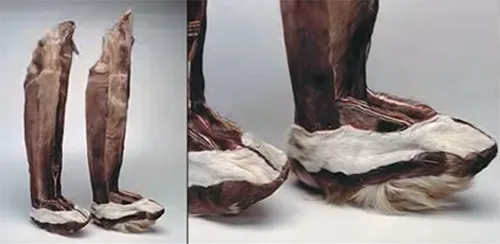
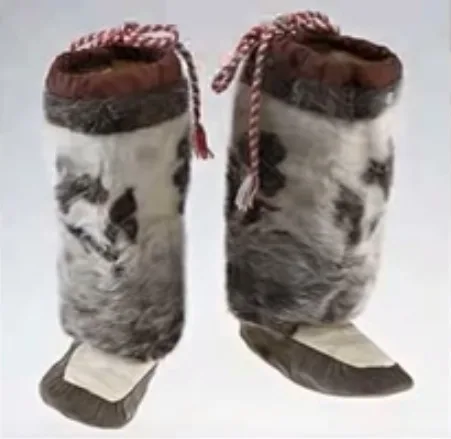
Inuit boots made from animal skin and fur, 1900-1930 and 1987. Such footwear helped people who lived in Greenland, Alaska, Canada, and Russia survive super cold winters.
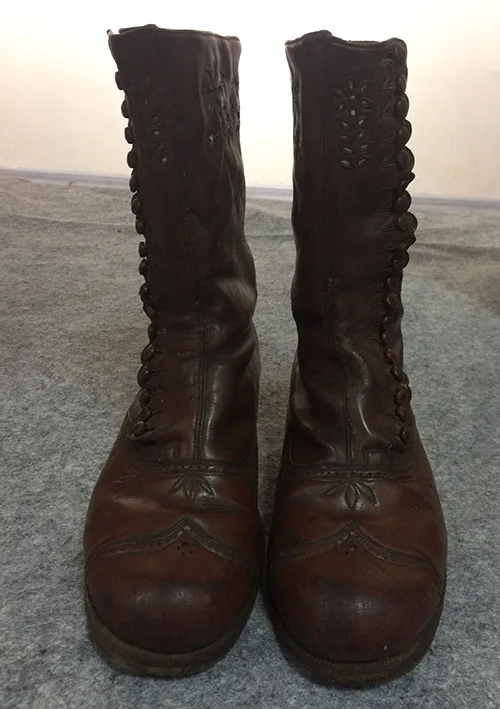
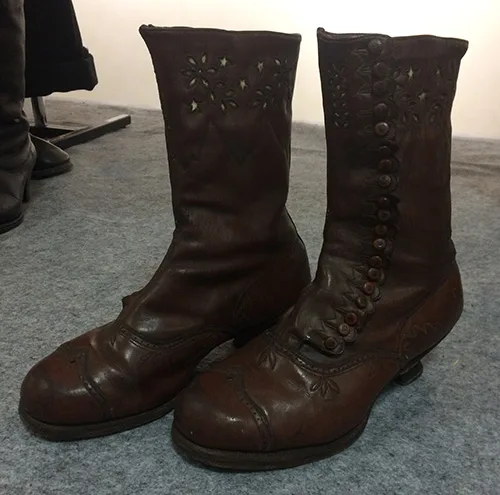
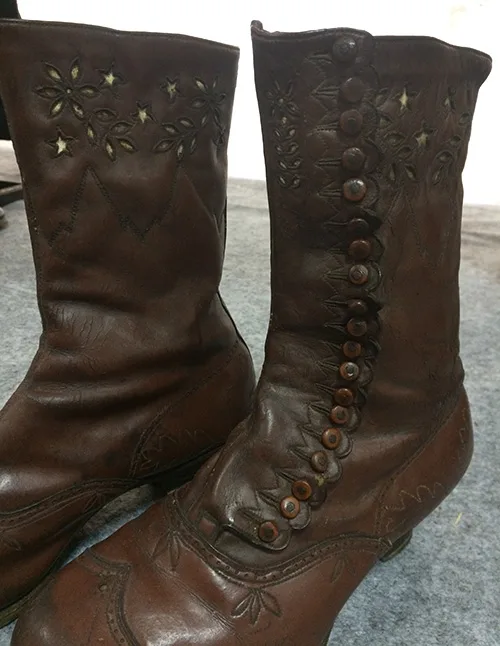
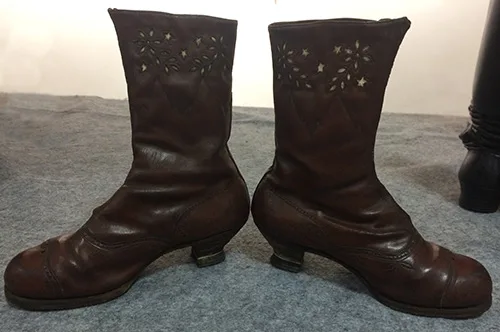
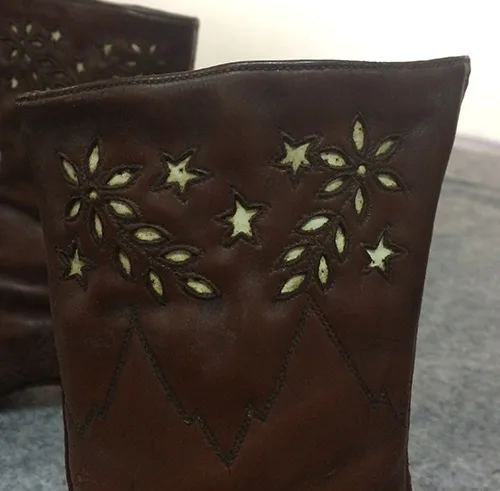
Female ornate leather shoes. Ivano-Frankivsk region (western Ukraine), the 1st half of the 20th century. Handmade. These boots are fastened with a help of 19 buttons. They are also embellished with cutting and decorative sewn patterns. The heels are made from pieces of leather glued together.
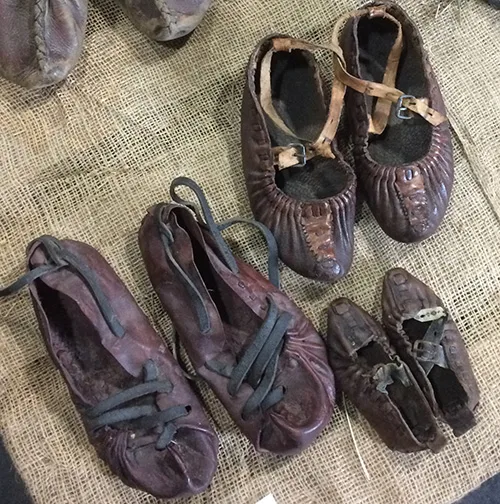
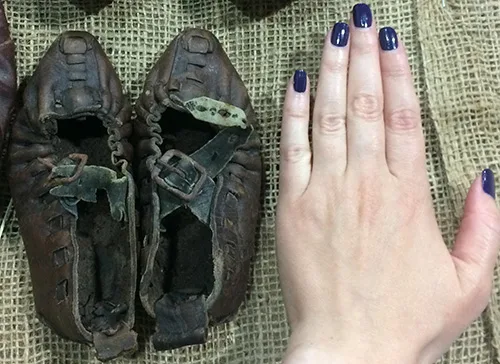
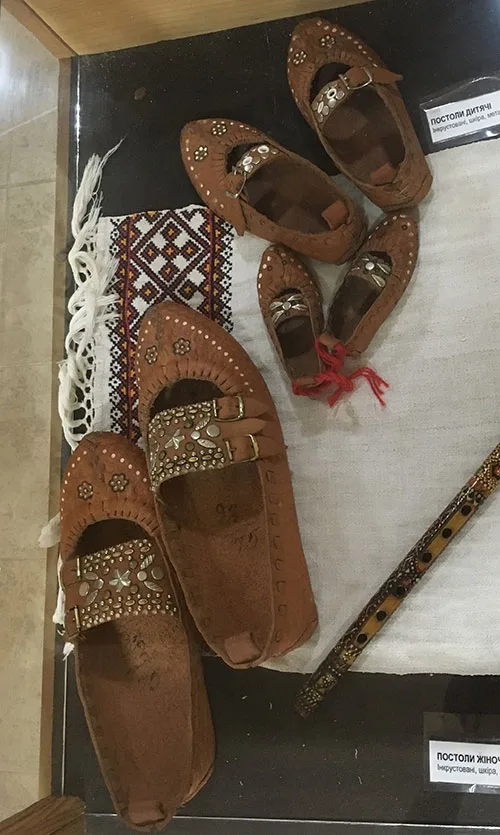
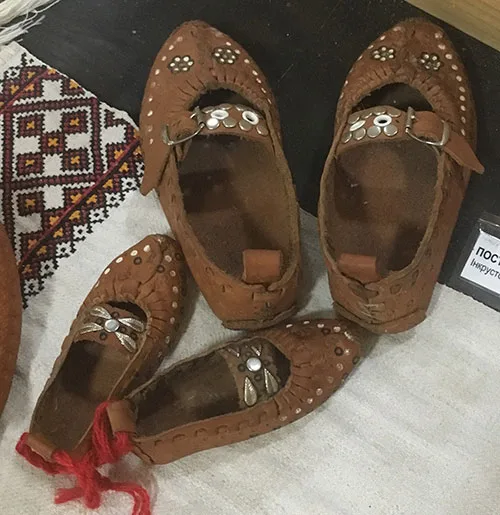
Female and kid leather shoes from Central Ukraine, the late 19th – early 20th century. They are called “postoly”. Such footwear traditionally was used in western and some central regions of the country.
These shoes are fastened with leather straps and buckles. The child’s shoes are tiny but made really accurately, just as the adults’ postoly.
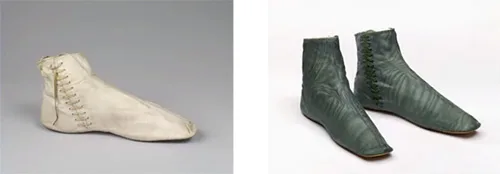
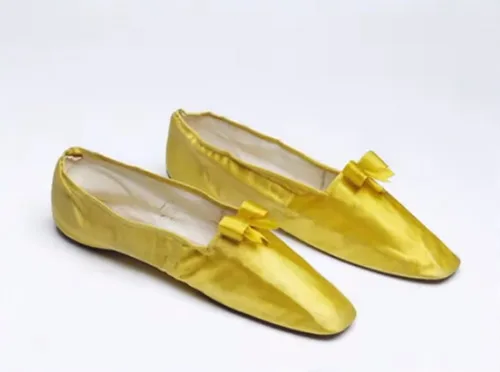
Vintage shoes from 1830s.
On the first two photos, are flat-heeled boots from The V&A. Both from between the 1830s-1840s. The white side-laced boot is made from a corded silk upper, while the dark pair of boots are made from watered silk uppers. Both have leather soles and are thought to possibly be made in France or Great Britain.
On the third photo, there are canary yellow silk-satin slippers in very good condition. They date between 1830-1835.
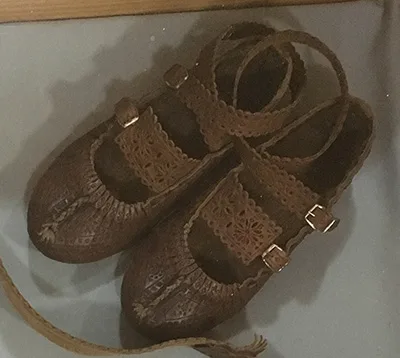
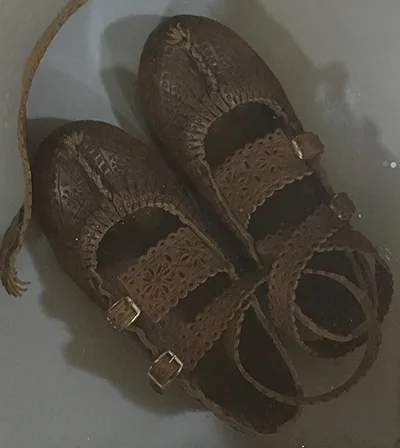
Kid folk shoes called “postoly” from Carpathian region of Ukraine. This is leather footwear, skillfully made and beautifully adorned. It is a modern replica of authentic shoes that were traditional for this region of Ukraine. They size is small but they are as festive and ornate as any adult postoly would be. As you see, these is a long leather strap that snakes around the ankle to keep a shoe in place. Marvelous piece
Traditional Ukrainian leather shoes called “postoly”, Western Ukraine (Carpathian region). These are men’s shoes; modern replica of authentic footwear. They have decorative leather straps with metal buckles used to tie the shoe to the foot and are adorned with stamping on leather. These footwear pieces are ornate and charming.
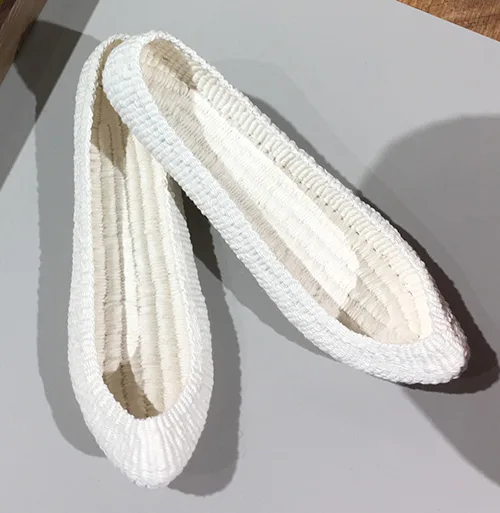
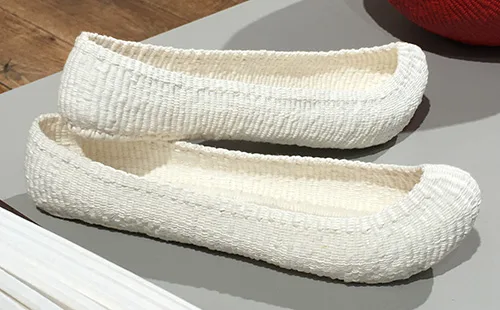
Delicate Korean traditional shoes made from hanji paper (special material produced from the inner bark of paper mulberry tree). They are so cute and look feminine. And also, these shoes are rather durable despite being made of paper.
Magnificent Ukrainian traditional shoes. They are from Carpathian region. This footwear is called “postoly”, they are made from fine leather and richly adorned with stamping, metal decorations, etc. These are female (made in 1975) and two pairs of kid folk shoes (1980).
Men’s leather shoes called “postoly” from western Ukraine (Carpathian region). They are worn with special wool leg wrappings (festive ones are decorated with embroidery on the upper edge). This footwear is embellished with cutting and stamping.
Scandinavian clogs or klompen – traditional wooden shoes. Such footwear was used in the Netherlands, Sweden, Norway, etc. These shoes are worn, so it’s obvious they were in use for a long time.
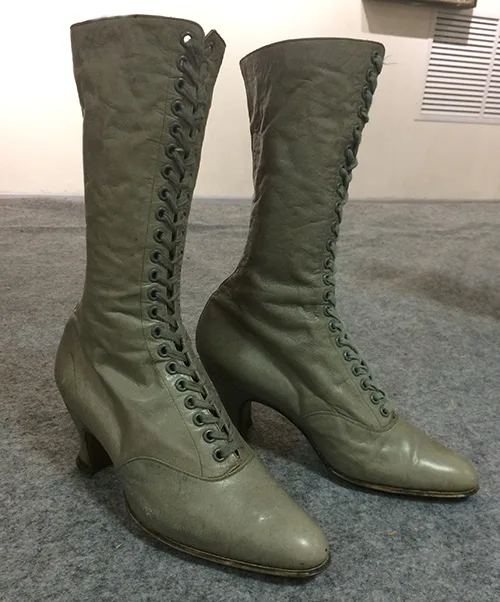
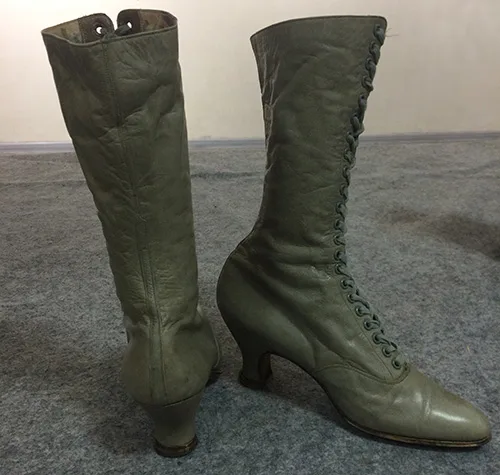
Elegant women’s high leather laced-up shoes from Ukraine, 1936. Industrial mass production. Their color is unusual gray-green, including the matching laces. They have a high lacing and elegant heels. These shoes look pretty modern.
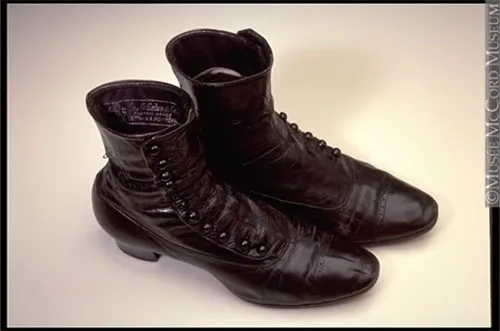
Vintage women’s boots by Canadian footwear manufacturer George G. Gales & Co., about 1900. They’re stored now in the McCord Museum. Look how cute the buttons are!
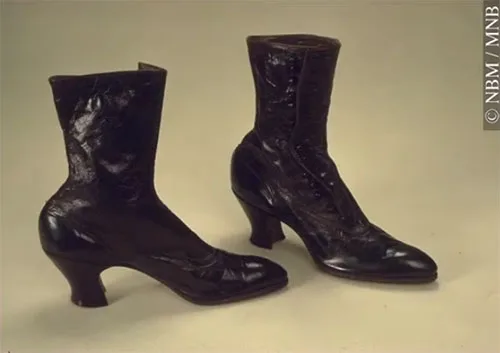
According to McCord Museum, in 1890 in Canada, the production of shoes increased to more than 2.5 million pairs. Montreal then occupied 60% of the Canadian footwear market. About 1888, a working-class family spent about 60-70% of its income on food, 21% on rent, and 11% on fuel. The remaining money – what there was of it – was used to buy clothing and shoes.
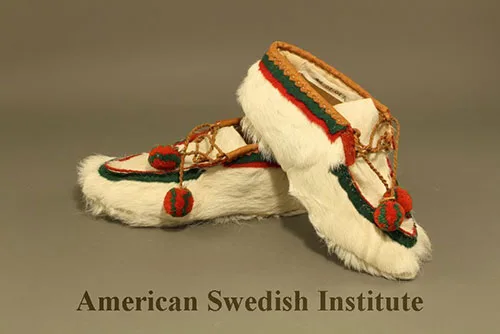
Vintage Swedish traditional reindeer shoes. They’re made from reindeer skin and adorned with colorful woolen cloth and yarn pompons. The shoes look so homey and comfortable. And they’re tied with a cord to keep them in place.
From American Swedish Institute
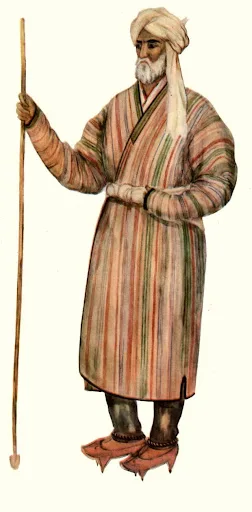
Curious Tajik shoes called “kafshi chubin” – elaborate wooden clogs on 3 legs. The toes of this footwear are up-turned and the sole has not one but three sort of heels – 1 at the back and 2 at the front of the foot.
sofiya
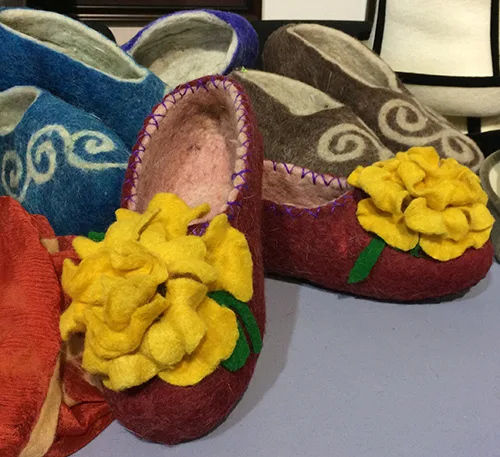
Kyrgyz felt footwear. Beautiful shoes made of wool. Handmade by artisans from Kyrgyzstan.
Footwear.jpg
wow, very colorful! I bet they are super warm and perfect for wearing at home. Do you know where I can buy online smth like it? I want to get couple for my homes in Bavaria, would be really cozy.