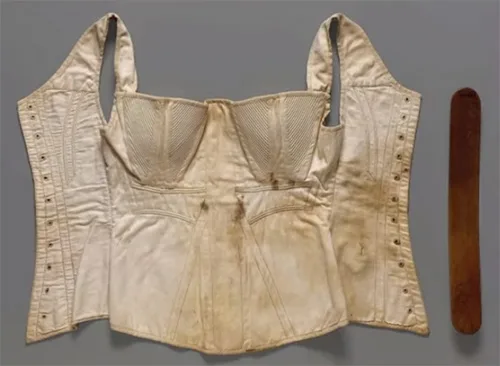
Here is a cotton sateen American corset from about 1830 from The Museum of Fine Arts in Boston. It's rare that the busk, which is pictured on the right, is still with the corset.
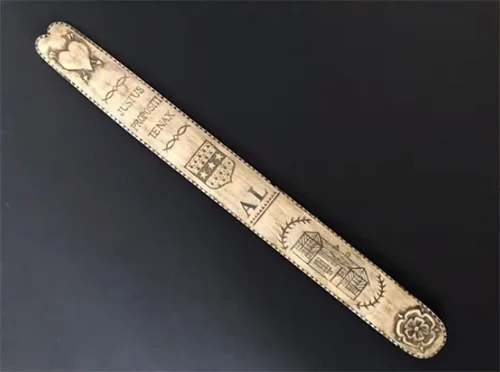
Such wooden busks, but engraved with names, dates, patterns, etc, were popular gifts from men to their sweethearts, since the busk would have been worn close to the body.
Ann-Walker35.jpg
Like this modern one made for the “Gentleman Jack” TV series. It has symbols “AL”, which mean “Anne Lister”, the name of main character.
Regal ruff collars - a handy accessory.
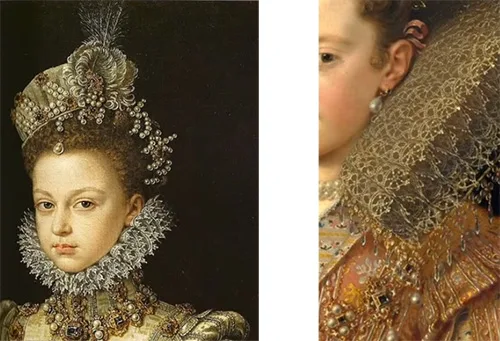
On the left, a Spanish Renaissance painting of Infanta Isabel Clara Eugenia by Alonso Sanchez Coello from 1579. The model wears a beautiful ruff, an item that was designed to keep the gowns clean, as the starched ruff could be laundered in between wearing.
On the right, is a close-up and you can see that the ruff is formed by pleating the lace in a “figure 8” formation. The technique is called “cartridge pleating” and was a popular technique during the Elizabethan period.
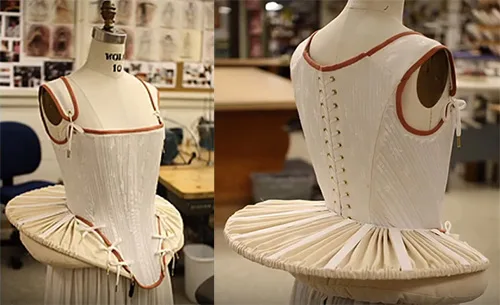
Reproductions of a wheel farthingale and a corset. They were used in historical series “Reign”. The farthingale is actually supported by the bum roll. And British Queen Elizabeth I, popularized that look and actually took it to extreme measures.
Female underpinnings from the 19th century. You can see a set of sleeve supports from 1828 from the Met. Sleeve supports were down-filled pillows but chintz with ribs of wire or cane was also used to make somewhat airier lantern-light forms. And this set are made from cotton and whale baleen.
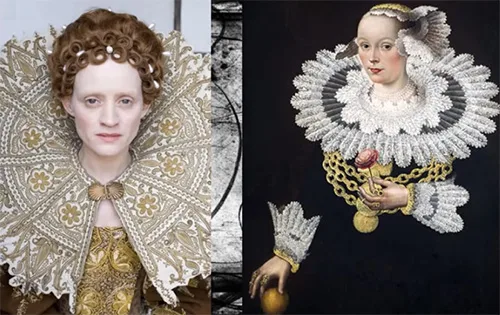
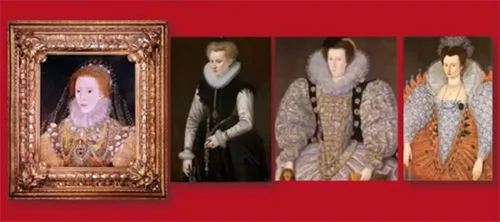
Elizabethan ruff. On the left, is the collar from the BBC production of “The Virgin Queen”. And on the right, this is Michael Conrad Hirt’s portrait from 1642. The headpiece also shares a close likeness. In the third picture, you can see various Elizabethan ruffs on old portraits.
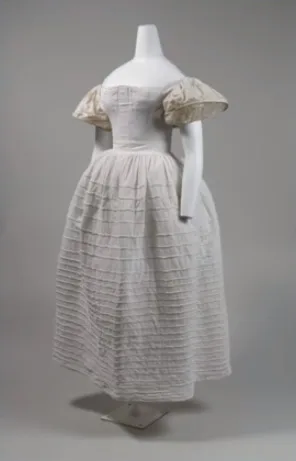
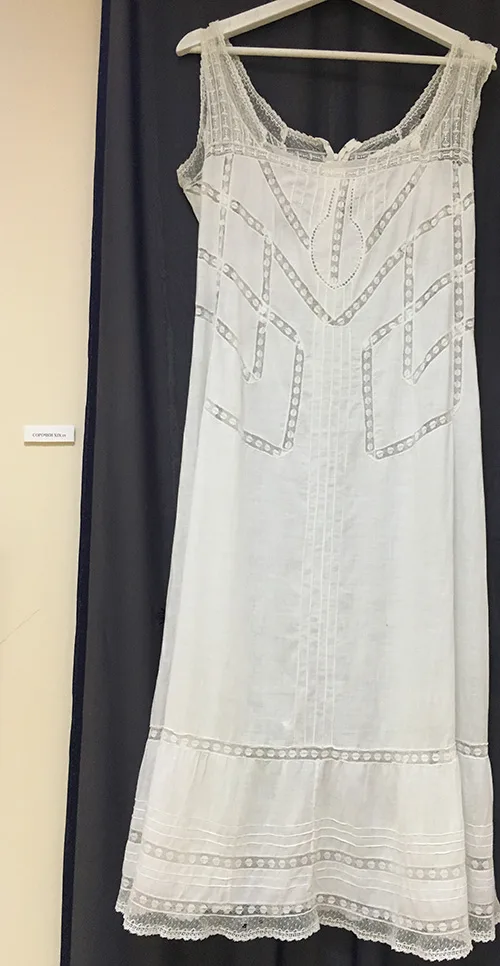
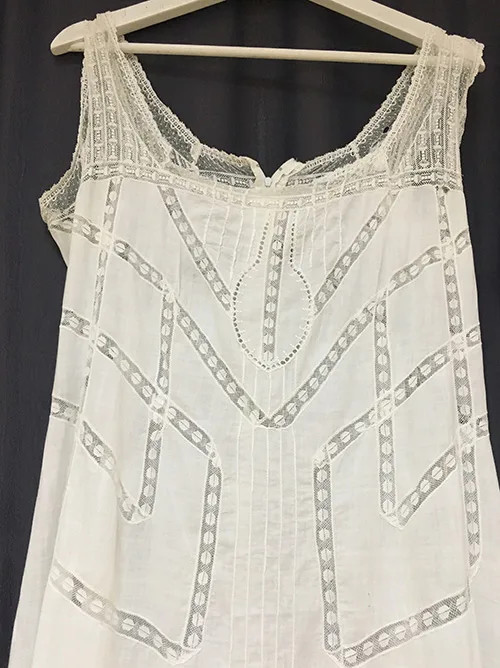
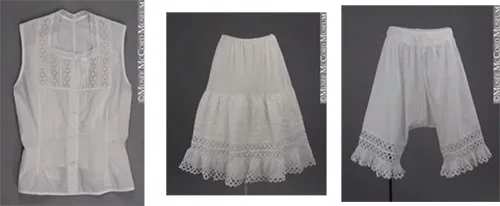
Female underpinnings, mid to late 19th century. Elegant and prettily embellished underwear – undershirt, petticoat, and bloomers. From the McCord Museum.
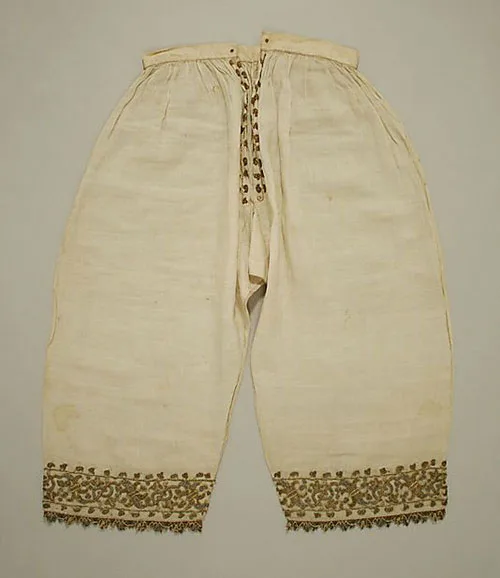
Vintage underwear piece, the late 1500s. Illustration from the book “Queen Elizabeth's Wardrobe Unlock'd” by Janet Arnold. These are women’s linen drawers from the late 16th century adorned with silk, gold, and silver embroidery. From The Met collection.
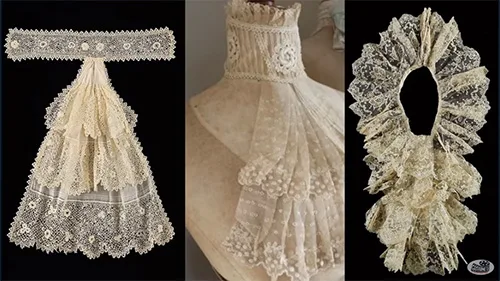
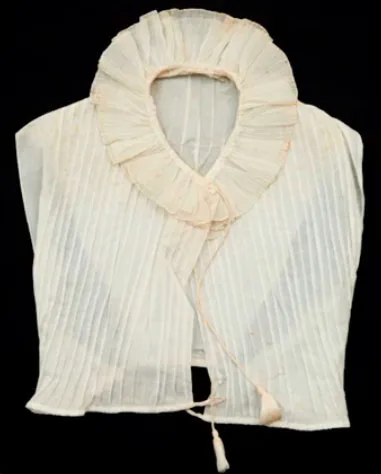
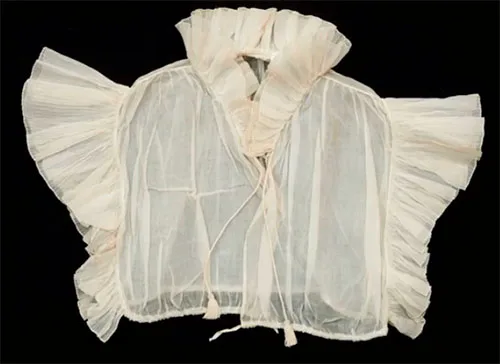
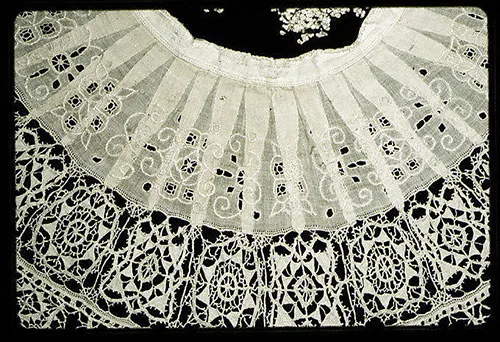
Delicate and sheer vintage ruff collars, the 19th century. They were not stiff, as you would expect from a ruff collar, and were attached to a chemisette worn over a dress. So, it’s more of a top with a collar than just a collar.
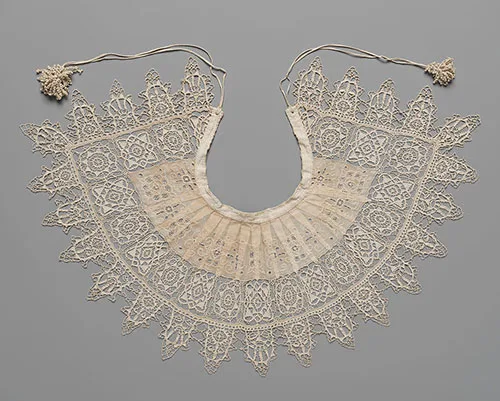
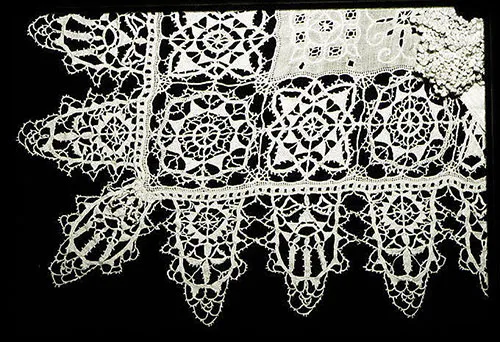
Lace standing collar made using Italian punto in aria technique of lacemaking. Possibly French, about 1610-1620. From The Met Museum. This collar is striking!