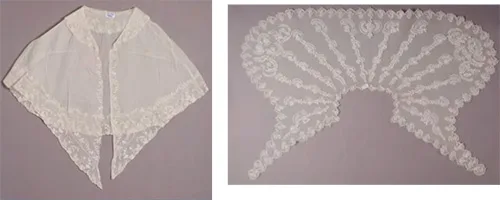
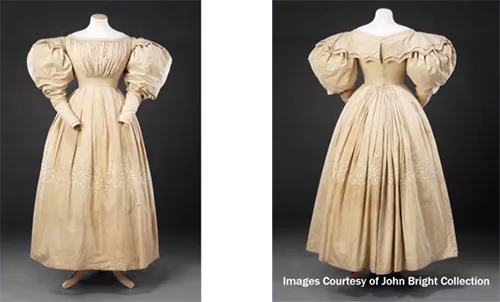
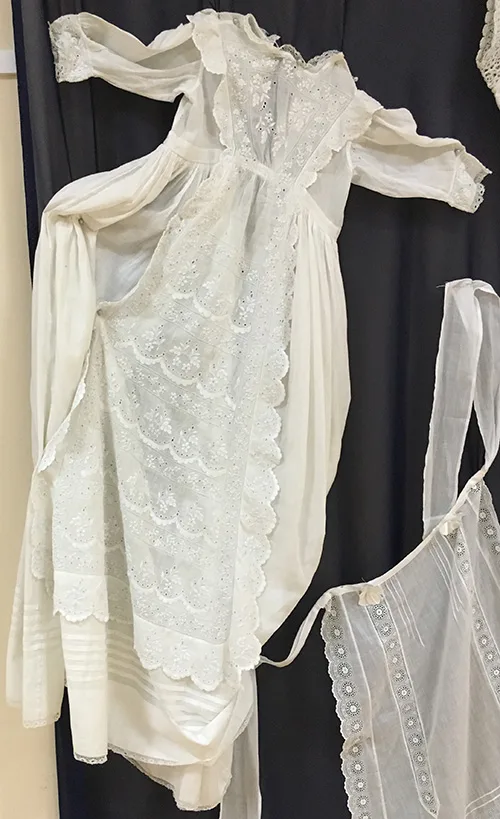
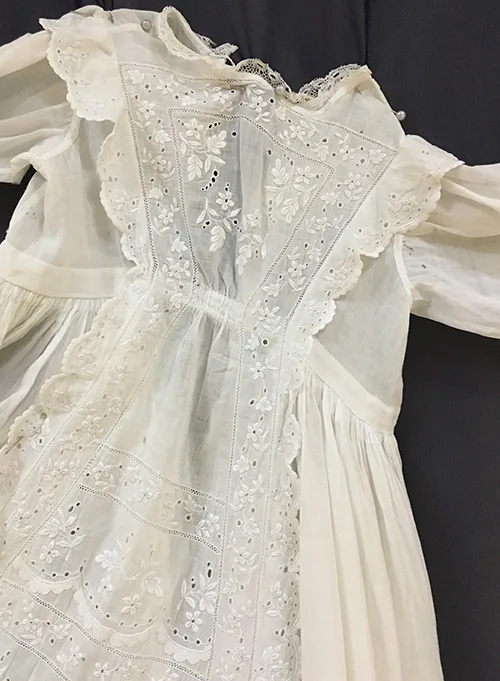
Mid-19th-century pelerine fichus. Very delicate and pretty. These are from The Centraal Museum in the Netherlands.
The collar on the left dates between 1825-1875. It's made from embroidered cambric or batiste, a lightweight closely-woven white linen or cotton fabric.
And the embroidered tulle collar on the right dates between 1830-1835.
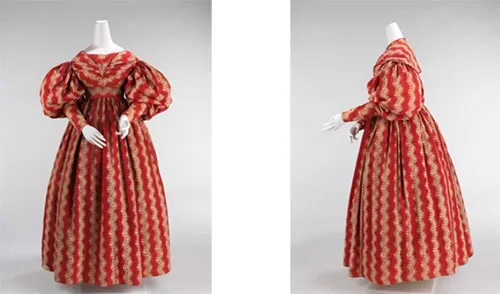
Cotton dress with gigot sleeves from America. It is displayed at The Met and dates 1832-1835. “Gigot” is a French word for “leg”. This style of sleeve is also called “leg ‘o’ mutton” or “leg of mutton” because of its resemblance to a mutton leg. And according to The Met, gowns like this were popular from the 1830s through 1836, when they began to diminish to the tightly fitted sleeves of the following period.
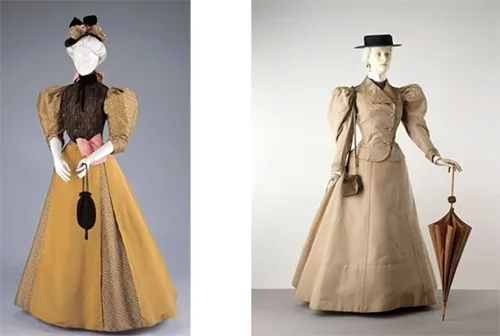
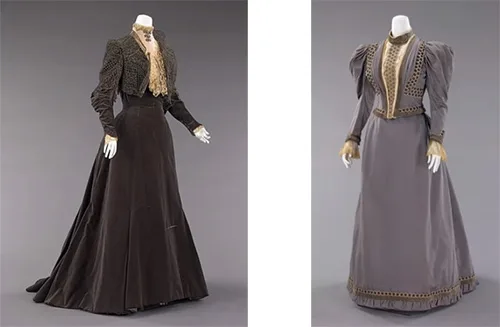
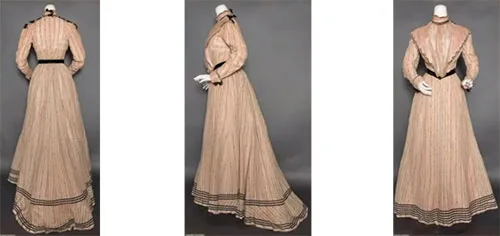
Two late 1880s lady’s walking suits with a similar silhouette. The afternoon ensemble on the left in golden tones consists of a bodice and skirt by American designer HS Poco, it’s from 1896-1897. It is constructed with silk sequins and metallic thread. While the suit on the right is from 1895, it was made by Parisian designer Jacques Doucet. This suit is linen, with the collar and cuffs embroidered with silk cord, elastic stays are attached to the inside of the skirt to control the fullness.
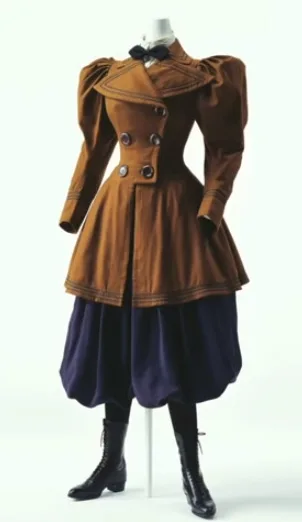
American tailored jacket from 1895. It is double-breasted with an oversized buttons and leg’o’mutton sleeves. This outfit is the Victorian equivalent of a sporting outfit, in this case, used for cycling.
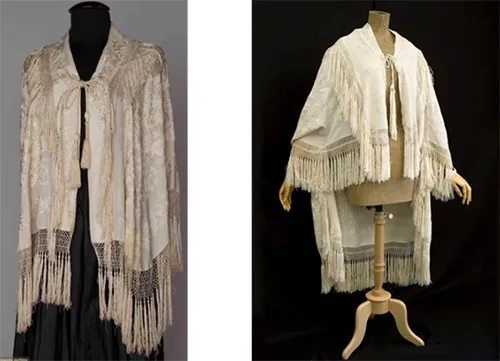
Two cloaks fashioned from large shawls. Such garments were popular in the late Victorian period from until the 1920s.
The cloak on the left is from a private collection; it is a Chinese silk cape from the 1880s. The cape is made from embroidered cream silk, featuring a fitted back with a large knotted and tasseled medallion, and it's edged with knotted French silk.
On the right, is a similar hand-embroidered silk cloak from about 1890-1900. The cape is also bordered all around with hand-knotted silk fringe.
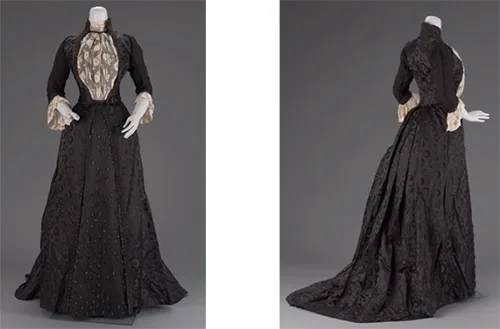
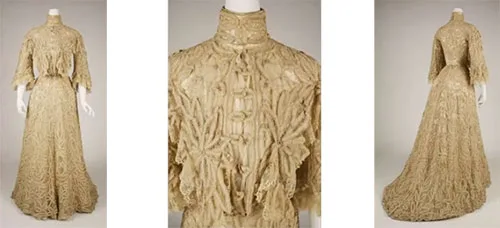
French gown from the late 19th century. It is from 1889 and created from silk satin damask, silk plain chiffon, silk appliquéd lace, and glass beads. The dress is exhibited in The Metropolitan Museum of Art in New York City. It’s designed by Emile Pingat.
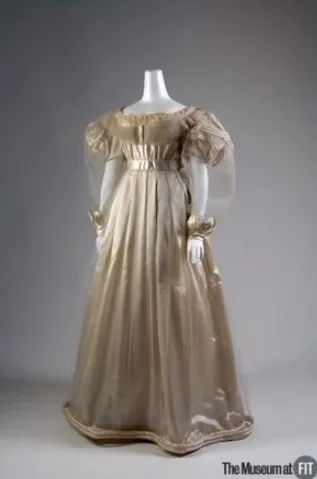
This is a 19th-century cream satin evening gown from Russia, 1832. It has detachable lightweight tulle oversleeves. This dress is from The Museum at FIT.
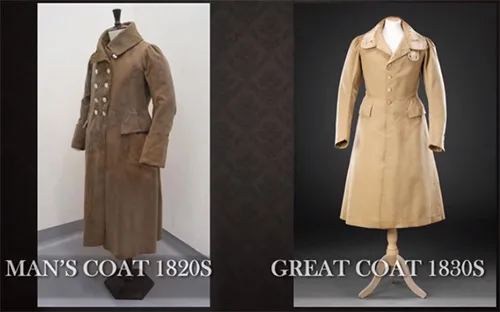
Two gentlemen’s overcoats from the early 19th-century. On the left, is an example of an 1820s men’s overcoat after conservation by the Scottish Conservation Studio; on the right, is an 1830s great coat from the John Bright collection.
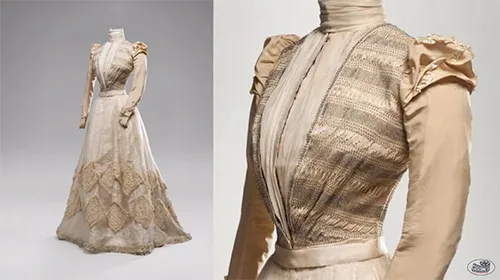
Vintage dress from the late 19th century. Exquisite Italian gown from 1890 created from Texas silk, bobbin lace, silk needlepoint, and beads. Gorgeous!
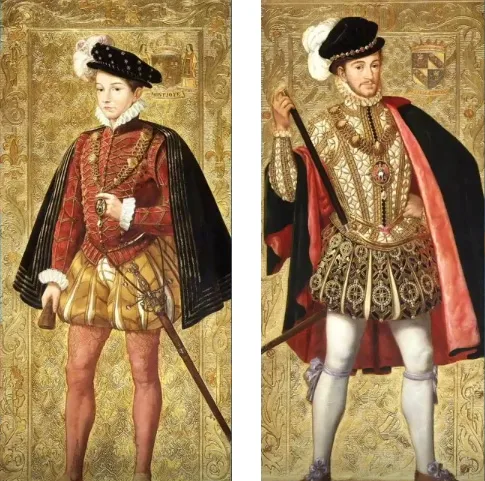
Pumpkin pants or trunk hose – short male pants. In these two 19th-century paintings, are Francis II and Lord Darnley. The portraits are by British painter Richard Burchett. Both men are wearing pumpkin pants, the proper term is “trunk hose”, with their doublets or jackets.
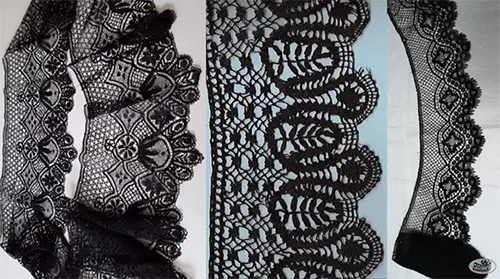
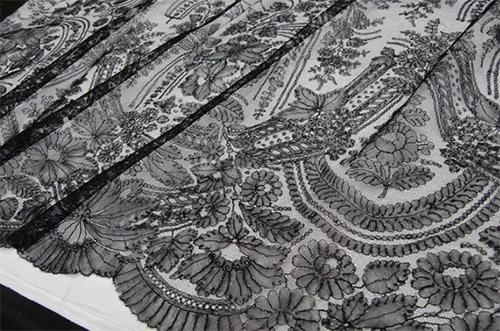
Samples of 19th-century lace. On the left, are two samples of vintage Le Puy silk guipure bobbin lace. On the right, Maltese lace.
Silk guipure was developed in the town of Le Puy, France, famous for their bobbin lace.
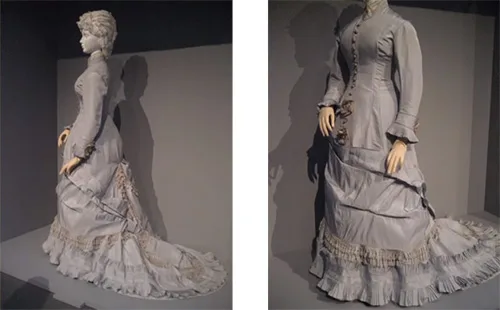
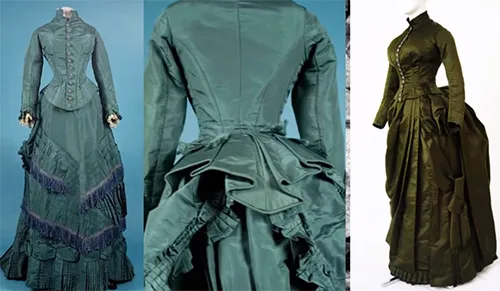
Two vintage silk bustle gowns from the Victorian era. The sage green visiting gown on the left dates from the early 1880s, while the leaf green gown on the right is from about 1886. The colors are perfect and the cuts flattering.
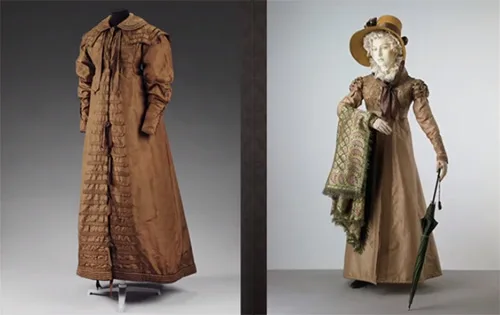
19th-century female outerwear – English pelisse coats. The V&A in London. On the left, is a pelisse coat and collar made from brown silk taffeta from about 1818; on the right, is a silk pelisse lined with silk satin and cotton, and it's made circa 1820.
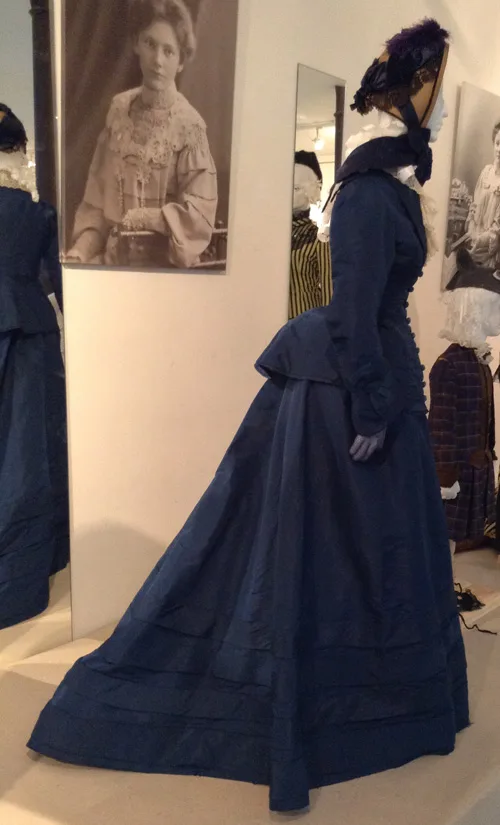
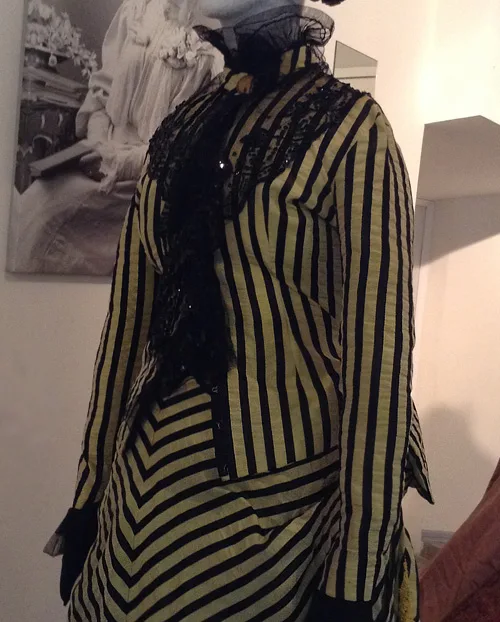
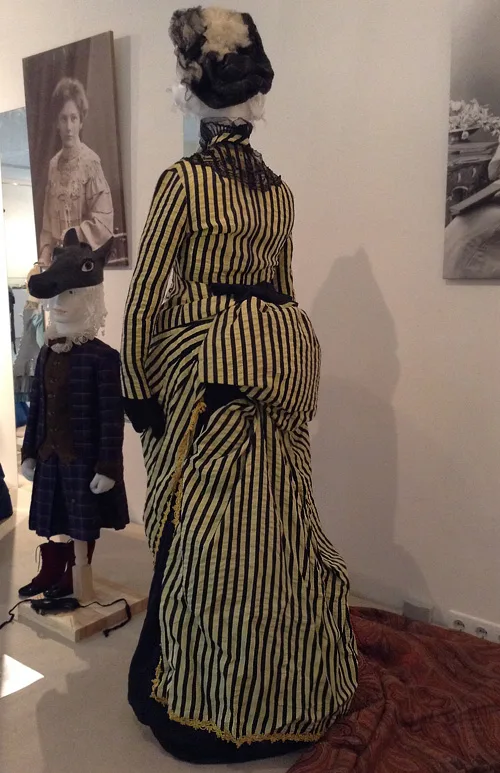
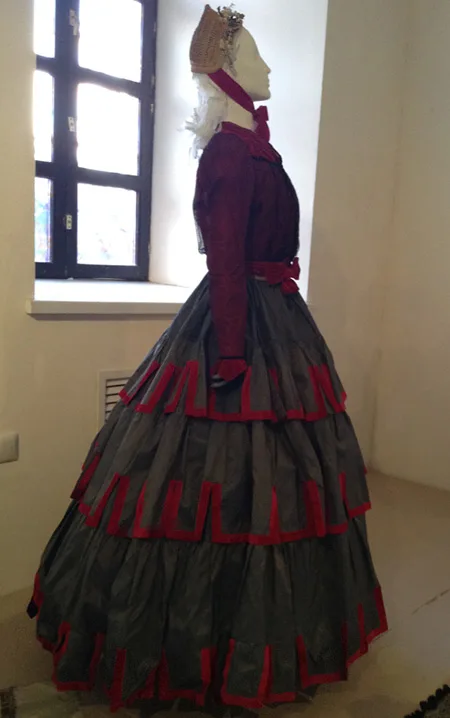
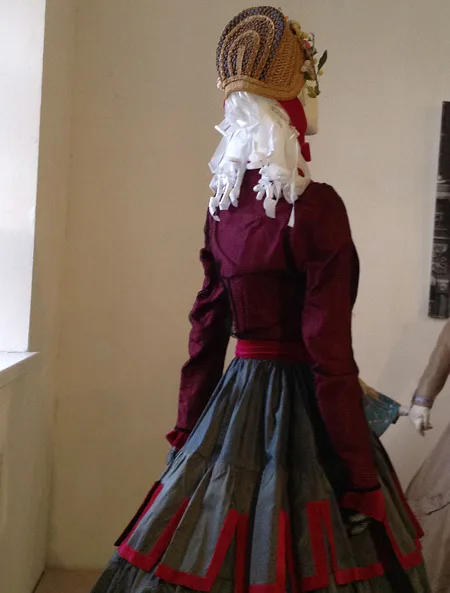
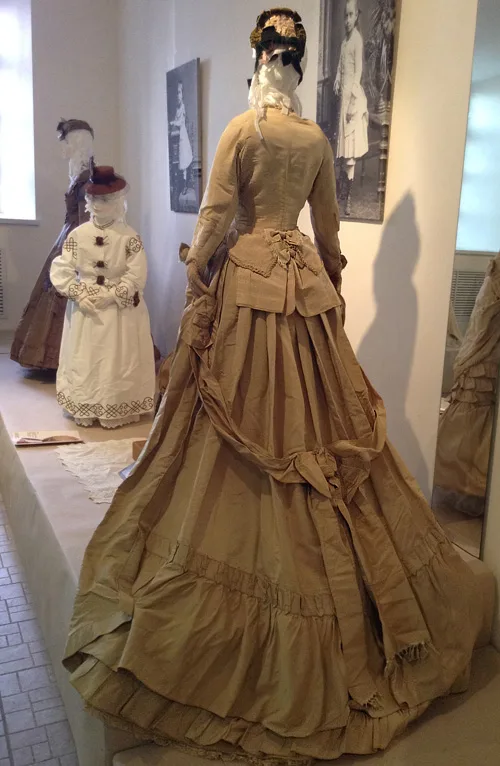
Female costume for walking or visiting state institutions, Holland (the Netherlands), 1870-1875. Long skirt with bustle; tight-fitting bodice; straw hat with ostrich feathers and lacy underside tied under the chin with a long satin ribbon.
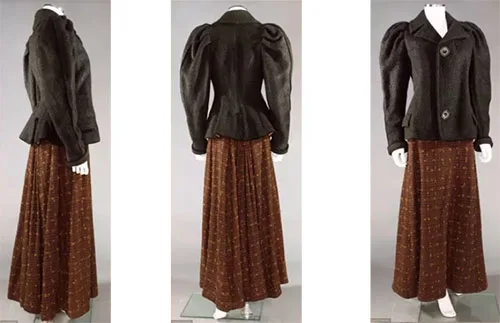
Vintage American set of clothing. Jacket and skirt from Augusta auctions, circa 1895. The jacket has typical leg-o-mutton sleeves fashionable at the time.
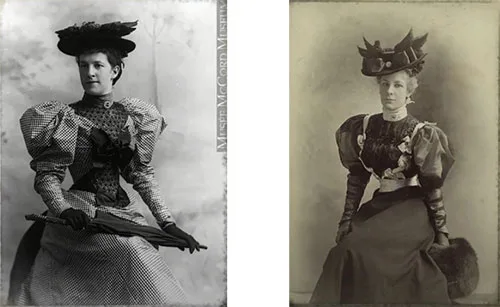
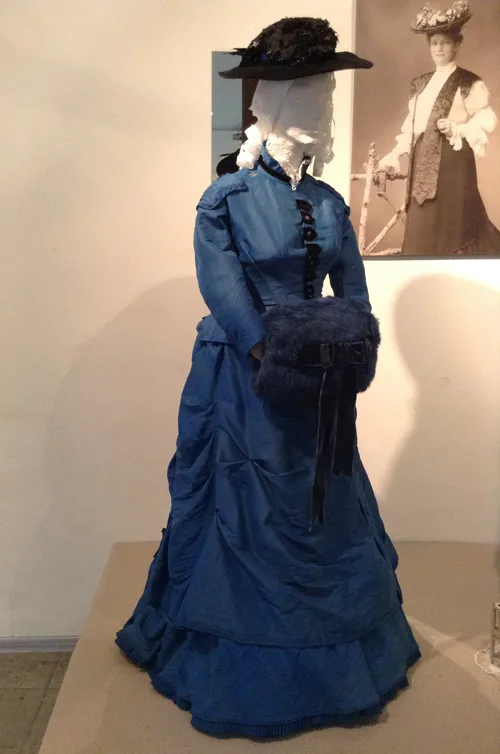
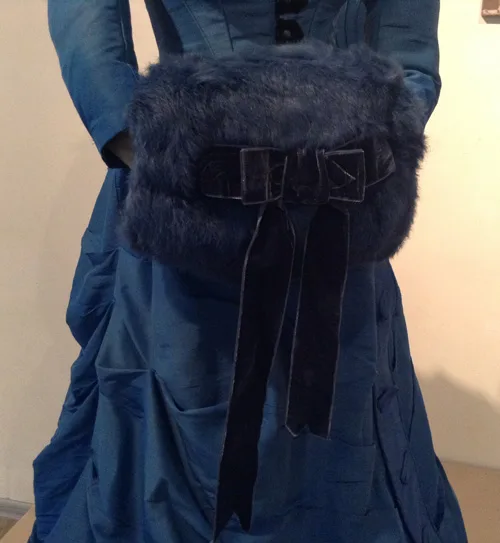
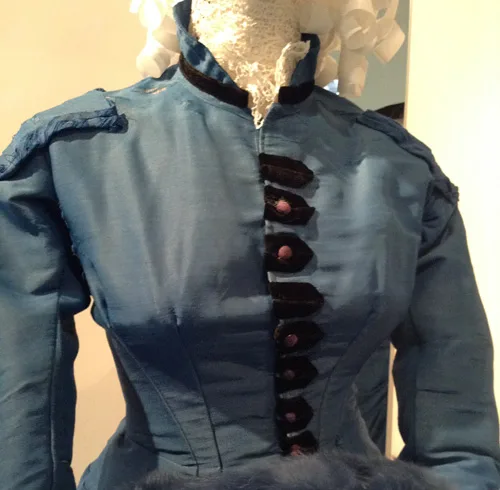
Women’s walking suit, Holland (the Netherlands), 1886. Its fur muff is a wonderful accessory. The attire consists of long dress with tight-fitting top on corset and wide skirt on crinoline; fur muff with velvet ribbon; wide-brimmed hat decorated with sequins and artificial flowers.
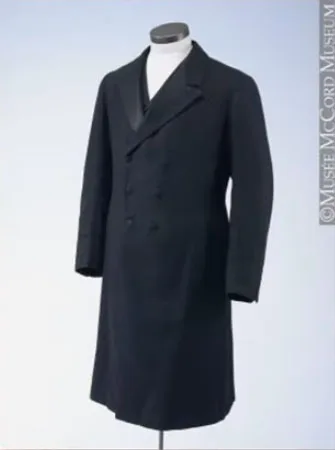
At the end of the 19th century, young men started to wear morning and frock coats instead of sack coats as everyday business wear. Here’s an example of such a frock coat with a waistcoat underneath, 1875-1900.
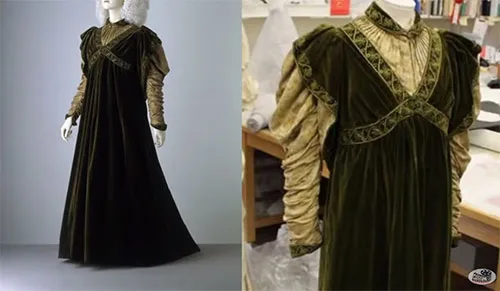
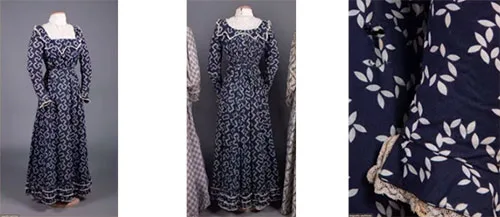
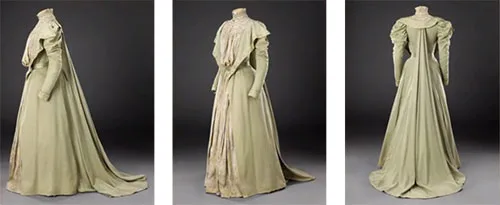
19th-century Aesthetic dress design. Tea gown, late 1890s. According to The John Bright Collection, this style is based on medieval or classical dress, loose in appearance, made from fine soft fabrics in subtle colors, and embroidered in distinctive stylized designs.
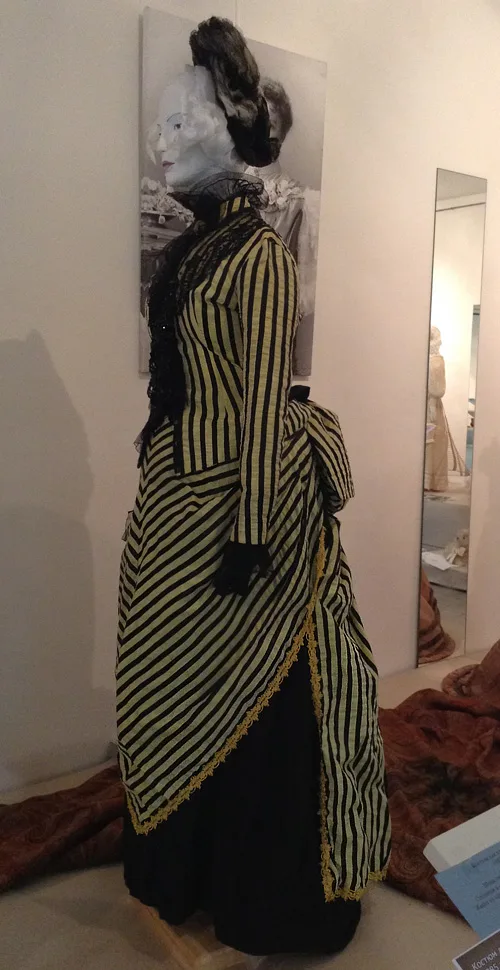
Extravagant vintage walking suit, Germany, 1886. Skirt of beautiful design with large bow on the back, black petticoat, embellished bodice, gloves, and hat. The clothes are made from silk. The bodice has a delicate lace collar and front.
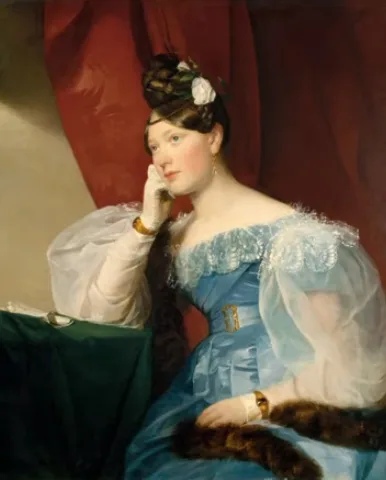
Portrait of countess Julie von Woyna from 1832 by Austrian painter Friedrich von Amerling. Her dress features huge and sheer gigot sleeves, also called leg-of-mutton sleeves.
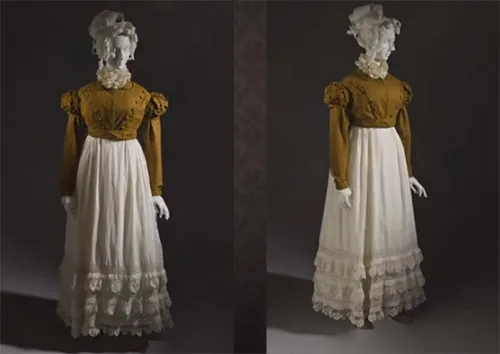
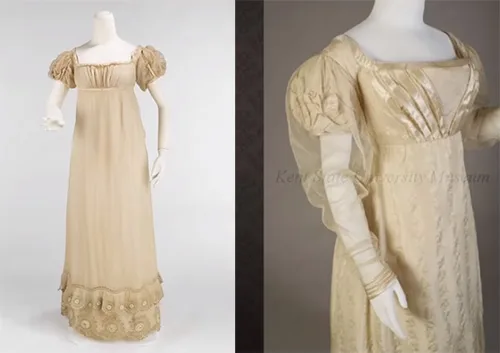
Regency-style gowns from early 1800s.
On the left, is a pretty cotton & silk dress from 1810. This style persisted until the 1820s, when the waist slowly lowered and the skirts became more bell-shaped.
On the right, you can see an ivory silk damask gown from about 1821. The Empire waistline was already beginning to drop.
These dresses are from the Kent State University Museum in Ohio.
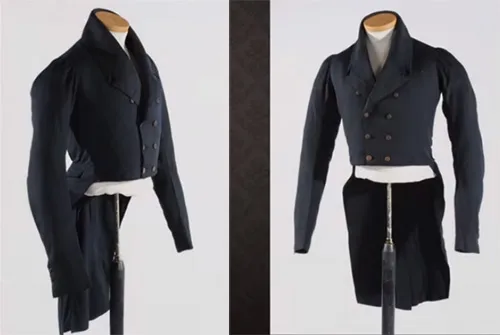
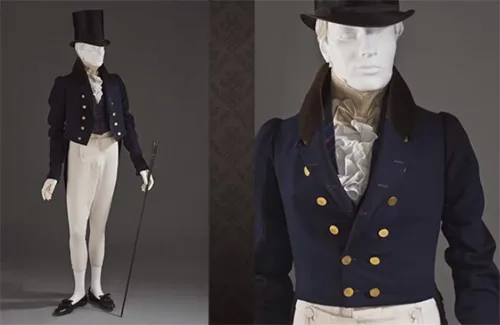
Another great example! Stylish 19th-century men's tailcoat, probably English, from the Los Angeles County Museum of Art. It dates 1825-1830. This wool plain-weave coat, with hints of military influences, buttons all the way to the collar – although the fashion was to wear it open or buttoned just to the bottom two or three rows.
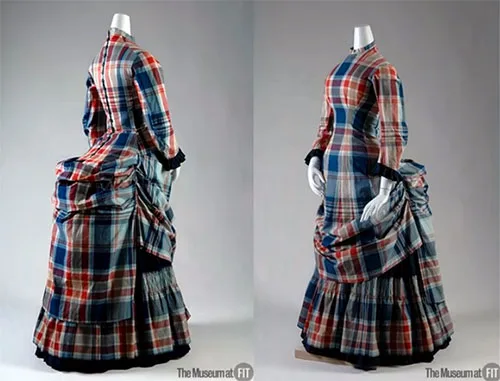
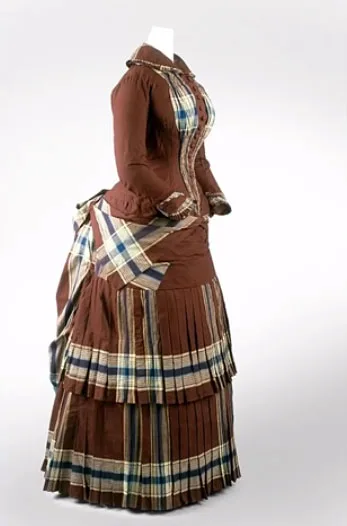
Elegant French plaid dress from 1882 from The Met Museum. It’s worn with a bustle cage. This is an ordinary day dress usually worn by aristocratic ladies in the late 19th century.
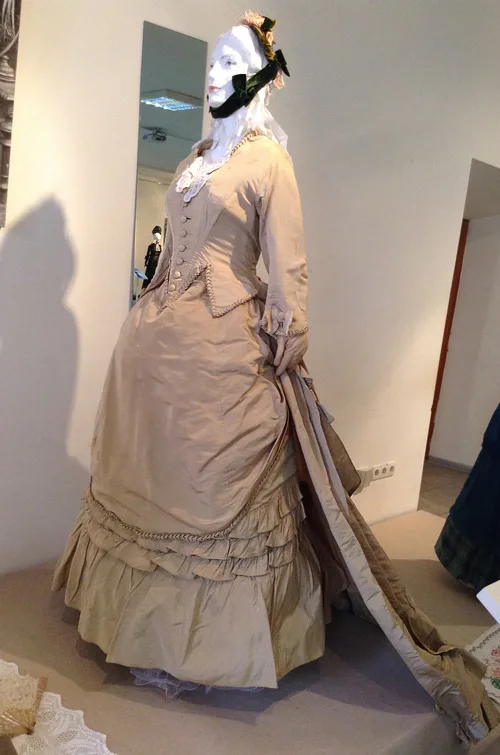
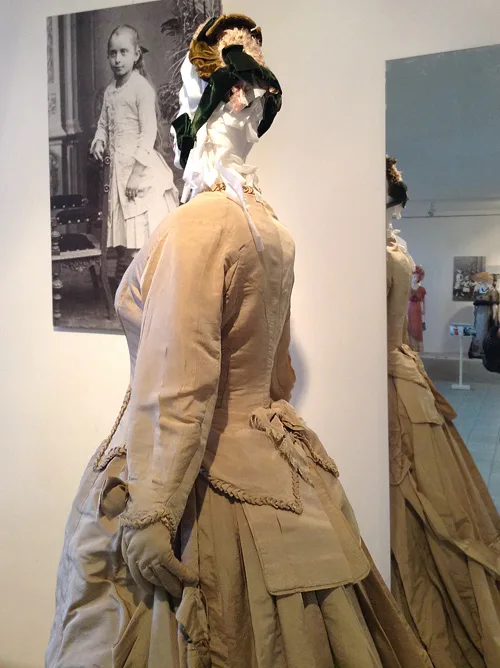
Lady’s wedding attire, 1865-1870. Tight-fitting bodice, wide skirt with train, gloves, and hat. The costume is made from taffeta. The bodice is worn with corset, the skirt – with bustle and petticoats. The hat is made from velvet and embellished with artificial flowers and velvet decorations.