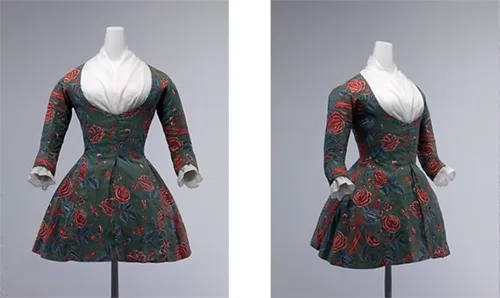
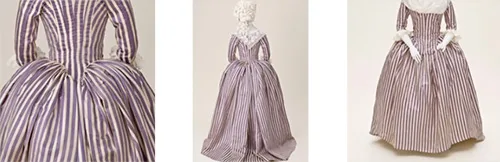
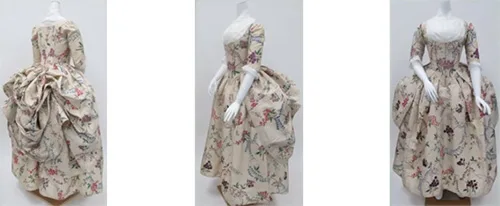
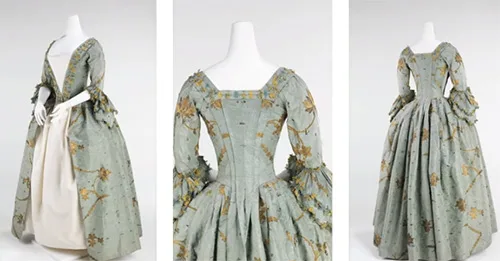
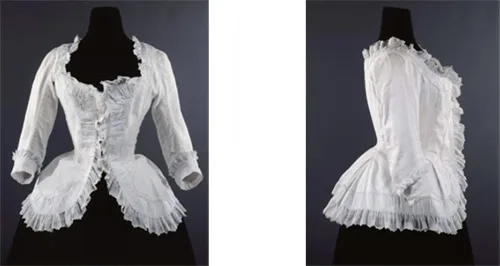
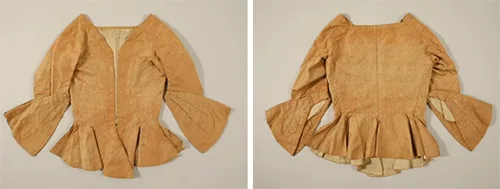
Dutch cotton caraco from the 2nd half of the 18th century. From The Metropolitan Museum of Art in New York.
A caraco is a style of woman's jacket used in mid-18th to early 19th century. This jacket is thigh-length, opened in front, with tight three-quarter or long sleeves, and fitted to the waist.
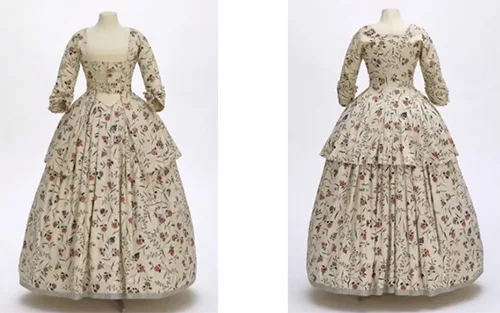
Matching caraco and petticoat made from cotton from the V&A in London. This British-made gown dates 1770-1780. It has floral pattern on the fabric and looks rather elegant.
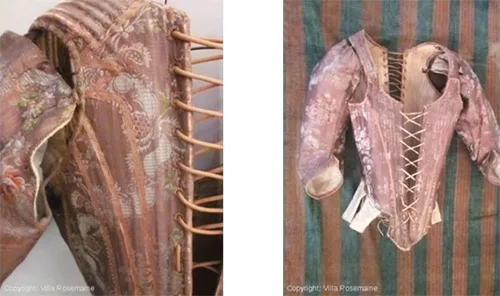
The laced on sleeves weren't common in Europe in the 18th century but they did exist to some extent. The 1st photo is an example of mid-18th-century silk stays from Italy. In this case, the sleeves are attached with ribbon ties.
And the 2nd photo shows another set of stays that date between 1720-1750. The sleeves seen here are attached with what looked like tabs.
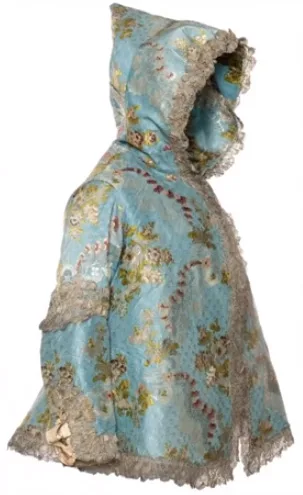
A little bit oddly-shaped 18th-century garment – Capuchin-style jacket. This French jacket dates 1760-1770. It is made from shaped taffeta, brocaded silk, spun silver, and silver lace flounces.
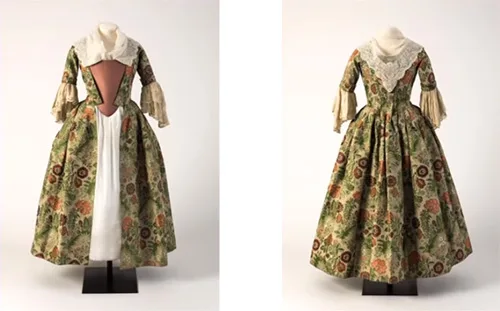
British sack gown. This green&pink brocade-woven silk open robe is from the collection from the costume exhibit in Bath (Somerset, England). The gown would have had a contrasting underskirt and stomacher – the one seen here is for display purposes only.
Look at these pretty three-quarter sleeves and lace collar.
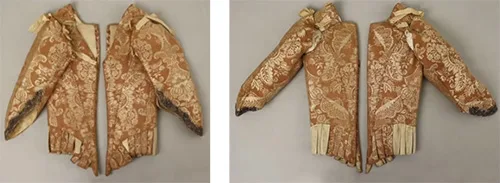
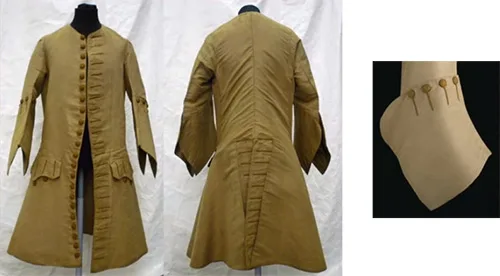
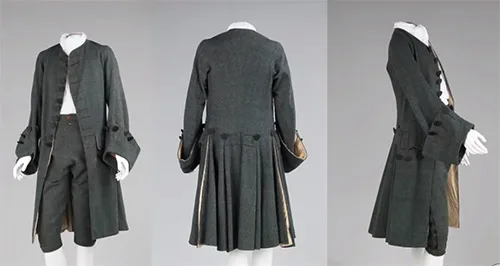
This is a 1730s male coat from The V&A. The cuffs seen here were known variously as an “open cuff” or “open sleeve”. It would have extended well past the elbow in the deep, curved shape, fashionable at the time.
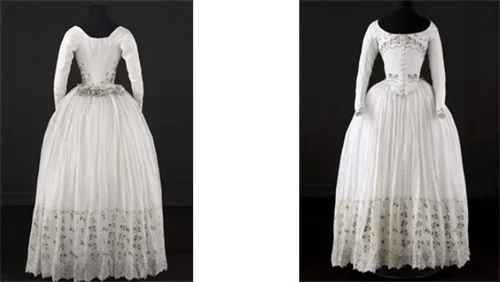
This is a late-18th-century (1790-1800) skirt and matching caraco from the City of Paris Fashion Museum. The caraco is a type of a female jacket used in the mid-18th – early 19th century. It was thigh-length, open in the front, with fitting long or ¾ length sleeves.
Vintage women's gown dating 1785-1790. This gown is cut in the English way, without a sack back, and this tulle dress is of French origin from a collection at the Los Angeles County Museum of Art.
Pretty and elegant robe a la Polonaise from The Met Museum. This French silk gown dates about 1780. It’s a great example of late-18th-century lady’s dress.
Pretty silken metal robe a l'Anglaise from 1770-1775. According to The Met where this beauty is on display, the robe a l'Anglaise developed with a fitted back after the style of dress worn in England. The silhouette is composed of a funnel-shaped bust feeding into wide rectangular skirts, which were often opened at the front to expose a highly-decorated underskirt.
Nice example of a caraco jacket from the Fashion Museum of the City of Paris. Caraco is a female jacket worn in the mid-18th – early 19th century. This style of jacket was often worn with a petticoat, open in the front, and with a stomacher or a decorative stays. And the sleeves were either full-length or 3/4 length but were always tightly fitted.
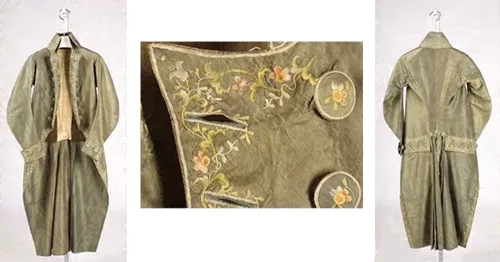
Simple British male wool coat from the 18th century. It's from The Met. The notes on this costume state that the British sensibility was less ostentatious than the French.
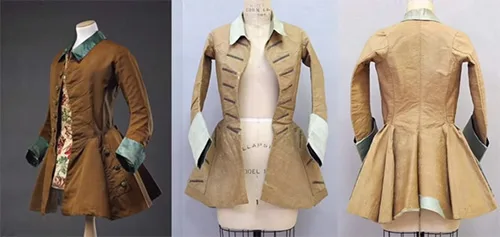
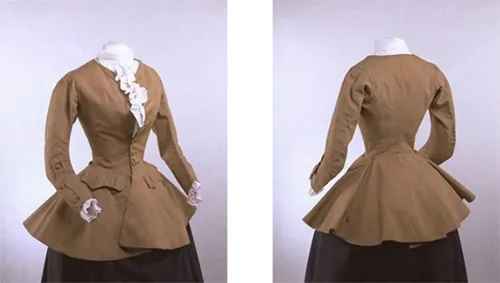
Here are a few examples of 18th-century riding jackets.
The first is a 1740s coat made from worsted wool and trimmed with brocaded silk and silk satin. According to The John Bright Collection that owns this coat, this lady's riding jacket is based on the cut of men's coats of the time. The fullness of its skirt and it's hard wearing fabric make it a very practical garment which, together with a matching petticoat or skirt, could also be worn for traveling.
And the second garment is an 18th-century wool and silk coat cut in much the same way. This French riding coat is from The Met.
The last one is a worsted wool British riding coat that dates between 1750-59, and it's from the V&A. The coat is lined with linen and silk. While the first two coats are meant to be worn open with a waistcoat, this jacket is fastened at the front with buttons.
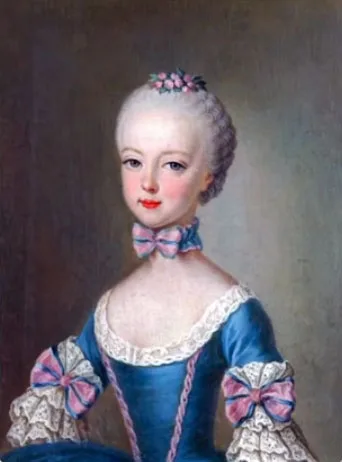
7-year-old queen Marie Antoinette in fashionable period clothing. Portrait of Archduchess Maria Antonia of Austria, circa 1762, by Jean-Etienne Liotard. Her choker is lovely))
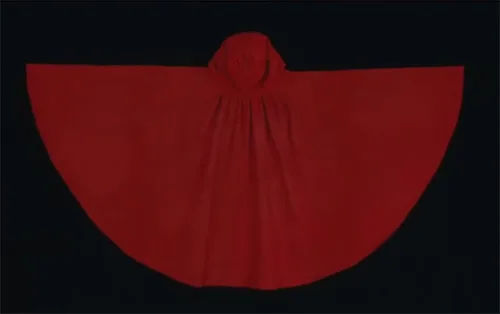
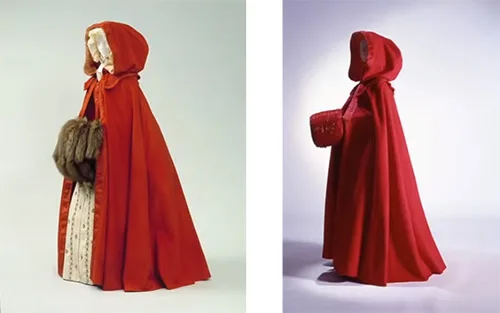
Rare example of a mid to late 18th-century cloak from the Colonial Williamsburg Museum. This red wool broadcloth cloak is English and it's lined in dull red silk. A woman would look like Little Red Riding Hood in such outerwear.
Another bright-red wool cloak dating the last third of the 18th century from The Met Museum. It’s called a “cardinal” cloak because of its color. Cute piece!
Marie Antoinette is my fashion icon of all time. Her dresses are the most fashionable, trendy and good-looking dresses I have seen. She needs a whole museum of her dresses and jewelry. Even if I adore her outfits, I prefer sexy outfits that highlight my body. I opt for a mini dress for a disco or party because I love my long legs and big boobs. Everybody should choose their style, but the 18th century was the best in the fashion world, for sure. I want to live in that era, just for the clothes, haha, and balls, of course.
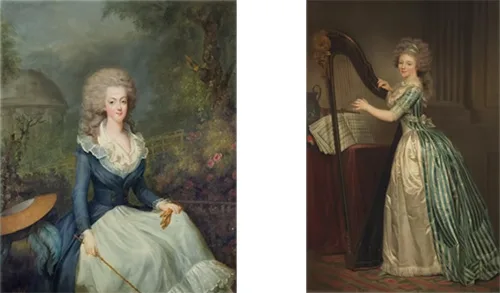
Historical 18th-century robe a l'Anglaise or English gown in portraits. On the left: A Portrait of Marie Antoinette by Jean-Baptiste Andre Gautier-Dagoty, 1780. On the right: Self-Portrait with a Harp by Rose Adelaide Ducreux, 1791.