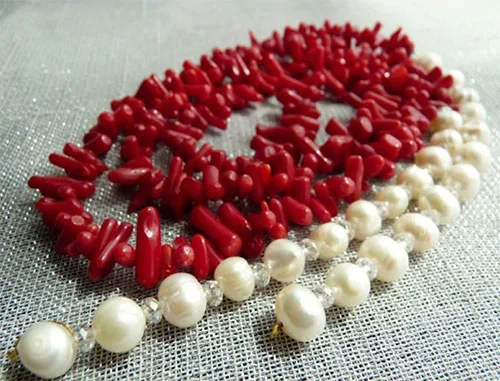
The national costume of Ukraine always includes a necklace. In old days, the rings, earrings, or bracelets were traditionally less common. But a necklace was a must-have and an integral part of any attire – festive or daily dress. It served not only as an embellishment but also as a protection amulet and a mean to show the status and financial capability of the wearer. The Ukrainian tradition of using various necklaces is rich and exciting. The further info on this topic is here: Ukrainian vintage necklaces. Beaded necklace could protect from evil eye or determine health issues (http://nationalclothing.org/europe/15-ukraine/150-ukrainian-vintage-necklaces-beaded-necklace-could-protect-from-evil-eye-or-determine-health-issues.html).
On the photos below, you can see several variants of mixing different necklaces.
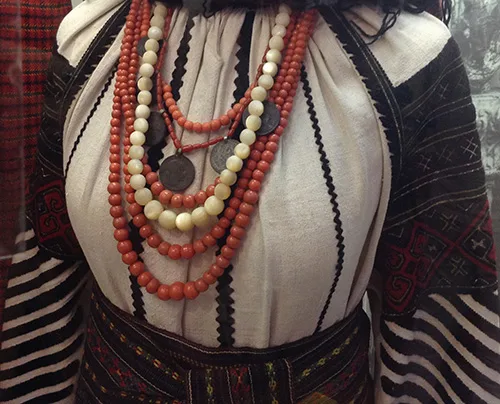
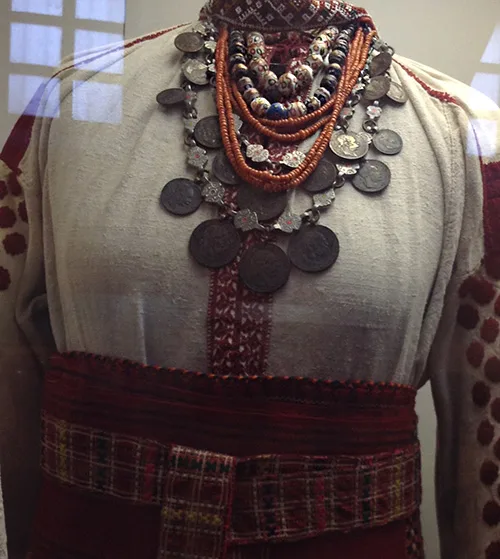
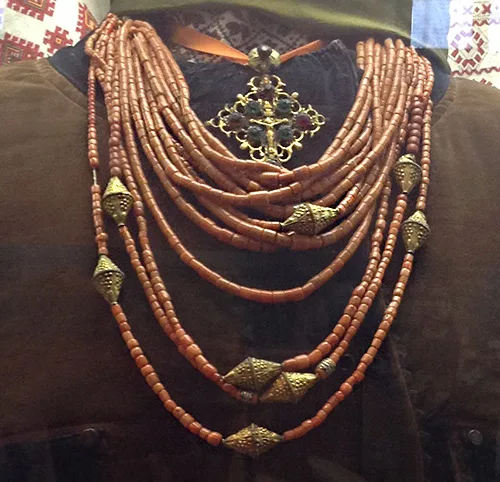
Several rows of stone necklaces (fake coral), a string of coins combined with real coral beads, and a necklace made from mother-of-pearl called “balamuty”Necklace1.jpgCombination of several strings of coins with metal decorations, several rows of coral, and two rows of glass beads made from Venetian glassNecklace2.jpgBeautiful cross embellished with gemstones and many rows of coral necklace decorated with large metal beadsNecklace3.jpgMany rows of fake corals (made from smalt or clay) and three small icons of God called “molitovka” used as a necklace by religious women. Polissia region, northern part of UkraineNecklace4.jpgCombination of several coral necklaces, pearl necklaces, and a row of dukach coins. Wedding jewelry of a wealthy woman from Kolomyia district, Ivano-Frankivsk region, the beginning of the 20th centuryclothing34.jpgWide bead weaving necklace from Lemko region of Ukraine (part of Transcarpathian region, western part of the country), the early 20th century. The necklace is decorated with colorful geometric patternsCostume_Lviv12.jpg
There are 6 main jewelry pieces that are a must-have for every Tunisian woman. No matter vintage or modern, these items are in every female’s jewelry box in Tunisia.
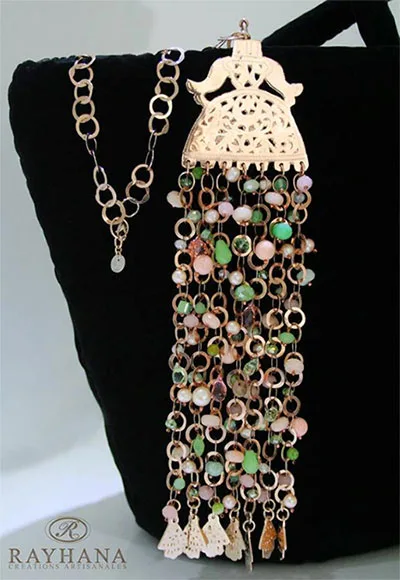
Rayhana – pendants at the temples made from small metal hoops, often decorated with semi-precious stones.
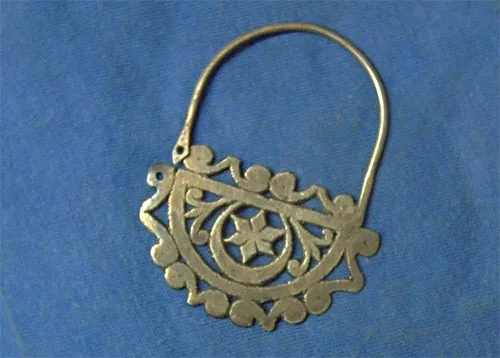
Jewelry17.jpgLarge earrings. Usually, they are moon-shaped or khomsa-shaped (the shape of a hand) and decorated with beads, semi-precious stones, and metal elements.
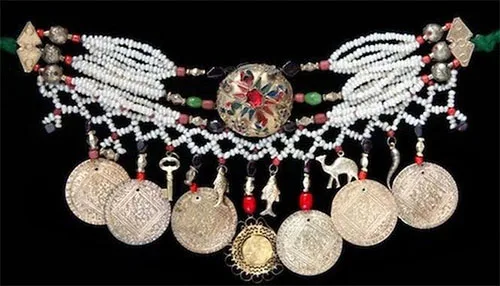
Jewelry4.jpgTlila – necklace decorated with 7 coins, pearls, metal elements, and other beads.
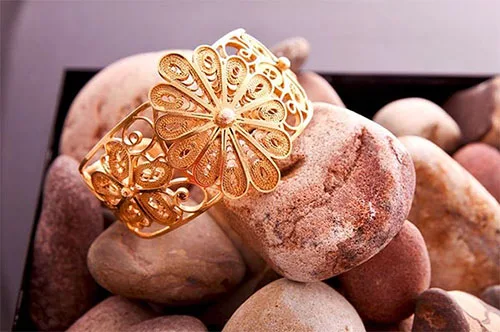
Jewelry13.jpgMeguies – rings of intricate design. A lot of Tunisian jewelry pieces are made using a technique “wire weaving”; the items are made from gold or silver wire. There are many various designs of meguies.
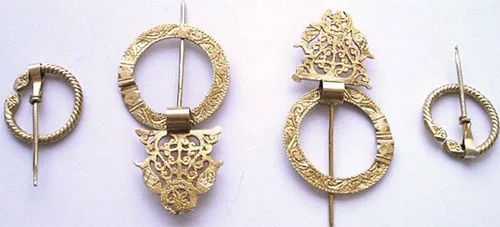
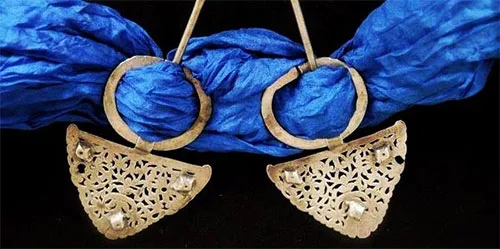
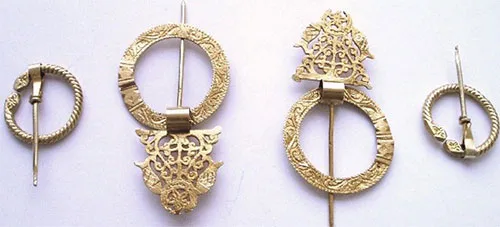
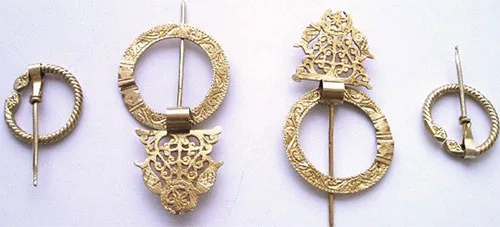
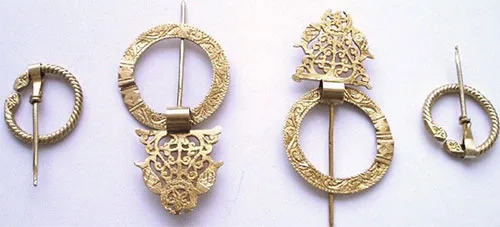
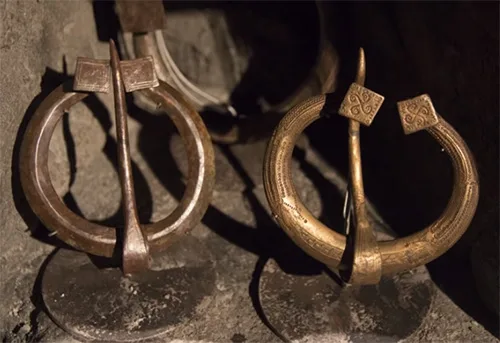
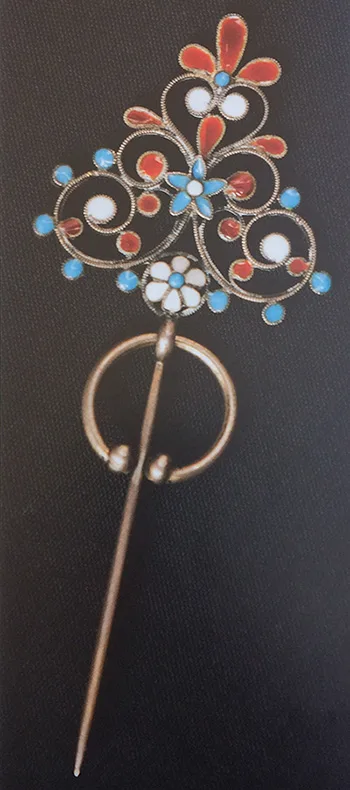
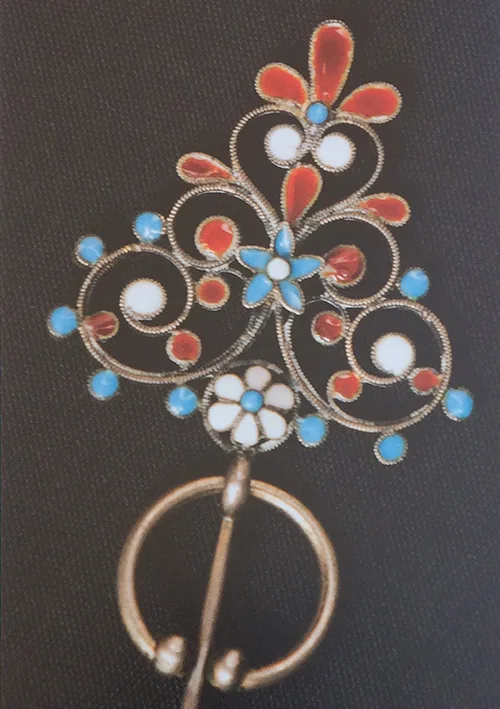
Jewelry19.jpgKhlel – Tunisian traditional fibula (brooch). Usually, it is triangular-shaped or moon-shaped.
Jewelry9.jpgKholkhal – Tunisian anklet (ankle bracelet). It is traditionally worn by females with a wedding outfit.
Jewelry10.jpg
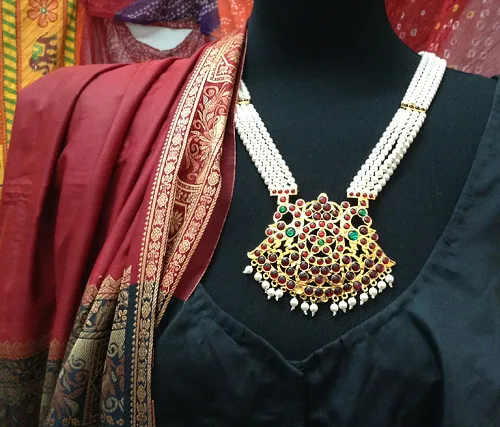
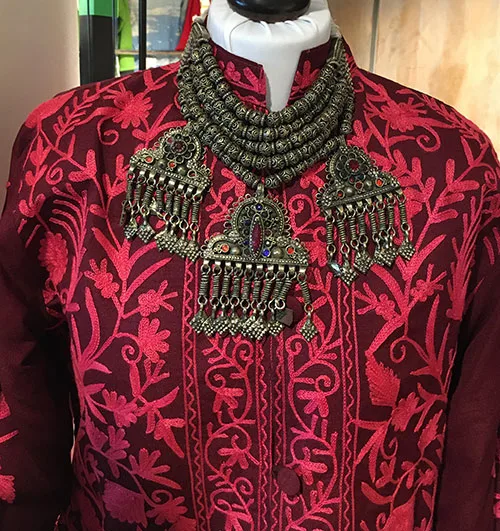
Indian traditional necklace worn with a sari. The necklace is large and pretty but it’s an imitation jewelry. Many Indian women use imitation jewelry instead of golden ones. Indian-sari3.jpg
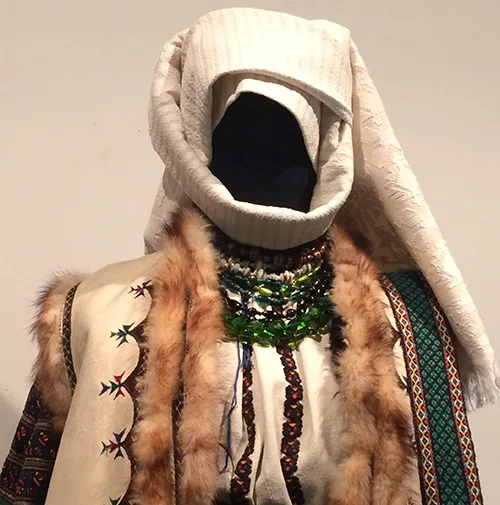
Several more samples of Ukrainian necklaces. Also, you can see the traditional headdresses used in certain regions of Ukraine.
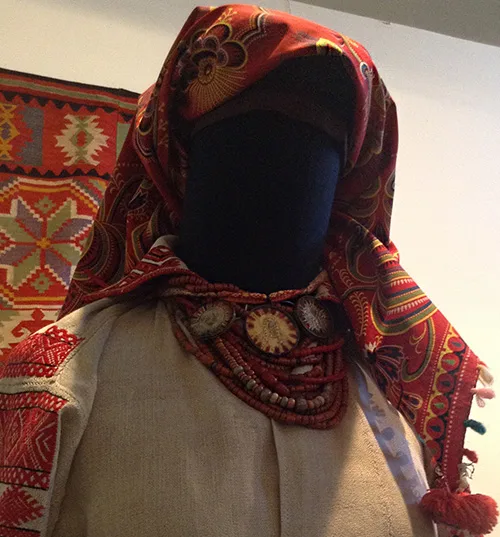
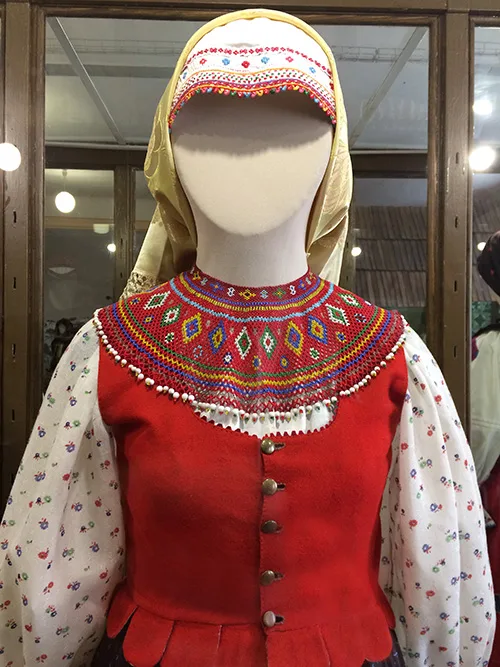
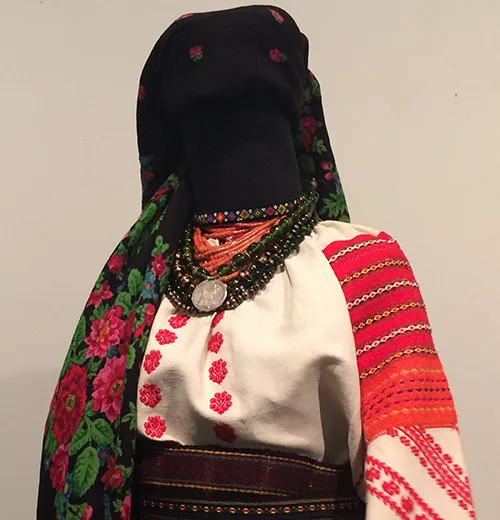
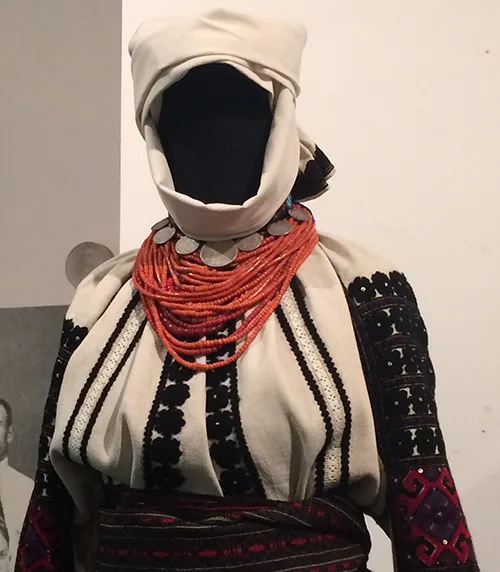
Traditional costume of a married woman from Zalishchyky district, Ternopil region (western part of Ukraine). She has a large kerchief with floral print on. Her jewelry set consists of many rows of coral necklaces, several rows of glass beads (including Venetian glass), a large silver coin called “dukach”, and a narrow bead weaving choker called “sylianka”Necklace7.jpgTraditional costume of a married woman from Borshchiv district, Ternopil region (western part of Ukraine). Her headdress is called “namitka” – it is a long rectangular piece of cloth with embroidered ends. Her necklace consists of many rows of coral and a narrow bead weaving choker called “sylianka” adorned with silver coinsNecklace6.jpgTraditional costume of a married woman from Bukovyna region of Ukraine (western part of Ukraine, close to the border with Romania). The headdress is called “namitka” – it is a long rectangular piece of cloth thoroughly embroidered. Her jewelry set consists of several rows of Venetian glass beads and several rows of ordinary glass beadsNecklace5.jpg
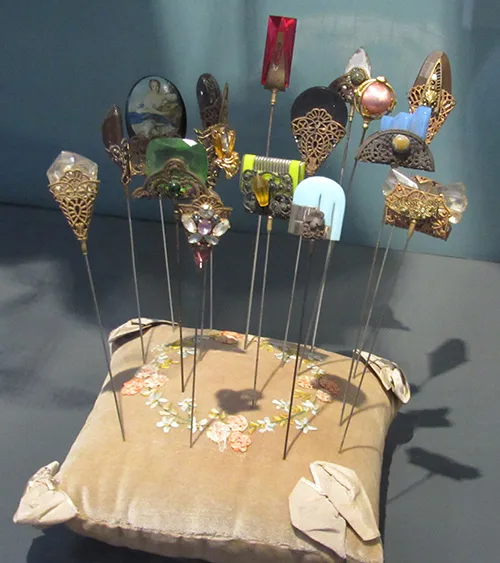
Gorgeous hairpins used by European upper-class women. These all are vintage pins decorated with gold, silver, precious and semi-precious stones. The rims are intricate and delicate. These hairpins are real masterpieces. hair-pins.jpg
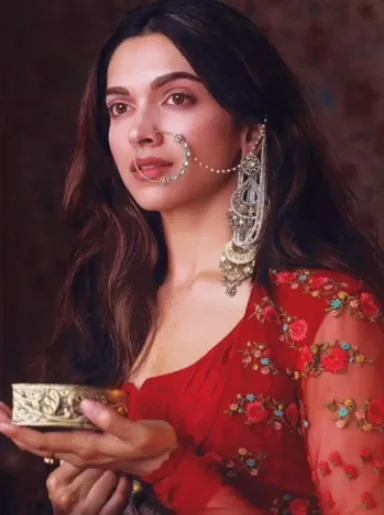
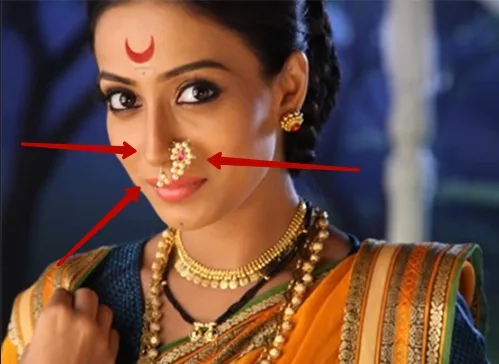
Traditional Indian jewelry pieces for women – nath and nathni
Nath is a hoop-shaped nose ring with a chain. Nathni is a hoop-shaped nose ring but without a chain. Nathni is worn in the western Indian states of Gujarat and Rajasthan. It is a bridal jewelry item with a deeply symbolic meaning. Some Indians even believe that nose piercing helps to lessen the pain during the childbirth. Nath.jpgnathni.jpg
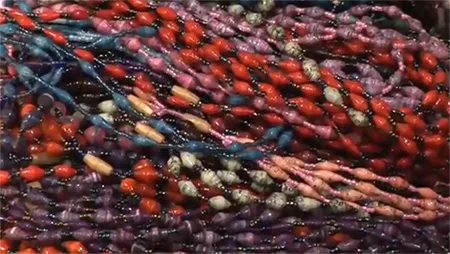
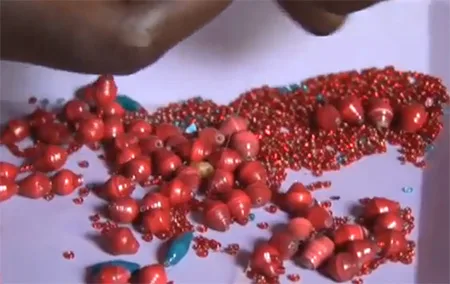
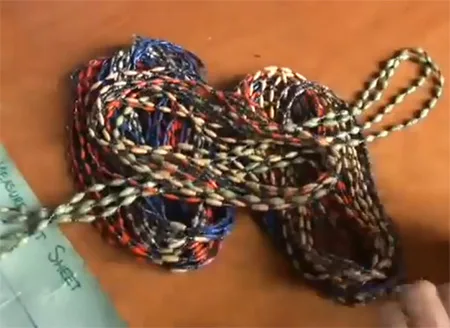
Ugandan beaded necklaces made from recycled paper. Local females are really skilled craftswomen. They make beautiful colorful beads and use them to produce handmade necklaces. Beaded-necklace1.jpgBeaded-necklace5.jpgBeaded-necklace6.jpg
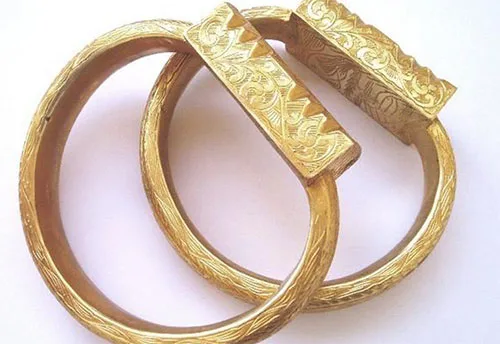
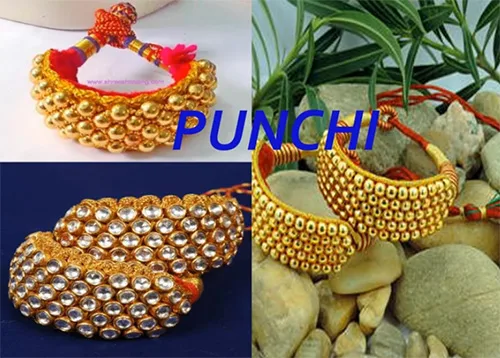
Indian traditional bracelet called “punchi”.
It is a bracelet worn by women on the wrist. Punchi is made from gold and richly decorated with gems or little gold balls. This jewelry piece is massive, just as it is typical for Indian jewels. Punchi.jpg
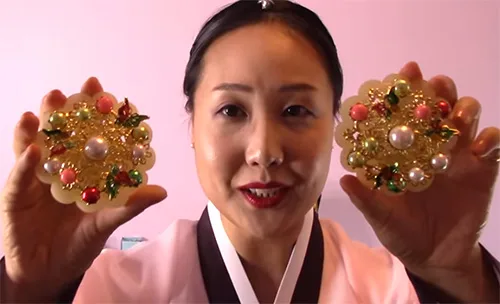
Korean female folk hair accessories called “sonjjang”. The beads on them shake and flutter when the wearer moves. These fluttering accessories were historically restricted to women of the court who are of high ranks, like the queen, or the dowager queen, or the crown princess. sonjjang.jpg
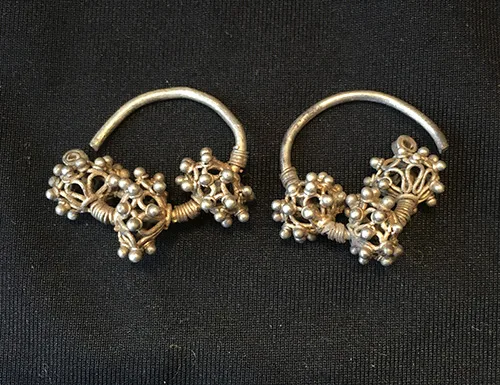
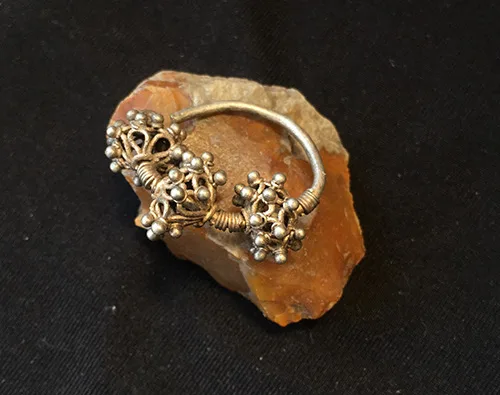
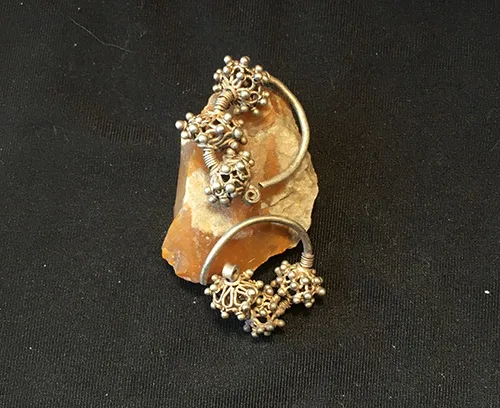
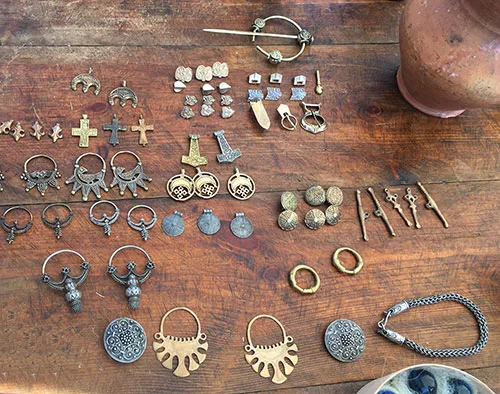
Temple rings – magnificent Medieval jewels
These particular temple rings are from Kievan Rus’ (territory of Kyiv region, modern Ukraine, Europe). Though, similar jewelry pieces were made and used by many Slavic and Scandinavian tribes.
Temple rings were the analogue of earrings but they were worn not in the ears but attached to the hair or headdress. You didn’t have to pierce your ears to use these jewels.
Temple rings were women’s jewels. There were dozens of various shapes of temple rings. But the ones on the photo are made very skillfully from fine silver. If to talk about dating these pieces, it is approx. 11th-13th century A.D. Earrings1.jpgEarrings2.jpgEarrings3.jpg
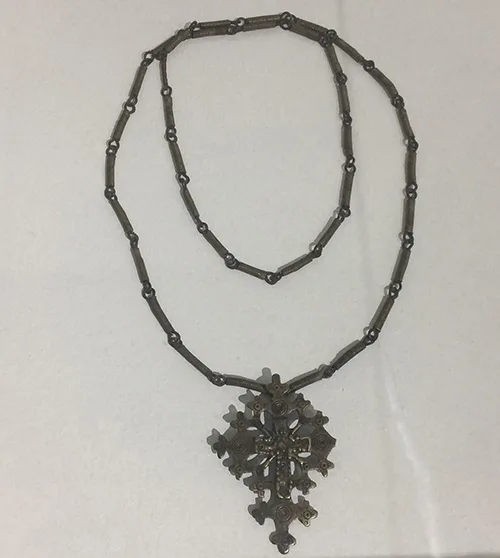
Absolutely beautiful Ukrainian men’s jewelry piece – a large brass cross on a masculine chain. Handmade by Ukrainian jewelers. Ivano-Frankivsk region of Ukraine, the 18th century. Such jewelry items were typical for the western part of the country. They were called “zgarda” and usually consisted of a metal or leather chain with several metal crosses strung on it. Male-costume18.jpg
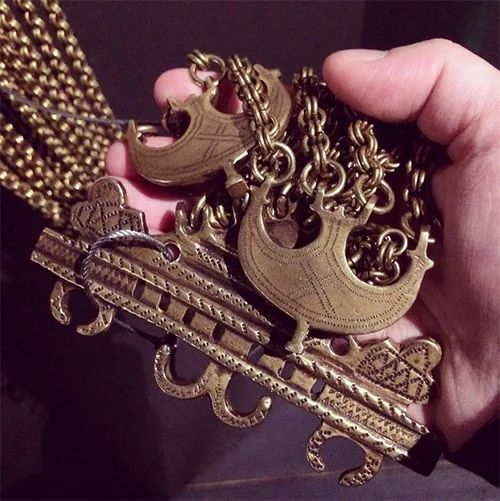
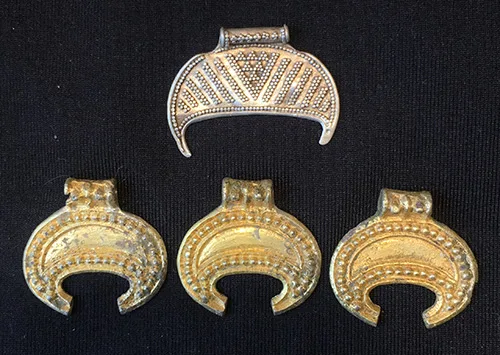
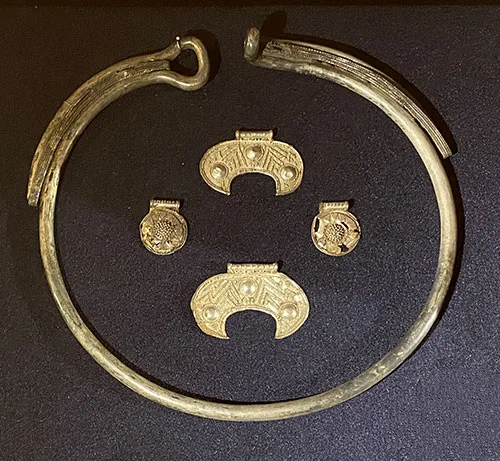
Silver and silver + gold-gilding crescent-shaped pendants. Early Kievan Rus'.
Moon-shaped adornments traditionally were women’s jewelry. Similar pieces were used by Scythians, Vikings, Ancient Romans, and other nations. Pendants2.jpg
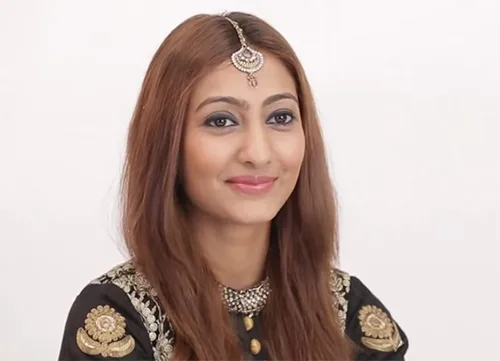
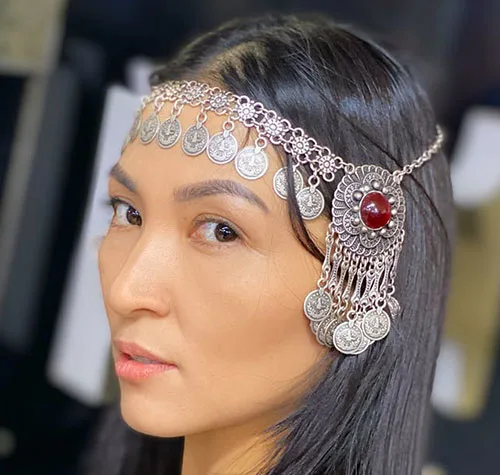
Indian traditional hair jewelry called “maang tikka”. It has a chain and is placed on woman’s forehead – the chain helps to attach the item to the hair. Maang tikka can be made from gold or silver and adorned with precious stones, also it can be biju – imitation jewelry. Both variants work well for Indian women. Maang-Tikka1.jpgMaang-Tikka7.jpg
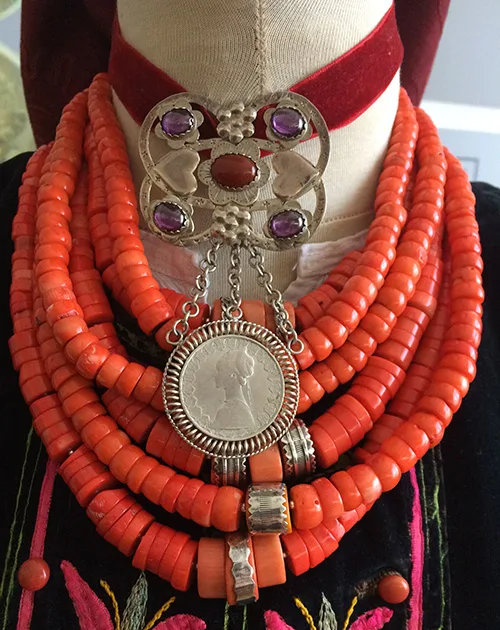
Ukrainian jewels, the 19th – the beginning of the 20th century. Gorgeous jewelry set that consists of a coral necklace with silver decorations and a silver dukach adorned with gems. Such jewelry items were typical for Ukraine of this period
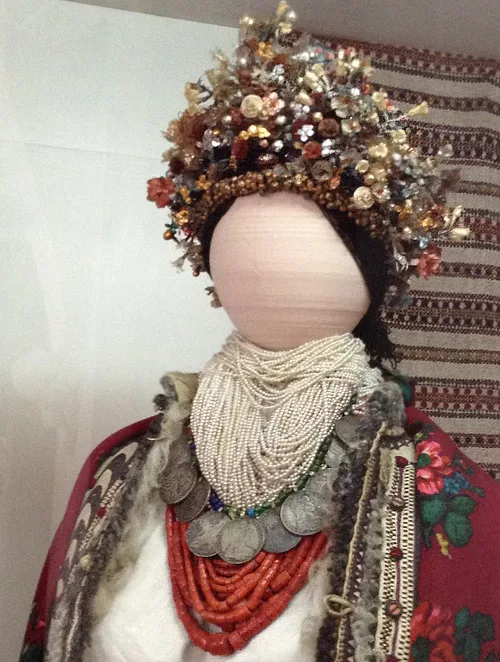
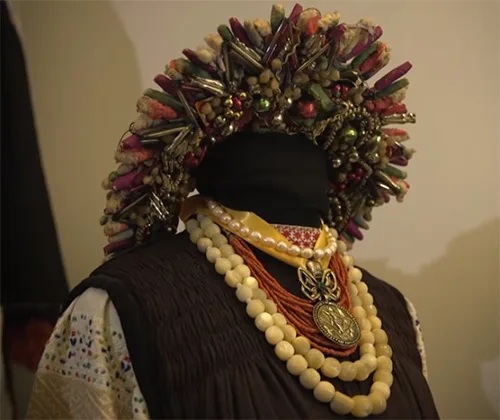
Traditional Ukrainian jewelry set and an intricate bridal wreath. The jewels consist of 2 strings of mother-of-pearl beads called “balamuty”, several strings of tiny coral beads, a string of fake pearl beads, and a large metal jewelry piece called “dukach”.
Also, you can see a bridal wreath made from glass beads and different metal, glass, and yarn elements. It looks very festive.
Exhibit from Roksolyana Shymchuk Ethno-gallery (Lviv, Ukraine).
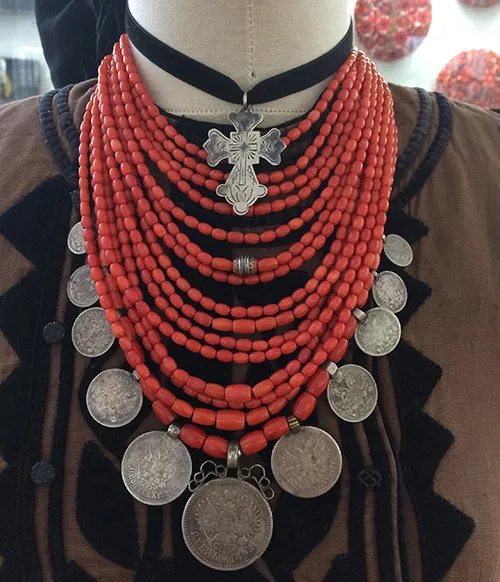
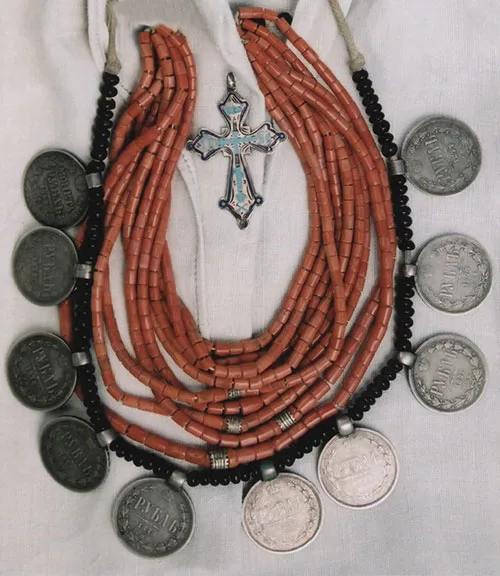
Vintage Ukrainian coral necklace combined with dukaches of various size and denomination, and a silver cross. Such jewelry sets are traditional for Ukraine and were often used by local women during the festivities and special occasions. Even today, Ukrainians like coral necklaces and silver jewels very much.
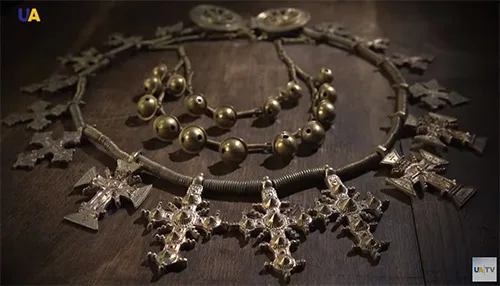
Ukrainian traditional necklace called “zgarda” typical for western Ukraine (Carpathian region). It is made only from brass – crosses, jingle bells, springs, and a large round clasp called “chepraha”. By the way, similar jingle bells were worn by men and women of Kyivan Rus’ (the 9th-13th century). Kobrynsky National Museum of Folk Art (Kolomyia, Ukraine)
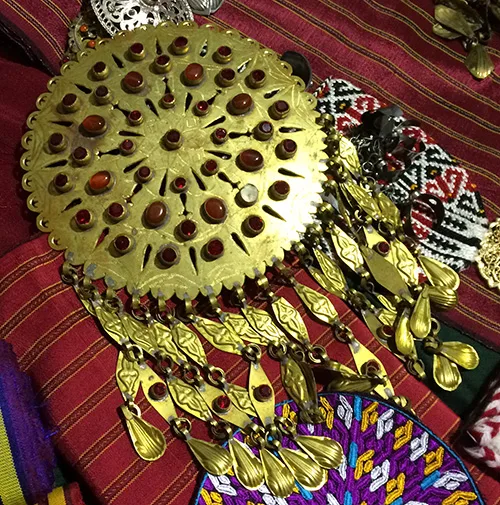
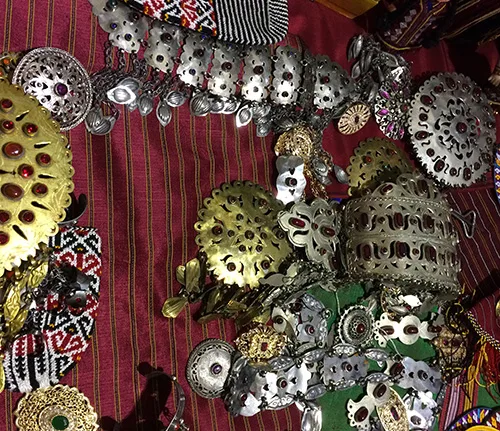
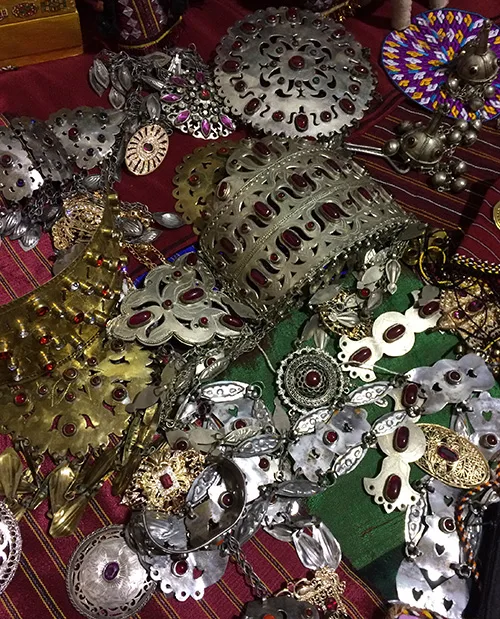
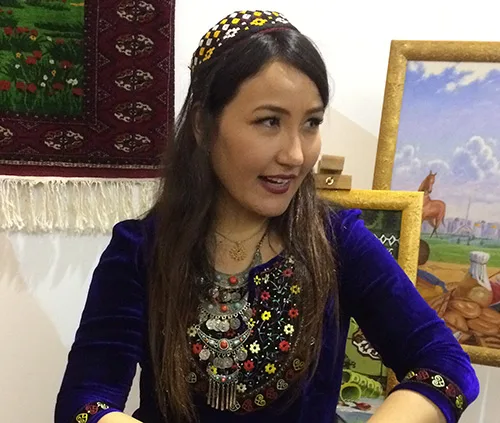
Traditional jewelry in Turkmenistan (Central Asia). These jewels are made from brass, silver, and other metals and adorned with real precious and semi-precious stones. Turkmen women use large jewelry pieces: necklaces, belts and belt buckles, earrings, brooches, bracelets, etc.
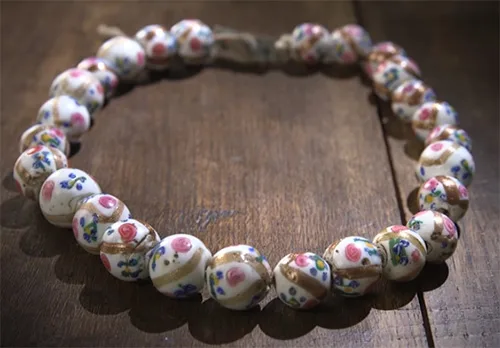
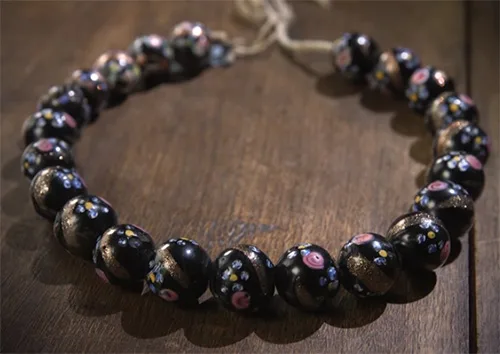
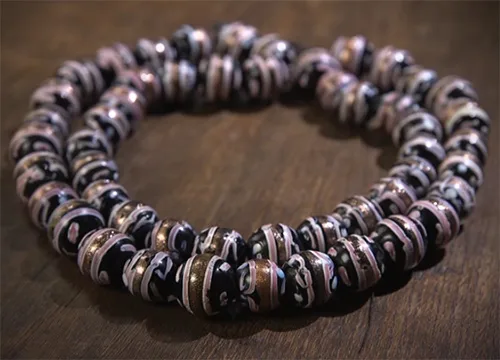
Vintage white and black Venetian glass necklaces. Such jewels were used by Ukrainian women until the mid-20th century. Kobrynsky National Museum of Folk Art (Kolomyia, Ukraine)
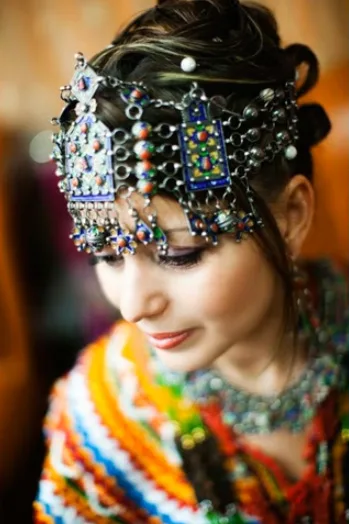
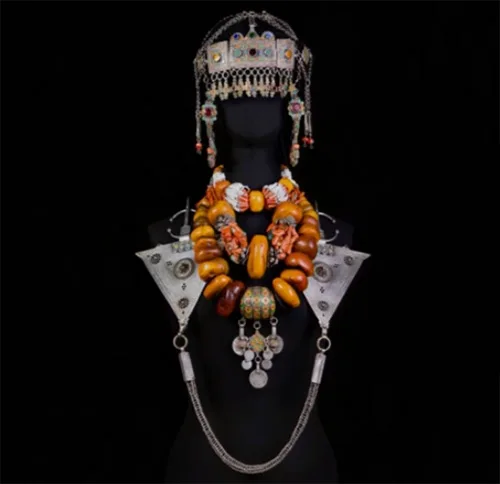
Traditional Berber or Amazigh head jewelry. It is a very beautiful piece made from silver or silver alloy and adorned with enamel and gems (presumably coral or fake coral).
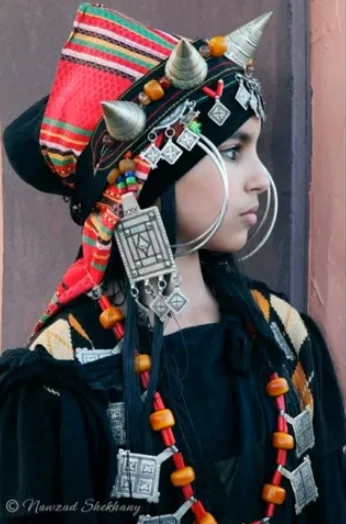
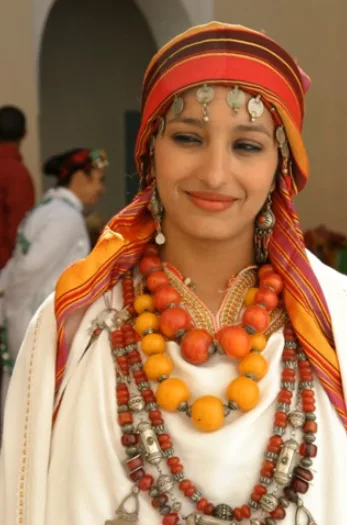
Massive Berber or Amazigh folk jewelry. These pieces are made from silver or silver alloy, amber, coral, and a few colorful beads. The young Berber girl a massive necklace and a headdress richly adorned with jewels.
Jewelry set from Morocco, the late 19th – early 20th century. Musee Berbere, Morocco.
The main materials are silver, amber, coral, and other gems. This set is pretty massive but it is typical for the Berber jewels.
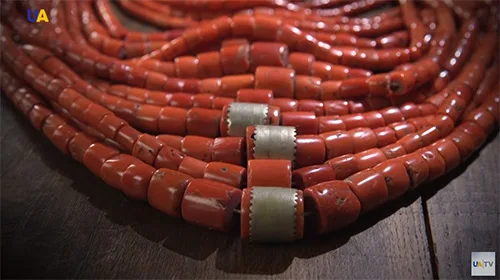
Ukrainian folk jewelry. Vintage coral necklace with silver adornments. It has many rows of cylindrical coral beads. Kobrynsky National Museum of Folk Art (Kolomyia, Ukraine)
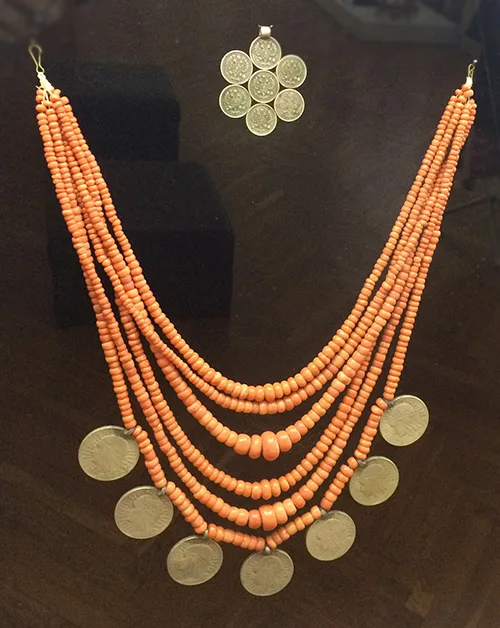
Ukrainian vintage jewels. Below, there’s a coral necklace with silver dukach coins. Above, is an interesting pendant made from 7 silver coins fused together. The beginning of the 20th century. Such jewelry pieces were used by women with the folk costume of Ukraine.
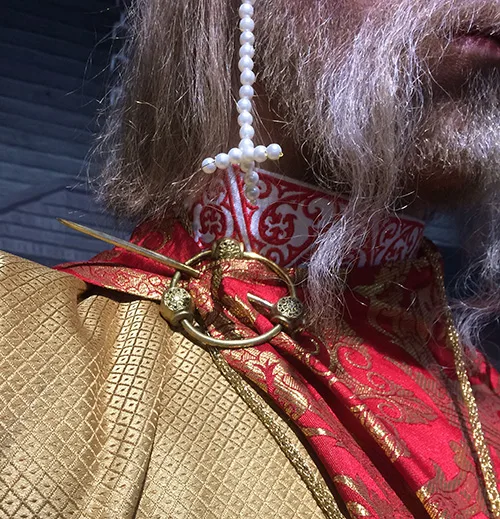
The Viking traditional cloak was attached to the outfit with a brooch (fibula). There have been found many of them, with various designs, made from different materials. Here are two examples of such a brooch – these are bronze, round-shaped, and called “sulgama”.
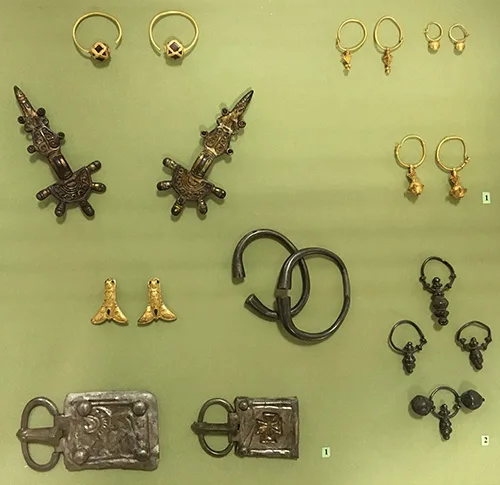
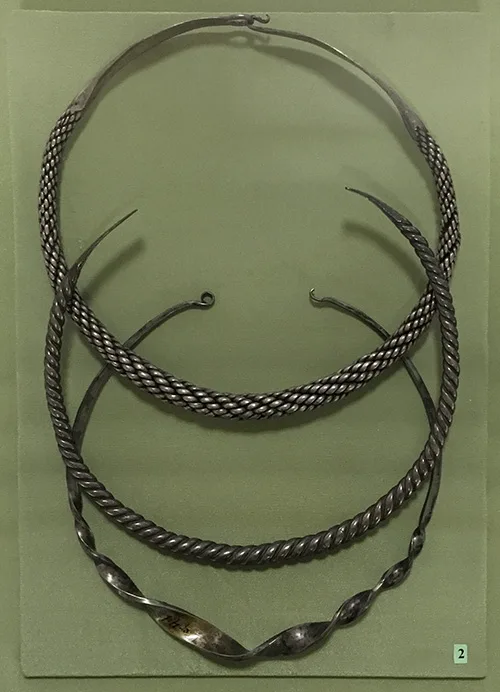
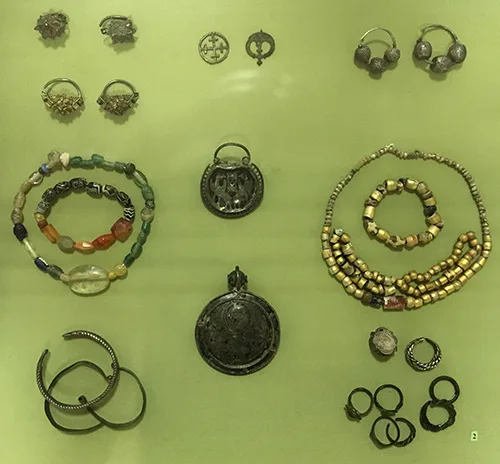
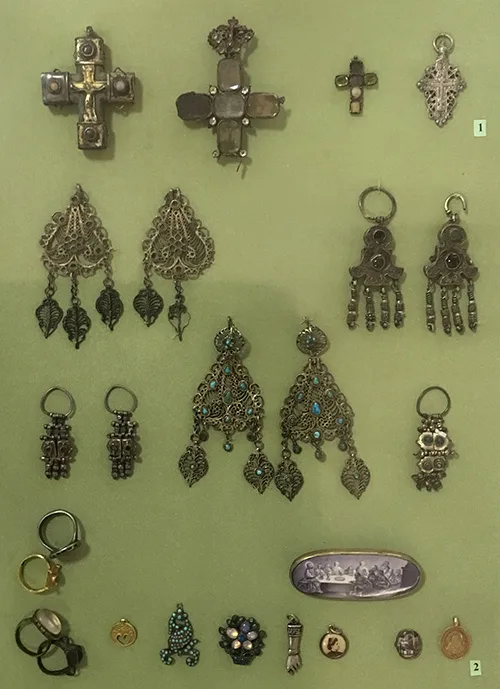
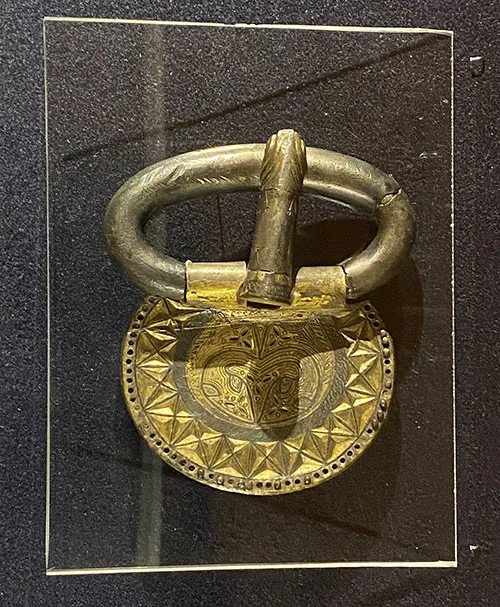
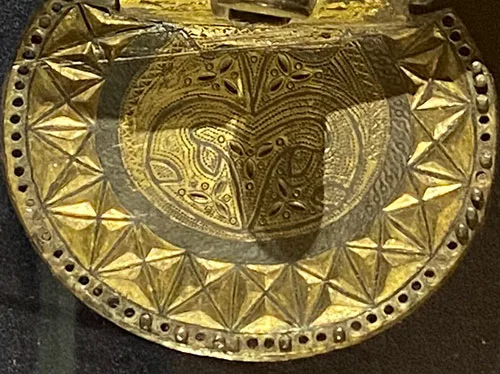
Ancient traditional jewelry used on the territory of modern Ukraine. They are made from gold, silver, and glass. Exhibited in the National Museum of the History of Ukraine in Kyiv.
1. Jewels of The Migration Period (6th-7th century).
2. Jewelry of the Kyivan Rus’ (9th – early 13th century).
Some of these pieces are similar to Scandinavian (Viking) and other European cultures, others are unique and typical only for this particular territory.
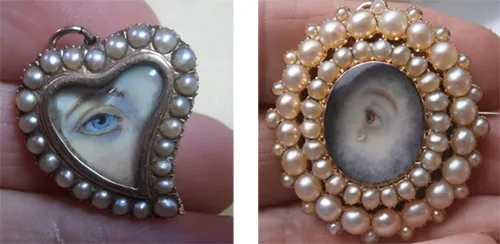
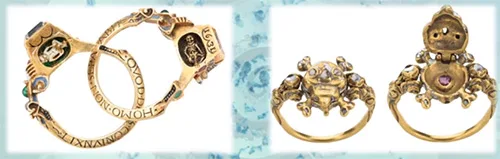
Georgian Lovers Eye jewelry from a private collection. Such jewels were also called “eye miniatures”. They became popular in the late 1700s. The Lovers’ Eye were watercolour on ivory depictions of the eye or eyes of a loved one or child. Very popular and a little bit bizarre-looking.
The shape on the left is called a “witch's heart” – this shape used as a talisman to ward off evil spirits. In Scotland, this same shape was called the “Luckenbooth”.
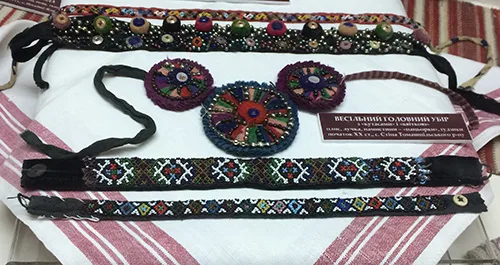
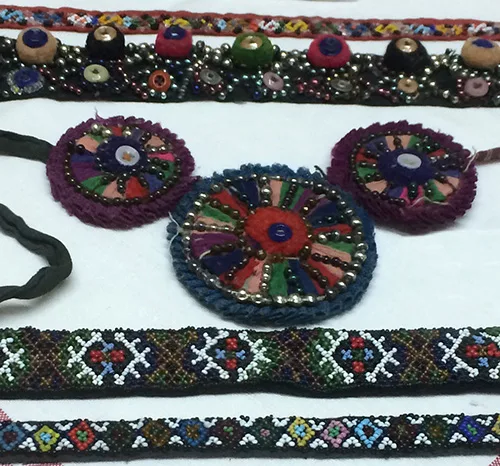
Women’s festive adornments for the head and neck (chokers). Vinnytsia region of Ukraine, the beginning of the 20th century. These items are made from the fabric decorated with beading, buttons, and yarn pom-pons.
Striking Ukrainian jewelry pieces. These are vintage gold medallions called “dukach”. The medallions depict various religious scenes. They are also decorated with colorful glass beads and semi-precious stones (really expensive gems were rarely used). Such dukach jewels were hung around the neck with a ribbon.
Pretty Norwegian jewelry. Brass brooch adorned with enamel. Similar round brooches are typical for Norway, they were used by the Vikings and were called “sulgama”.
Bunad12.jpgBunad13.jpg
Here you can see two Viking brooches.
Berber (Amazigh) women wear necklaces made from amber beads – often rather large ones. This material is rather valuable for Berbers. If to talk about precious metals, silver is the favorite one.
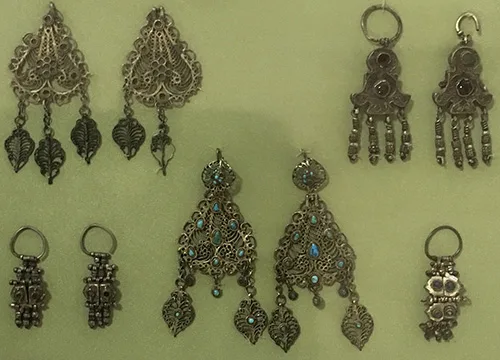
Various gold and silver jewelry pieces found on the territory of modern Ukraine, the 16th-18th century. The National Museum of History of Ukraine.
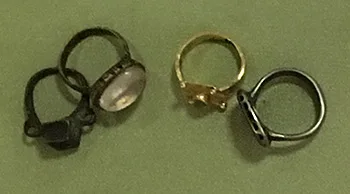
There are crosses, earrings, finger rings, pendants, and a brooch. The jewels are adorned with semi-precious stones and glass beads. Different jewelry making techniques are used, e.g. filigree.
Korean jewelry made from hanji paper. The craftswoman is Lee Booduck. In Korea, hanji paper is traditionally used to make a lot of various things, including clothing, shoes, and jewels. These jewelry pieces look very pretty and unusual.
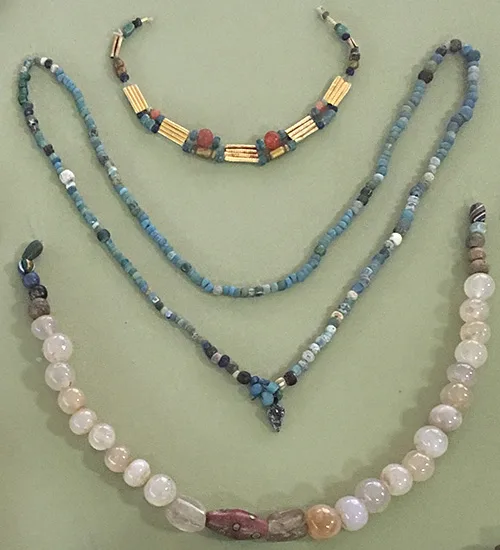
Pretty necklaces from the Scythian-Sarmatian Age (late 6th – early 4th century B.C.). These are archaeological finds from the territory of Ukraine. They are made from stone and glass beads and gold elements.
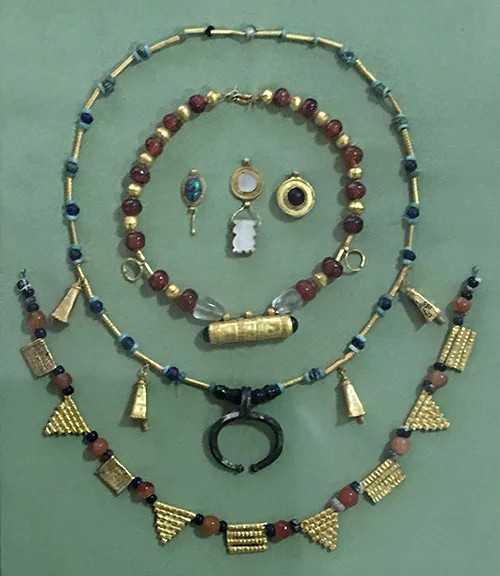
Gorgeous ancient jewelry (4th century B.C. – 4th century A.D.). These necklaces and pendants are skillfully made and delicate. A lot of gold is used to make them and also stone and glass beads.
Royal round brooch called “sulgama”. Kyivan Rus’, the 10th-11th century. This one is a replica, the original one would be made from gold. Such fibulae were used to fasten the cloak.
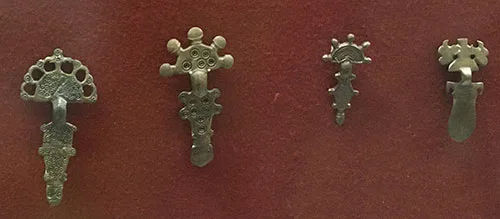
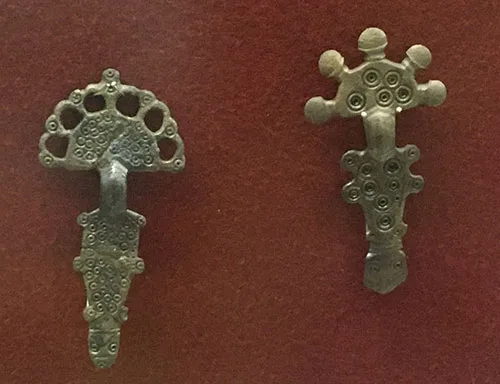
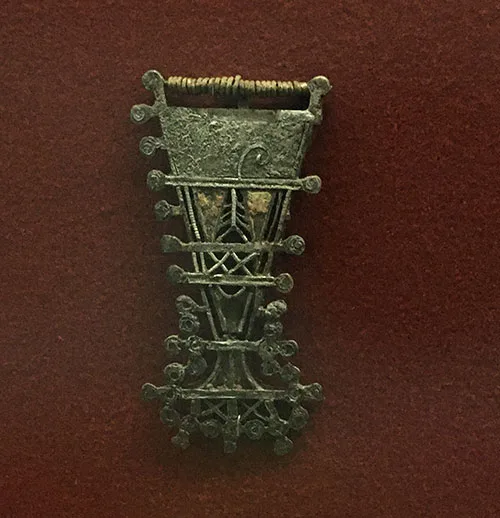
Pretty bronze radiate-headed fibulae. East Slavic tribes, appr. the 5th-10th century. Museum exhibits; they were found during archaeological excavations on the territory of modern Ukraine. Such brooches were used to pin the cloak or fasten the dress before buttons were invented. They were pretty and functional jewelry.
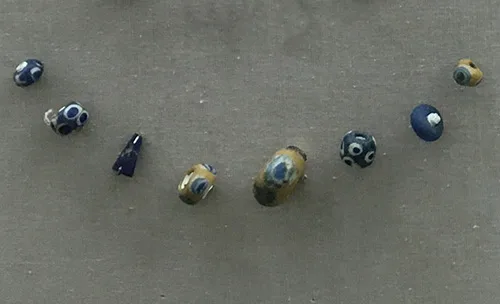
Pretty and very old glass beads from the territory of modern Central Ukraine, the 5th-3rd century B.C. They have nice patterns on them. Just imagine that they’re 2,500 years old!
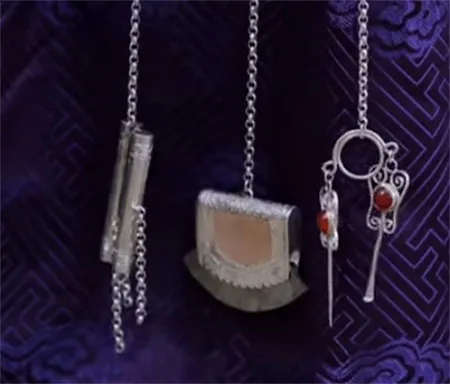
Useful Buryat jewelry. Buryat jewelry makers turned small household items into artful jewels. The local women wore them attached to the belt. For example, here you see a silver fire striker, an ear pick, a needle, and a manicure set. The items are skillfully made and embellished with coral.
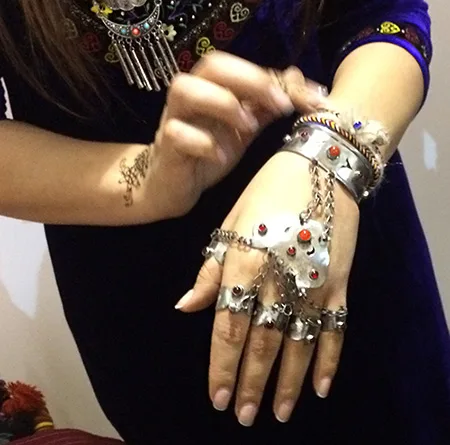
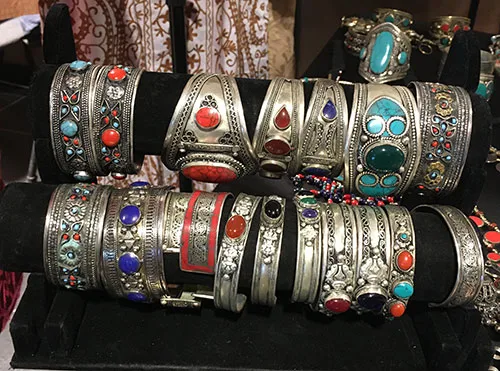
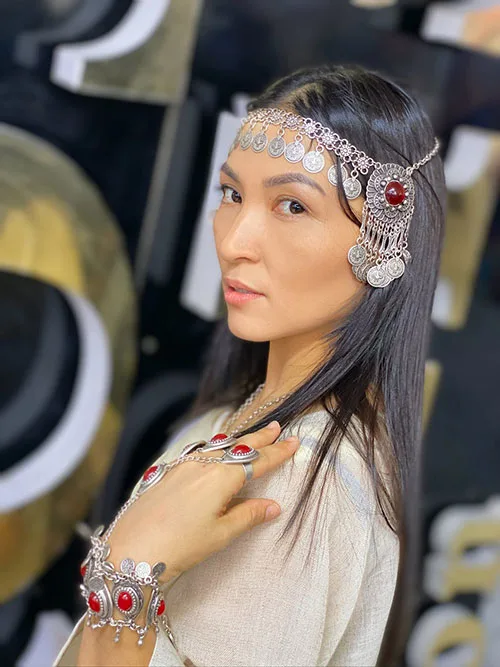
Traditional silver jewelry from Central Asia. Such pieces are very popular in this area even these days, especially bracelets with finger rings joined by chains. Central Asian jewelers often use cute semi-precious stones in their jewels.
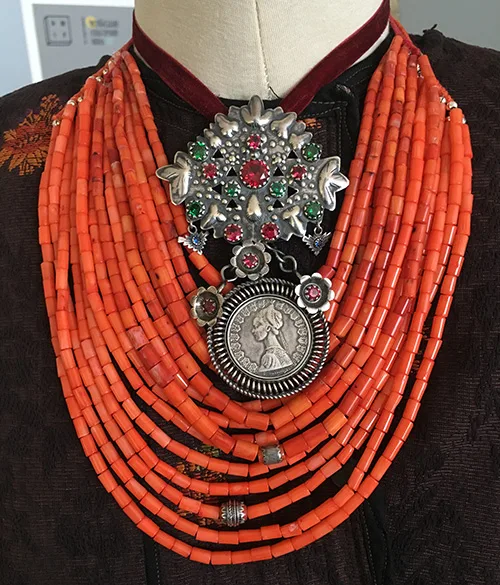
Costly Ukrainian jewelry, around the 19th – early 20th century. Vintage coral necklace consisting of 15 rows of coral beads (two of them are adorned with silver) and an elaborate silver dukach pendant. The dukach is made from a silver coin in an intricate setting. There are colorful glass beads in the setting, and it is tied around the neck with a velvet ribbon. The whole set looks grand, festive, and expensive.
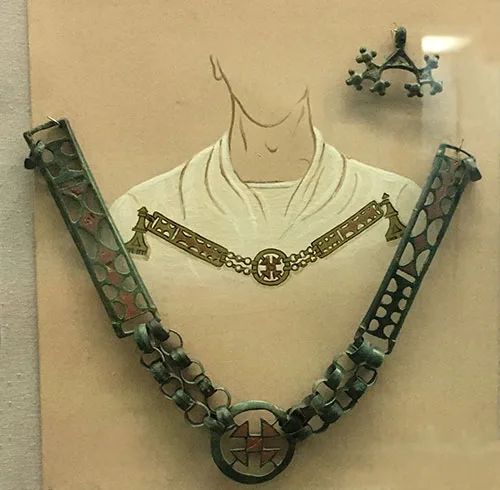
Ancient bronze jewelry pieces embellished with enamel, the 3rd-5th century A.D. Archaeological finds. These are a chest adornment, a pendant, and a large and intricate fibula (brooch that fastened the flaps of a cloak or another outer garment). In the pic, you can see how the chest adornment was attached to clothing by two fibulae.
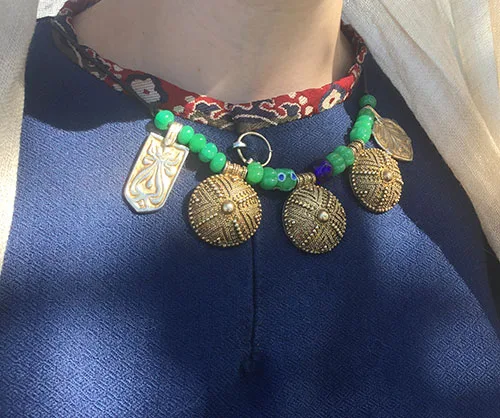
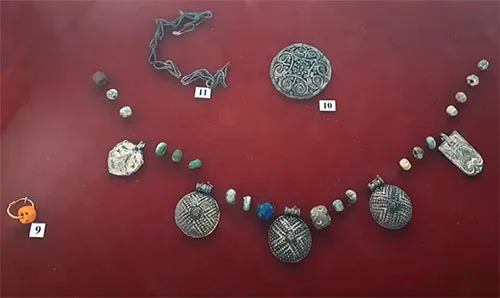
Beautiful replica of medieval necklace. It is made by reenactors from glass beads and silver pendants (some of them gold plated). Also, here is a photo of original necklace, archaeological find (in Kyiv, Ukraine) kept in a museum. You can easily compare these necklaces.
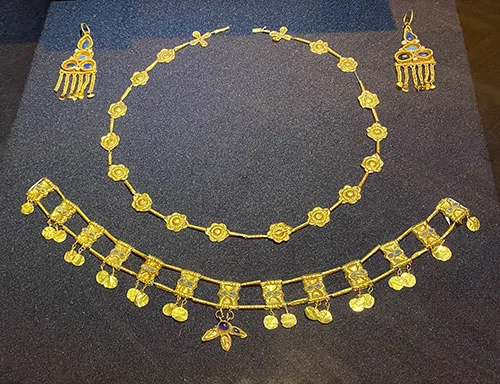
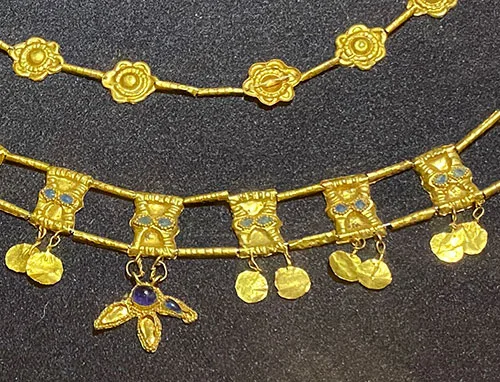
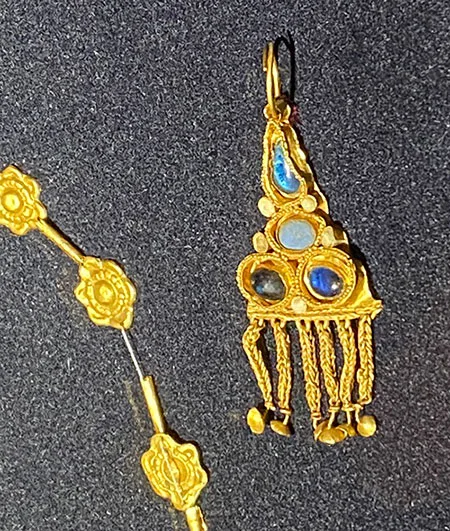
Millennia-old gold jewelry set. It’s from the burial of noble Sarmatian woman, the late 1st century. The gold set consists of two necklaces and a pair of earrings made in intricate design. We can see that jewels are adorned with semi-precious stones.
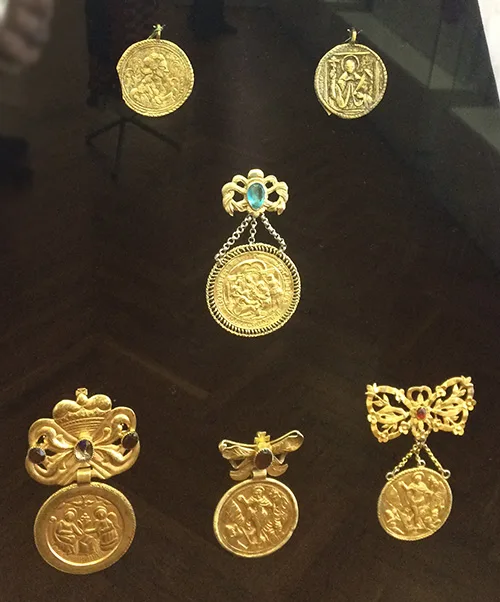
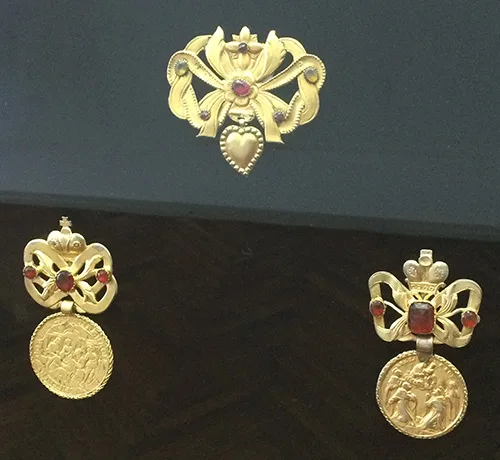
Vintage silver gold-plated traditional pendants from Ukraine, the end of the 18th – the beginning of the 19th century. Such pendants were called “dukach” and they usually consisted of a coin and a decorative setting. These particular dukaches are adorned with round religious icons and a heart rather than a coin. The setting is embellished with colorful glass beads.
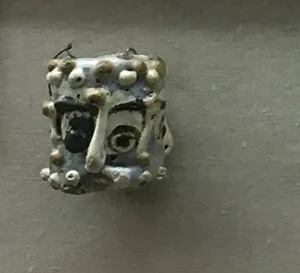
Very old and very curious large bead made in bizarre shape, Scythia, the territory of modern Ukraine, the 11th century B.C. – 2nd century A.D. This bead looks like a man’s face!
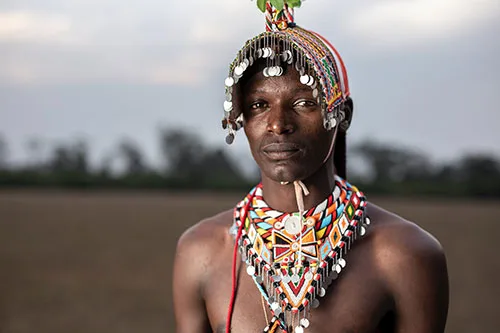
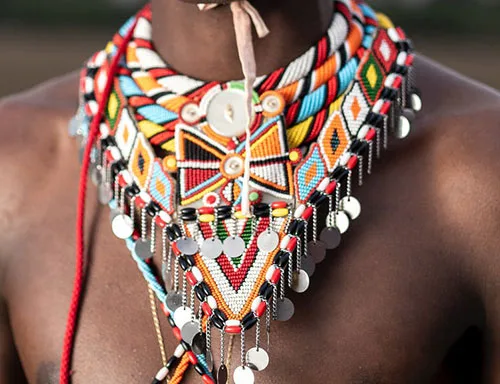
Kenyan man wearing exquisite beaded jewelry. His intricate necklace includes beads, seed beads, buttons, and round metal pendants. The beadwork patterns are also very nice.
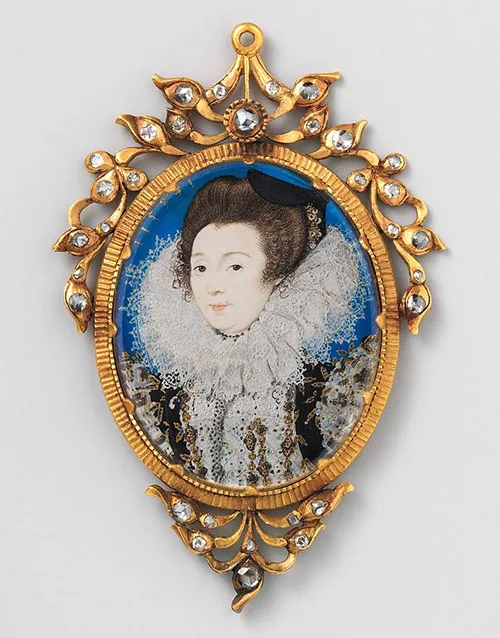
This is lovely! Elaborate bejeweled portrait miniature of a woman, 1597. And what a setting! It was made by British artist Nicholas Hilliard. From The Met Museum
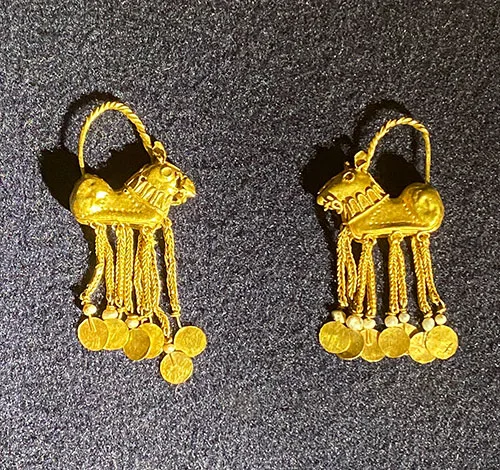
Wonderful ancient gold jewelry piece. Pair of animal-shaped earrings that belonged to a Sarmatian queen or noblewoman, the late 1st century AD. From the National Museum of History of Ukraine. Just look how intricately and skillfully they are made, how many details!
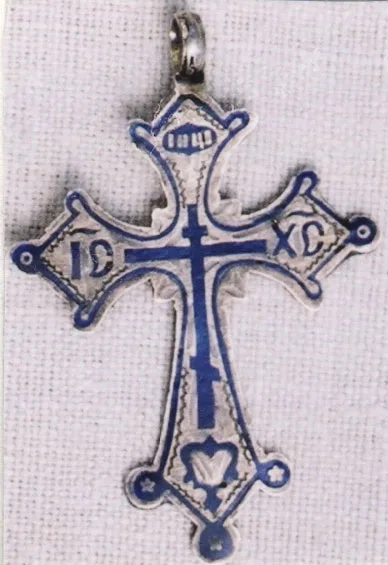
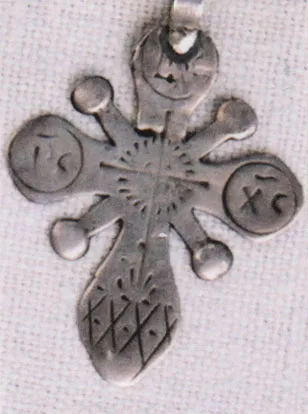
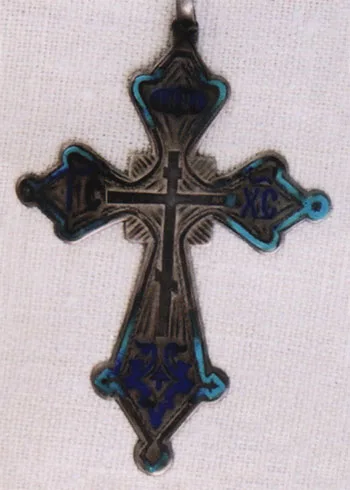
Vintage silver crosses traditionally used by Ukrainian women as part of jewelry sets, like in the last photo. In the 17th-19th centuries, Ukrainians were especially religious, so they often wore crosses. These were for special occasions.
How beautiful it is! And, of course, the traditions and culture of the nation can be easily understood by watching the national costumes and costume jewelry.
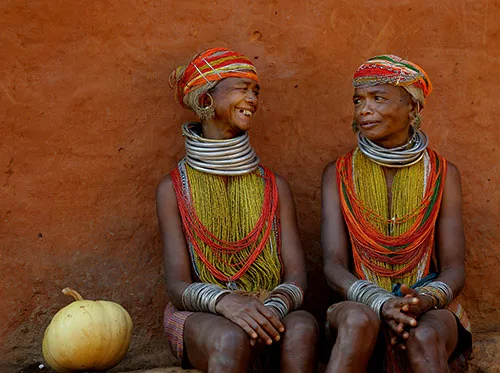
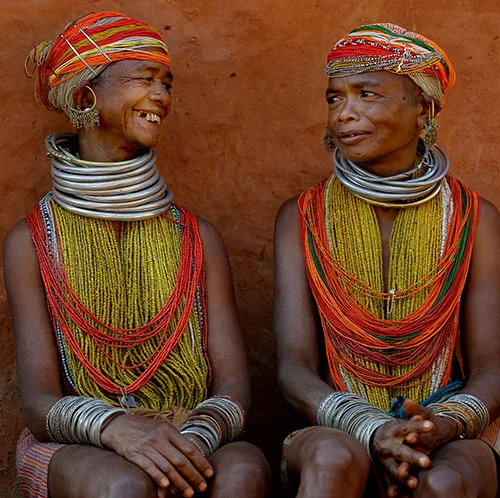
How many beaded jewelry can you wear at one time? These women definitely beat me)). And they added metal jewels, too. Imagine how heavy such an outfit is.
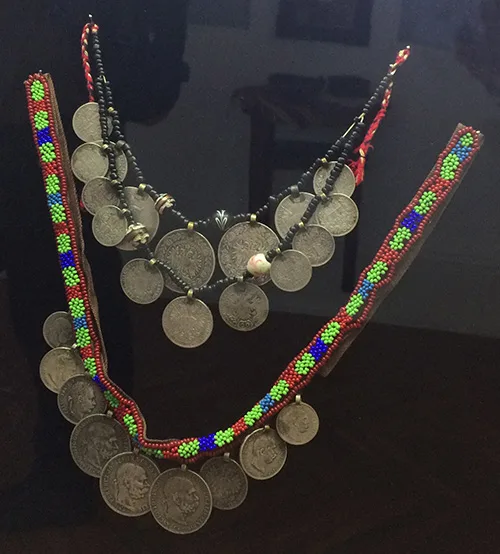
Two vintage necklaces made from seed beads and silver dukach coins, Ukraine, the end of the 19th – the beginning of the 20th century. Such jewelry was popular among wealthier Ukrainian women.
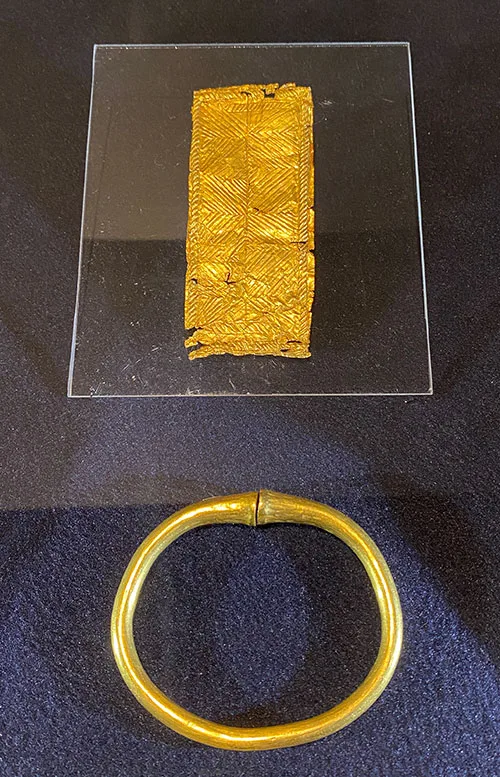
Gold adornments from burial of Sarmatian king Inismeos, the late 1st century A.D. These are décor of a bow guard (thin gold plate with ornamentation) and a gold bracelet. From a museum exhibition in Ukraine.
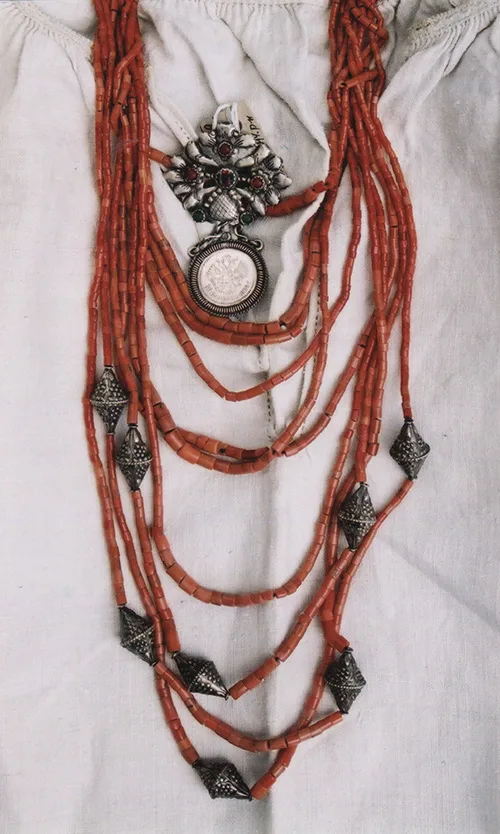
Vintage Ukrainian coral necklace worn with traditional attire, the late 19th – early 20th century. The necklace consists of coral beads and intricate silver beads. Also a large pendant called “dukach” – a silver coin in beautiful silver setting – is usually paired with a coral necklace.
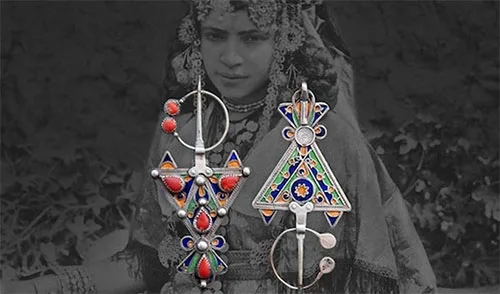
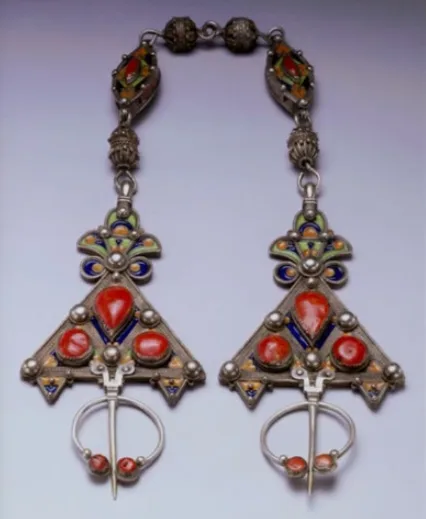
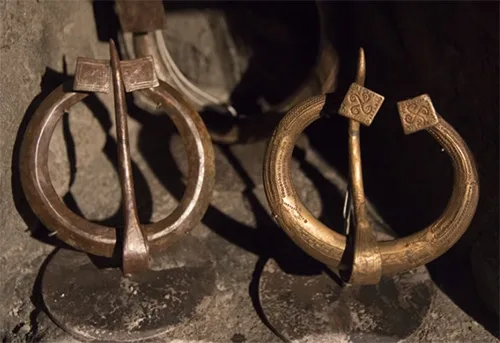
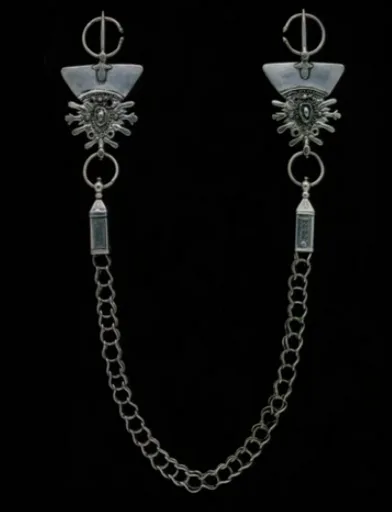
Berber traditional jewelry piece – a pair of brooches connected by a chain. These fibulae often had a triangular shape and were adorned with gems, filigree, enamel, etc. The material they were usually made from is silver (pure silver or silver alloy).
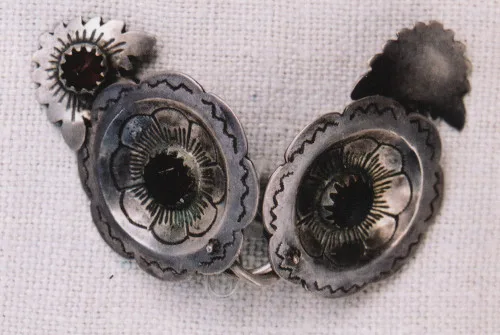
Vintage Ukrainian earrings. This design was extremely popular in the 19th – early 20th century. The earrings are silver, flower-shaped, and encrusted with red glass beads.
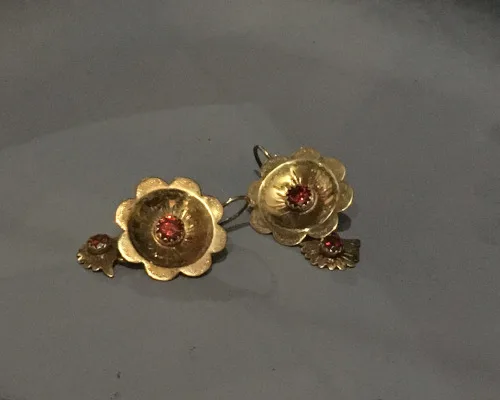
Vintage gold earrings with glass beads, shaped like flowers. A tiny pendant is attached to each earring. Such jewelry was very common in Ukraine in the 19th – early 20th centuries.